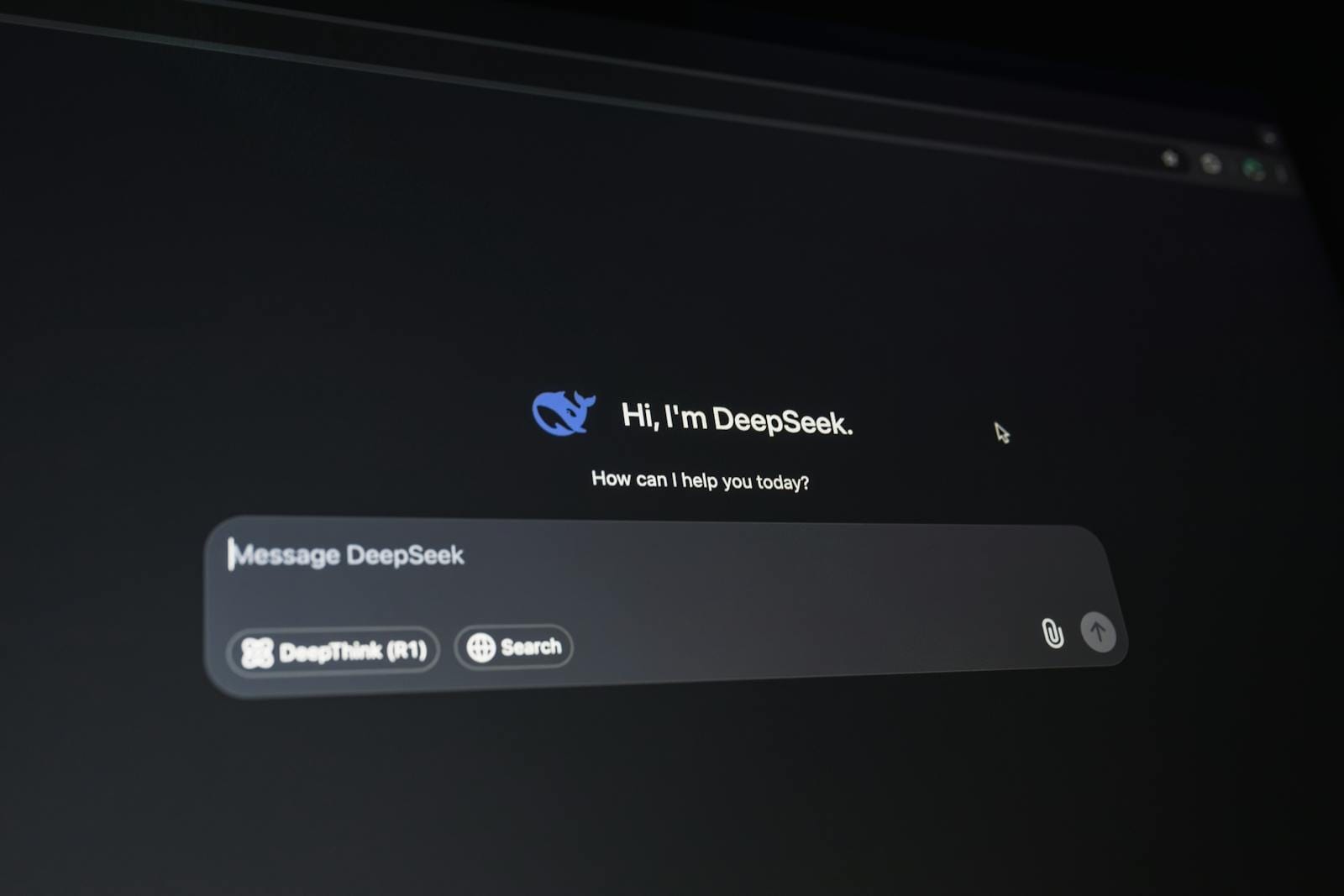
In the context of technological evolution in 2025, Deepseek AI positions itself as an artificial intelligence (AI) platform characterized by a highly scalable architecture and adaptive learning capabilities. More than a simple iteration on previous models, it represents a technological discontinuity that redefines methodologies for data processing, decision automation, and process optimization in critical domains such as healthcare, cybersecurity, computational marketing, and cyber-physical systems. The adoption of Deepseek by global organizations highlights its fundamental role in supporting large-scale operations, managing increasing complexity, and stringent compliance requirements. It is no coincidence that Deepseek was the most downloaded AI app of 2025, confirming its global impact.
Modular Architecture and Advanced Computational Paradigms
The latest release of Deepseek integrates a modular infrastructure based on deep neural networks and distributed reinforcement learning models. The architecture enables efficient parallelization on high-performance clusters, supporting heterogeneous data pipelines with latency optimization under milliseconds. Furthermore, Deepseek incorporates dynamic load balancing and predictive caching techniques, which further improve processing speed and system resilience. Interoperability with edge computing frameworks promotes a decentralization of the computational load, enhancing system resilience and scalability, while integration with containerization technologies like Docker and Kubernetes allows for flexible deployment and efficient resource management.
Continuous Learning and Automatic Self-Tuning
Deepseek adopts a continual learning approach, where meta-learning models dynamically manage parameter configuration, reducing the need for supervised retraining. The system leverages online adaptation mechanisms for fine-tuning predictive models, ensuring immediate responsiveness to changes in data patterns and optimizing prediction robustness in complex, non-stationary environments. The presence of drift detection algorithms allows for rapid identification of variations in input data, triggering automatic readjustment processes that maintain predictive efficiency over time. Moreover, Deepseek integrates model interpretability modules, allowing for detailed analysis of the algorithm's decisions and identification of any biases in the data.

Advanced Computational Efficiency
A distinctive aspect of Deepseek compared to its competitors, including advanced models like GPT-4 o1, is its efficiency in the use of computational resources. According to the developers, Deepseek requires significantly less computing power to achieve comparable results, thanks to advanced optimization of data processing and management algorithms. This characteristic allows for a reduction in operational costs and a more sustainable ecological footprint, making it a preferential choice for large-scale applications.
Advanced Frameworks for Proactive Cybersecurity
In the field of cybersecurity, Deepseek implements generative adversarial networks (GANs) for anomaly detection and machine learning-based threat intelligence systems for identifying advanced persistent threats (APT). The integration of graph neural network techniques enables the analysis of complex relationships between security events, improving the ability to predict and mitigate vulnerabilities in real-time.
Deepseek's security framework also includes multi-factor authentication (MFA) mechanisms and advanced encryption protocols to protect sensitive data, as well as attack simulation systems (red teaming) that continuously test the platform's resilience. The adoption of blockchain technologies for digital supply chain management adds an additional layer of security and traceability to critical transactions.
Predictive Modeling and Personalization in Healthcare
In the healthcare sector, Deepseek uses convolutional neural networks (CNN) for processing high-resolution diagnostic images and natural language processing (NLP) models for extracting insights from unstructured clinical data. The application of federated learning techniques ensures the privacy of sensitive data, while predictive modeling supports precision medicine, optimizing early diagnosis and personalized treatment management.
Deepseek is also capable of integrating data from IoT medical devices (Internet of Medical Things), providing real-time monitoring of patients' vital parameters and improving response capacity to critical situations. The analysis of genomic data and electronic health records enables the development of personalized predictive models for the treatment of rare and complex diseases, significantly improving therapeutic effectiveness.
AI-Based Business Strategies and Predictive Analytics
Deepseek's predictive analytics capabilities extend to various business areas, from supply chain optimization to forecasting market dynamics. The use of advanced clustering models and segmentation algorithms based on multi-dimensional similarity metrics allows for the personalization of marketing strategies, improving engagement and customer retention. Deepseek offers prescriptive analytics tools, which not only predict future scenarios but also provide operational recommendations to optimize decision-making processes. Sentiment analysis functionalities applied to data from social media and online reviews allow for real-time monitoring of brand perception and rapid adaptation of communication strategies.
Frequently Asked Questions about Deepseek ai
- What models does Deepseek offer? Deepseek offers a range of models, including deep neural networks (DNN), reinforcement learning (RL) models, generative adversarial networks (GANs), and convolutional neural networks (CNN) for specific areas like computer vision and natural language processing (NLP). Each model is optimized for different application scenarios, ensuring high performance and adaptability. Furthermore, Deepseek features models similar to GPT-4 o1, but optimized for superior efficiency and lower computational resource consumption.
- Is Deepseek suitable for small businesses or only for large organizations? Deepseek is designed to be highly scalable, making it suitable for both small businesses and large organizations. Solutions can be customized based on specific business needs, with flexible deployment options both on-premise and in the cloud.
- How does Deepseek guarantee data security? Deepseek implements advanced encryption protocols, multi-factor authentication (MFA), and blockchain technologies for secure information management. Moreover, the use of federated learning allows data processing without the need to transfer it, reducing privacy-related risks.
- Is it possible to integrate Deepseek with other technology platforms? Yes, Deepseek supports integration with various existing technologies thanks to its flexible APIs and compatibility with containerization frameworks like Docker and Kubernetes. This allows for easy interoperability with ERP, CRM, and other enterprise platforms.
Future Perspectives and Emerging Technological Developments
The evolutionary roadmap of Deepseek includes integration with edge AI architectures and generative artificial intelligence (Generative AI) systems to increase the autonomy and decision-making capacity of peripheral devices. The adoption of explainable AI (XAI) technologies aims to improve the transparency and reliability of predictive models, facilitating adoption in regulated and high-criticality contexts. In summary, Deepseek represents a strategic asset for organizations that intend to fully leverage the transformative potential of artificial intelligence in the coming decade.
The exploration of new computational paradigms, such as quantum machine learning, could further expand the platform's capabilities, paving the way for innovative solutions to complex problems in scientific and industrial fields. Furthermore, integration with augmented reality (AR) and virtual reality (VR) systems could foster new applications in sectors like education, professional training, and advanced simulation.
Sponsored Protocol