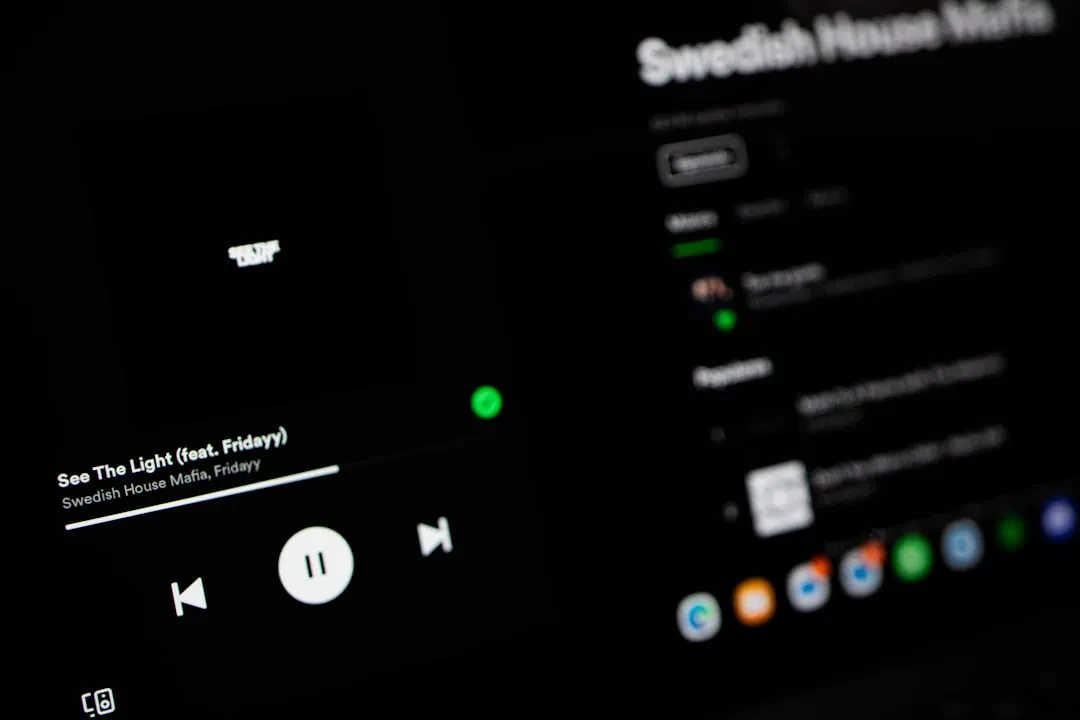
The world's largest music streaming platform has taken a decisive step toward globalizing the listening experience. The much-discussed Spotify AI DJ has expanded its reach, learning to speak fluently in French, German, Italian, and Brazilian Portuguese. This move is not just a language update but represents a profound evolution in how artificial intelligence interfaces with culture and user habits.
The Multilingual Expansion of the AI DJ
Until now, the synthetic voice that guided personalized playlists was only available in English. With the latest update, Spotify has trained its language model on a vast corpus of data in four new languages, curating not only lexical translation but also cultural nuances. The AI DJ does not simply translate the commentary between tracks; it adapts its tone and expressions to the local context. For an Italian listener, the voice will speak with an accent and terminology that evoke the musical traditions of Italy, mentioning local artists and typical genres.
This move has significant technical implications. The system relies on a combination of advanced voice generation and recommendation algorithms that analyze user preferences in real time. The biggest challenge was maintaining naturalness and spontaneity, avoiding the robotic effect that often plagues virtual assistants. Spotify has stated that it used convolutional neural networks for speech synthesis and large language models for text generation, optimized for each language.
Impact on the AI Economy and Privacy
The AI DJ expansion comes at a crucial time for the tech industry. Just as Spotify multiplies its efforts to make AI more pervasive, questions arise about energy impact and data management. As we analyzed in our deep dive into the five cracks in the AI economy, training multilingual models requires enormous computing power, with consequences for energy consumption and carbon footprint. Spotify has tried to mitigate these effects by optimizing data centers and using compression algorithms, but the debate remains open. Moreover, deep personalization raises privacy issues: to offer relevant commentary, the AI must access increasingly granular data on listening habits. Spotify has reaffirmed its commitment to transparency, but the road to a balance between innovation and privacy protection is still uphill.
For further details on these dynamics, please read the complete article on Five Cracks in the AI Economy: Energy Grid, Privacy, and the Search for Trust.
The Future of Music Recommendation
With the introduction of these four languages, Spotify not only makes the service more accessible to millions of new users but also lays the foundation for even deeper personalization. The AI DJ could soon learn to recognize regional dialects, interact with real-time voice commands, and even create original commentary based on the listener's mood. The competition with other platforms like Apple Music and Amazon Music is heating up, and the one who can offer a human and natural interaction will win the challenge. Spotify is betting on the consistency of the voice, a trademark that could become the true differentiator in the streaming market.
The AI DJ that speaks Italian, German, French, and Brazilian Portuguese is just the beginning of a revolution that will see artificial intelligence become your favorite musical companion. The path is set, and the melody of the future sounds increasingly multilingual.
Sponsored Protocol