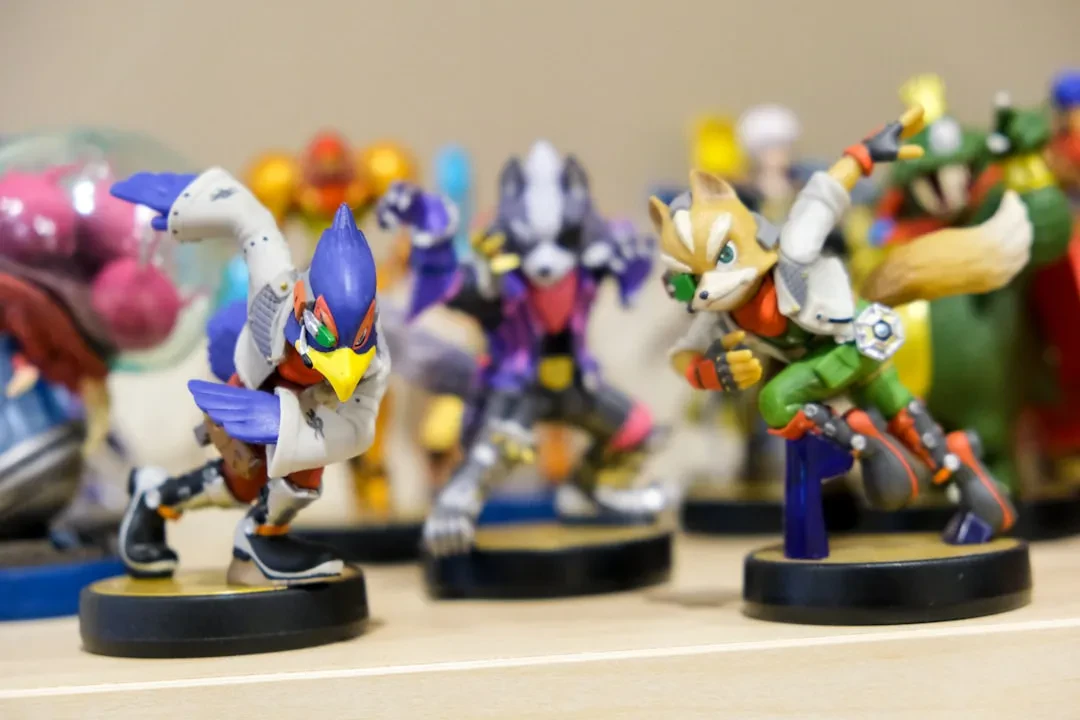
The video game industry never stops surprising. Two heavyweight announcements have shaken the gaming landscape in recent weeks: on one side, Ryu Ga Gotoku Studio, the celebrated creators of the Yakuza series, unveiled Stranger Than Heaven, a new title exploring the origins of the Tojo Clan; on the other, Nintendo confirmed a highly anticipated Star Fox remake for its new Switch 2 console, set for release on June 25. Both projects promise to redefine player expectations and mark a turning point for their respective franchises.
Stranger Than Heaven: The Roots of the Tojo Clan
Ryu Ga Gotoku Studio, known for its mature storytelling and hybrid action-adventure gameplay in the Yakuza series, steps back in time. Stranger Than Heaven will focus on the founder of the Tojo Clan, offering an unprecedented perspective on the origins of Japanese organized crime. The game, coming in winter 2026, appears to adopt a darker, more historical tone, partially departing from the contemporary chaos of Kamurocho. Early information suggests a more strategic combat system and an immersive open world, with meticulous attention to historical and cultural details — a trademark of the studio. This new IP could represent a testing ground for the Japanese studio's ambition, which has recently expanded its portfolio with titles like Judgment and Lost Judgment. Choosing to tell the origins of the series' most iconic clan is a masterstroke for longtime fans, but also an opportunity to attract new players curious about the roots of a complex narrative universe.
Star Fox Remake: A Cinematic Return on Switch 2
On the other side, Nintendo takes us back to gaming history with a Star Fox remake for Switch 2. June 25 will mark the debut of a cinematic reimagining of the N64 classic. This is not a simple remaster: the remake offers a more cinematic reinterpretation with enhanced cutscenes, polygon models rebuilt from scratch, and an optimized control system for the next-generation Joy-Cons. Nintendo's decision to bet on such an ambitious remake for its new console's launch window is a clear statement of intent: Switch 2 will not just be a hardware upgrade but a platform to reinterpret great classics with modern standards. The move fits into a broader strategy of leveraging the historical catalog, already seen with Zelda and Metroid remasters. The technical side promises to exploit the new console's power with particle effects, dynamic lighting, and a stable 60 frames per second frame rate.
Implications for the Market and the Future of Gaming
These two announcements are not isolated news; they are signals of a deeply evolving industry. On one hand, studios like Ryu Ga Gotoku show that the triple-A market can still surprise with high-profile new IPs anchored in solid narrative roots. On the other hand, Nintendo demonstrates that a well-crafted remake remains a powerhouse for introducing new generations to legendary franchises. In a context where mergers and acquisitions are becoming an increasingly common strategy even for sector startups, as analyzed in a recent piece on TechCrunch Disrupt 2026, the moves by Nintendo and RGG appear even more strategic. Both titles aim to solidify existing fan bases while attracting new users. The late June launch of Star Fox, right after Switch 2's debut, could boost console sales at a crucial time. For deeper background on the development team behind Stranger Than Heaven, the Wikipedia page for Star Fox provides a comprehensive overview of the franchise's history. With summer approaching, 2026 is shaping up to be an unforgettable year for gamers.
Sponsored Protocol