For years,
neural networks remained a laboratory curiosity, mentioned in artificial intelligence books but used only in research contexts. Today, they are the silent engine behind a huge part of the digital world: image recognition, machine translation, language models, recommendations, speech synthesis. Every time a system "learns from data," there is almost always a neural network behind it, adjusting billions of parameters without anyone writing them by hand.
What are neural networks
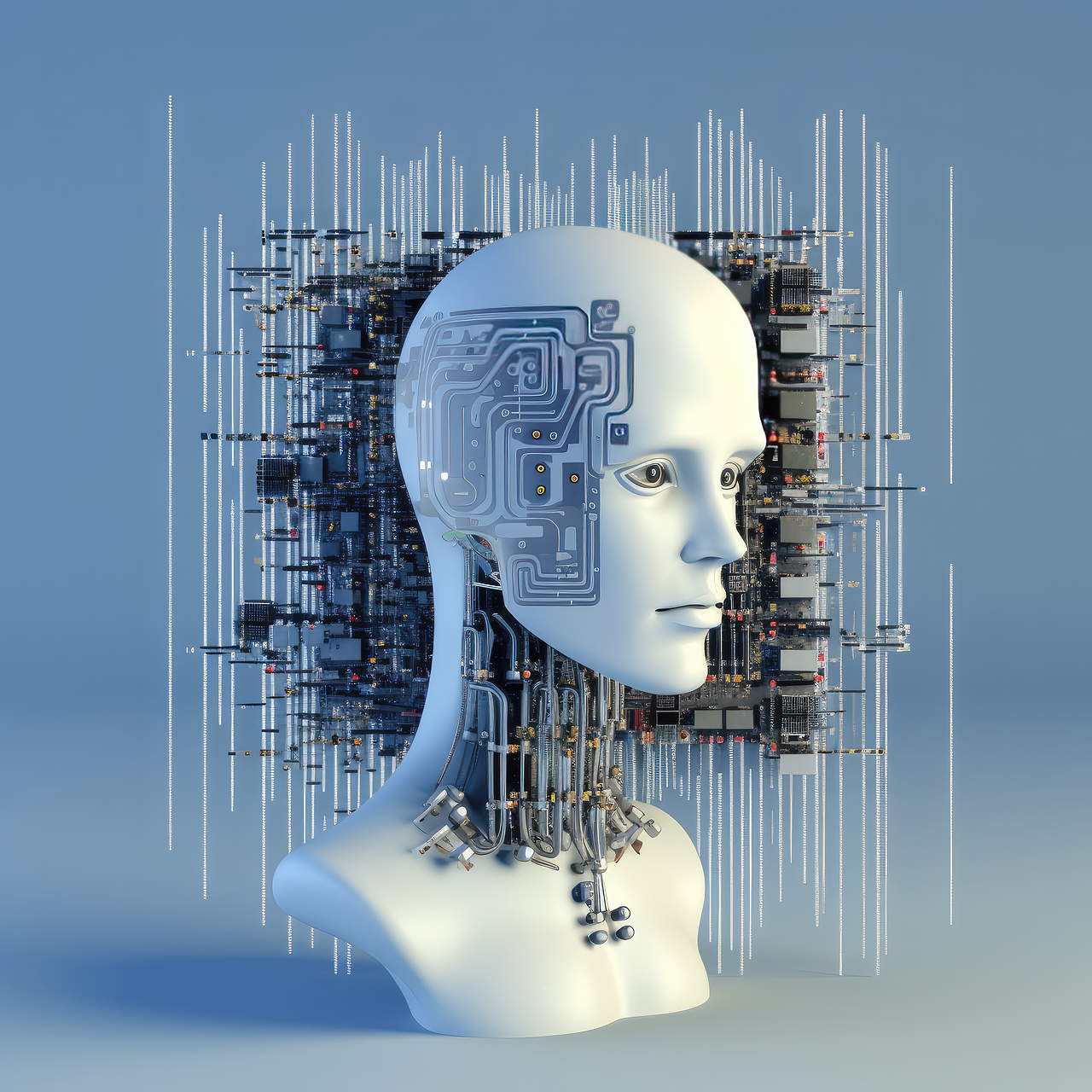
An artificial neural network is a mathematical model inspired, in an extremely simplified way, by the human brain. It is composed of many basic elements, the
artificial neurons, organized in layers and connected to each other. Each neuron receives numbers as input, combines them via weights, applies a transformation function, and produces a number as output. By connecting many of these neurons in a chain, the network becomes capable of representing very complex relationships between input and output.
In the reference book
Deep Learning by Goodfellow, Bengio, and Courville, neural networks are described as highly parametric functions: inside them, there are thousands, millions, or billions of adjustable parameters that determine how the input is transformed. The model is not programmed rule by rule but is
trained on example data until it produces sufficiently good responses.
The first idea dates back to the
perceptron, a model from the 1950s that simulated a single neuron. Today, networks are much deeper and more sophisticated, but the basic intuition is the same: a machine that changes its behavior by modifying the weights of its internal connections.
How a neural network works
From an operational standpoint, a neural network always works in the same way. In the
inference phase, that is, when it must make decisions, it receives a numerical input (image pixels, vectors representing words, sensor values) and passes it through the various layers. Each layer applies a transformation; at the end, the last layer produces an output, for example, a probability that the image contains a specific object or the text that continues a sentence.
The interesting part is the
learning phase, called training. Here, the network sees many examples where the correct input and output are known. For each example, the difference between the network's response and the desired response is calculated via a loss function. That error is then propagated backward through the layers with an algorithm called
backpropagation, which makes it possible to understand how each weight contributed to the overall error.
Based on this information, an optimization algorithm (often a variant of gradient descent) updates the weights in the opposite direction of the error, step by step. By repeating this cycle on millions of examples, the network gradually reduces its loss and learns to produce correct outputs even on data it has never seen before.
Frameworks like
PyTorch and
TensorFlow were created precisely to automate these steps: building computation graphs, automatic gradient calculation, efficient parameter updating on GPUs and dedicated hardware.
Why it is said they learn on their own
When it is stated that neural networks "learn on their own," it does not mean they develop consciousness or autonomous initiative. Learning is a process guided by data and objectives, not by hand-written rules. No one tells the network how to recognize a face or how to translate a sentence; it is shown a huge amount of correct input and output examples, and the optimization mechanism finds its own way to reduce the error.
The astonishing part is that, during this process, networks develop
internal representations that we have not explicitly defined. In a convolutional network for images, the first layers learn to recognize edges and textures, the intermediate ones more complex compositions, and the final ones entire objects. No one programmed these hierarchical levels: they emerge from the simple principle of minimizing error on examples, as shown by many research papers published on archives like
arXiv.
The same applies to networks that work on natural language. Large-scale models, trained on enormous collections of texts, learn syntactic structures, semantic relationships, different styles, even though their main instruction was only the task of predicting the next word. It is a form of learning that appears autonomous because it is not guided by explicit rules, but by a single general law: reducing error on the data.
Where we encounter neural networks in daily life
Many technologies that today seem almost trivial owe their effectiveness to neural networks. Automatic image recognition in photo storage services, song suggestions on streaming platforms, machine translation systems, spam classification, product or content recommendation systems: these are all fields where neural models have surpassed, in performance, simpler rule-based approaches.
In more advanced contexts, neural networks are the foundation of generative models that create text, images, audio, and video. The architectures described in the technical blogs of entities like
OpenAI or
Google DeepMind leverage variants of deep neural networks to build systems capable of conversing, writing code, synthesizing voices, generating complex scenes.
In the industrial sector, neural networks power predictive maintenance systems, signal analysis, automatic product inspection, demand forecasting, anomaly detection. They are no longer an experiment but a production technology that must be managed with the same criteria as any other critical component of a software architecture.
Limits, fragility, and responsibility
Despite spectacular results, neural networks remain
statistical models, not general intelligences. They work well in the domains they were trained for and can fail surprisingly as soon as the input deviates too much from the norm. Small perturbations in images can cause visual models to make gross errors; ambiguously phrased questions can lead language models to give inconsistent answers.
Then there is the issue of
bias. Neural networks learn what they see in the data. If training datasets contain imbalances, stereotypes, or distortions, models will tend to repeat and amplify them. This is why many guidelines on responsible AI, like those discussed by international organizations and research centers, insist on data quality and governance, not just model power.
The issue of explainability also remains open. Many networks are effectively black boxes: we know they work, but it is not always simple to understand why they made a certain decision. This poses specific problems in regulated fields, such as healthcare, finance, or law, where an accurate result is not enough; it must also be justifiable.
Why they matter for those building software and digital products
For those developing software, platforms, and digital products, neural networks are no longer a topic for specialized conferences. They are a tool available, powerful but to be used judiciously. Expertise is needed to evaluate when a neural model is truly necessary and when a simpler, more readable, and easier-to-maintain approach is sufficient. Architectures designed to integrate these models in a secure, measurable, and updatable way are needed.
This is where the work of entities like
Meteora Web comes into play: not just "adding AI" everywhere, but helping companies and projects understand where a neural network can generate concrete value, what data is needed, what risks must be managed, and how to make these models coexist with the rest of the application stack.
Understanding what neural networks are, how they work, and why they seem to learn on their own is now part of the toolkit for anyone who wants to design software and digital strategies that do not just use buzzwords but truly leverage the potential of artificial intelligence.