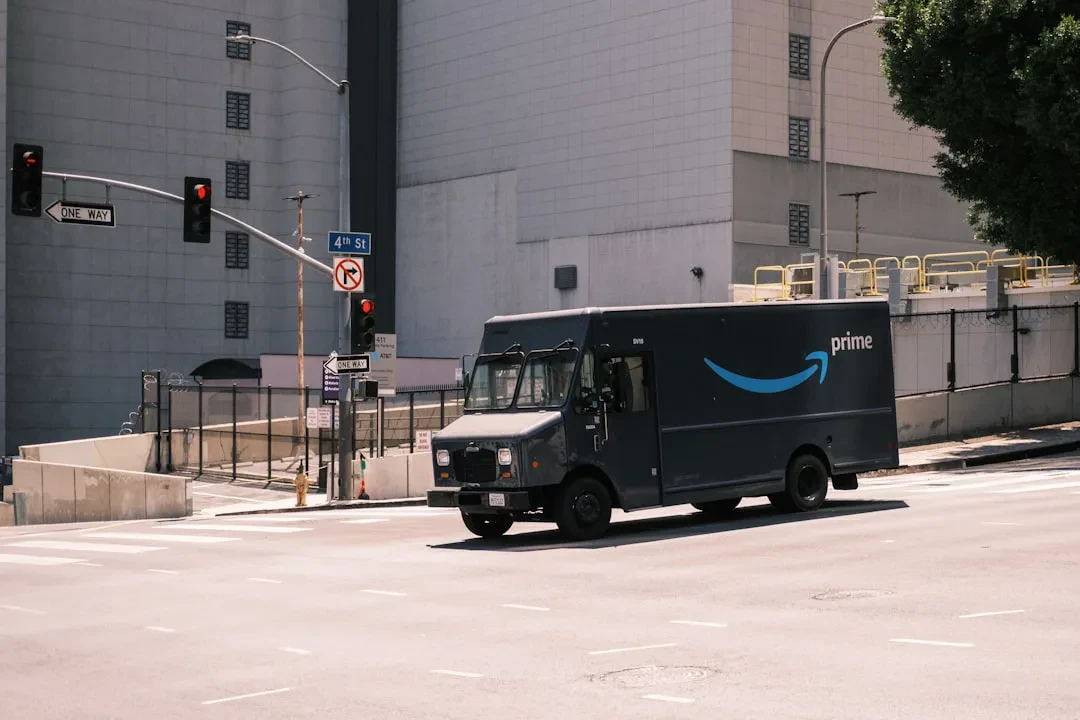
Amazon has once again revolutionized the concept of delivery speed. The company announced the nationwide expansion of its 30-minute delivery service across the United States, bringing groceries, household essentials, and other items to customers' doors in half an hour. This move is not just a logistical upgrade but a true paradigm shift for e-commerce and traditional retail.
The Technological Infrastructure Behind the 30-Minute Promise
To make such fast delivery possible, Amazon has heavily invested in micro-fulfillment centers strategically placed in urban and suburban areas. These automated warehouses, often inside former retail spaces, use robots and AI-powered picking systems to prepare orders within minutes. In addition, a fleet of electric vehicles and cargo bikes, supported by drones for low-density areas, handles the last mile. Amazon's routing algorithm, based on machine learning, optimizes paths in real time, factoring in traffic, weather, and driver availability. Without a vast data network and powerful servers, this would be impossible. As we have seen in the tech landscape of 2026, the integration of smart home devices with delivery services is becoming tighter, as discussed in our article on the smart home. Smart Home 2026 highlighted how voice assistants can automatically order groceries when sensors detect low stock, creating demand that services like this are meant to fulfill.
Sponsored Protocol
Impact on Retail and Competition
Amazon's service expansion puts additional pressure on traditional retailers like Walmart and Target, who are trying to catch up with their own rapid delivery solutions. Walmart recently upgraded its one-hour delivery, while Target relies on Shipt. However, Amazon's scale and its ability to integrate logistics with cloud computing and AI give it a significant competitive edge. Food delivery platforms like DoorDash and Uber Eats could also face contraction, as consumers might prefer a single ecosystem for all needs. The impact on employment is also notable. Gig workers in Amazon Flex are the engine of this service, with increasingly shorter and high-frequency shifts. Working conditions and location data privacy become hot topics, as previously highlighted in the digital privacy debate. Digital Privacy Under Siege touched precisely on these issues, showing how location data collection can be controversial.
Sponsored Protocol
Logistical and Environmental Challenges
While the 30-minute promise is enticing, the challenges are enormous. Urban congestion could worsen with more delivery vans on the streets. Amazon is trying to mitigate this with cargo bikes and drones, but integration into urban airspace is still experimental. Moreover, the carbon footprint of thousands of moving vehicles is not negligible. The company has ordered 100,000 electric vans from Rivian, but production has faced delays. Similarly, the space sector is facing analogous transport challenges, as shown by companies like Cowboy Space. Cowboy Space raised $275 million for orbital data centers, but the rocket shortage proves that logistics remains a bottleneck, both on Earth and in space.
The future of 30-minute delivery may see the integration of autonomous drones and self-driving vehicles, further reducing time and cost. Amazon has already patented delivery systems using balloons and hoverbikes. The real challenge will be maintaining the promise without sacrificing economic and environmental sustainability. Amazon's CEO, in an interview with TechCrunch, stated that the company is ready to invest billions to make this service standard. According to TechCrunch, the expansion already covers 70% of the US population, with a goal of reaching 90% by next year.
Sponsored Protocol
In conclusion, Amazon's move is not just a speed improvement but a complete redesign of the supply chain. Consumers will become accustomed to receiving anything in half an hour, and this will change shopping habits, urban planning, and even how we produce and store goods. The rest of the industry must adapt or be overwhelmed. The last mile revolution has just begun.