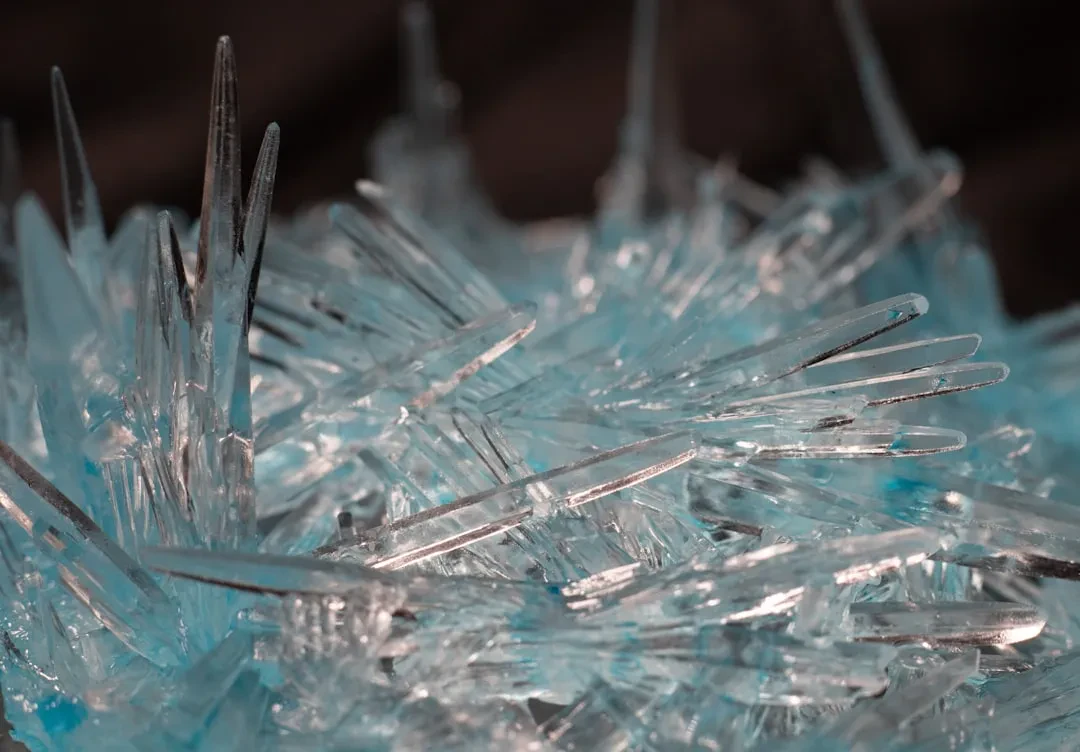
In the increasingly crowded landscape of low-impact innovations, an unusual material is capturing the attention of scientists and industry leaders. It is plastic crystals, at the core of a technology called Barocal, which promises to disrupt the refrigeration market with a principle as simple as it is effective: cooling food and drinks simply by squeezing a block of these crystals. If confirmed on a large scale, this approach could represent a historic turning point, drastically reducing pollution and energy costs compared to traditional gas compression systems.
How Barocal Plastic Crystals Work
The heart of the technology lies in a class of materials known as plastic crystals, organic substances whose molecules, while maintaining long-range crystalline order, are free to rotate. By applying mechanical pressure to these crystals, the molecules align, absorbing heat from the surrounding environment. When the pressure is released, the process reverses and heat is expelled. This cycle, similar to that of a mechanical compressor but without refrigerants, makes it possible to transfer heat efficiently using a solid, non-toxic material. The result is a cooling system free of ozone-depleting fluids or greenhouse gases such as hydrofluorocarbons.
Environmental and Economic Benefits
The Barocal proposition is not just a laboratory curiosity. Compared to traditional vapor-compression refrigerators, this technology offers several strengths. First, plastic crystals are inexpensive to produce and do not require rare materials or complex industrial processes. Second, energy consumption could be lower: mechanical compression can be optimized to work with a low-temperature heat source, reducing electricity demand. Finally, the material is fully recyclable and non-toxic, eliminating the risk of refrigerant leaks. In an era where the fight against climate change demands reducing every emission, a zero-greenhouse-gas cooling solution could soon become a standard.
Implications for Industry and Consumers
Widespread adoption of Barocal technology would bring a profound transformation across various sectors. From the food industry, which could preserve products at controlled temperatures without the use of harmful gases, to the cold chain logistics, increasingly under pressure to reduce its ecological footprint. It is interesting to note how this innovation fits into a broader trend of research on the invisible infrastructure that supports our digital lives. Just as the 'boring' parts of AI are becoming the new tech goldmine, cooling, often taken for granted, could soon see radical innovation. To explore this parallel, we analyzed Beyond the Glamour: Why the 'Boring' Parts of AI are the Next Tech Goldmine, which shows how basic technologies are attracting billion-dollar investments.
The logistics world could also benefit from greener cooling solutions. The opening of Amazon's logistics system to third parties, as reported in Amazon Logistics Opens Its Network to All Businesses Giant Logistics for Everyone, demonstrates that demand for cold chain management technologies is growing strongly. A plastic crystal cooling system could reduce operating costs and the environmental impact of these distribution giants.
Challenges and Future Prospects
Despite the enthusiasm, the road to commercialization is still long. Current Barocal versions operate at very high pressures, requiring robust and expensive containers. Researchers are working to lower the required pressure and improve the thermal efficiency of the material. Moreover, the durability and stability of plastic crystals after thousands of compression cycles must be thoroughly tested. However, the potential is enormous. If the technology reaches maturity, it could replace compressors in domestic refrigerators, air conditioners, and even data center cooling systems, reducing global energy consumption. For a comparison with other perception and environmental control technologies, see how Ouster's Color Lidar Revolutionizes Visual Perception Aiming to Replace Cameras, an example of how materials physics is changing our interaction with the world.
In conclusion, the discovery of plastic crystals as a cooling material represents an exciting frontier. Not only could it make our refrigerators more efficient, but it could also significantly contribute to the ecological transition. The search for clean energy sources also passes through materials innovation, and Barocal reminds us of this in a surprising way. For a deeper understanding of plastic crystal physics, you can consult the Wikipedia page on plastic crystals.
Sponsored Protocol
