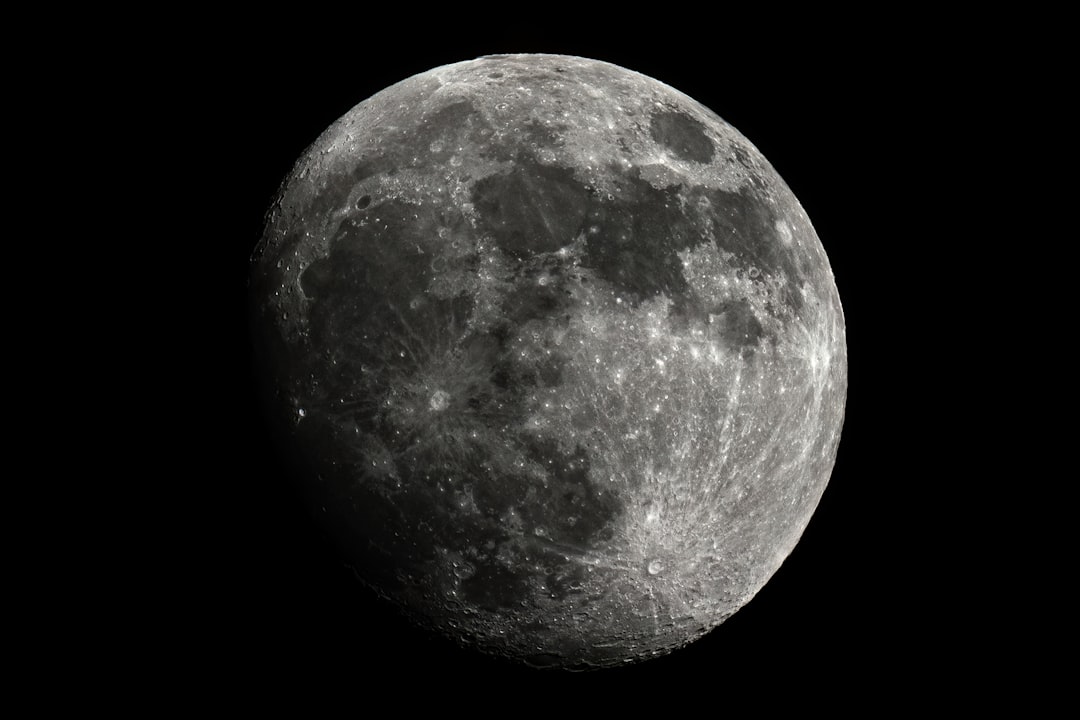
In the silent expanse that envelopes our cosmos, an ancient echo resonates once more. Artemis II, the mission that is once again taking humanity to the edge of lunar unknown, has crossed a crucial threshold. This is not merely about reaching cislunar space but a true homecoming, a re-emergence to that silver disc that has nourished dreams and ambitions for millennia. The Orion spacecraft, with its audacious crew, is now firmly anchored by lunar gravity, a whispered invitation from the stars to push beyond every previously conceived limit.
The date of this transition is not just a chronological data point but a tangible sign of progress. Imagine Earth, distant and sparkling, through Orion's portholes, a blue and green mirage that fuels memories and hopes. Astronauts Reid Wiseman, Christina Koch, Victor Glover, and Canadian explorer Jeremy Hansen are not mere passengers; they are the pioneers of an era that evokes the spirit of Apollo heroes but with infinitely broader technological awareness and perspective.
Sponsored Protocol
Their journey, which began just over four Earth days ago, marks an emotional and scientific record. Surpassing the mileage achieved by Apollo 13 is not just a matter of numbers but a tribute to human perseverance and the relentless pursuit of knowledge. Earth, at this moment, is a bright point in the vast darkness, and the crew is preparing for another maneuver that will define history: the figure-eight loop around the far side of the Moon. This will not be just a flyby but a deep immersion into the unknown, reaching an apogee of 252,757 miles from Earth, a distance that makes even the most daring space travelers of the past pale.
Sponsored Protocol
The preparation for this moment has been meticulous. Manual piloting demonstrations, review of scientific objectives for the six-hour observation period, and the inspection of spacesuits, which are true life-saving shields, attest to the seriousness and complexity of the mission. But beyond protocols lies pure wonder. Observing the lunar disc in its entirety, capturing polar nuances from a distance of just 4,066 miles from the surface, and even witnessing a solar eclipse from Orion's window, where the Sun will disappear behind our satellite for an entire hour, are experiences that transcend science and touch the very essence of human existence.
Sponsored Protocol
This return to the Moon is not a simple repetition of the past but a new beginning. It is the demonstration that bold dreams, when supported by ingenuity and determination, can indeed bring us back among the stars. Artemis II is not just a space mission; it is a symbol of resilience, a reminder that our place is among the stars, and that the future is written with courage, exploration, and a deep connection with the cosmos that hosts us.