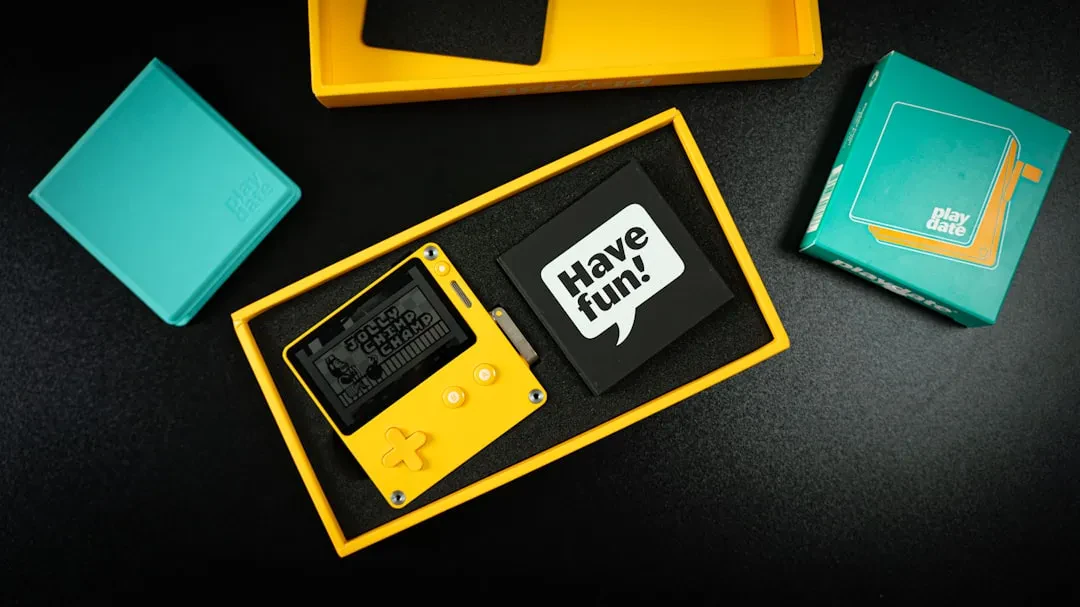
In the ever-evolving landscape of video game development, a radical innovation is shaking the industry's foundations. Generative artificial intelligence, once seen as a promise of unprecedented efficiency and creativity, now finds itself at the center of a heated debate regarding its integration into creative processes. The portable console Playdate, known for its distinctive design and unique approach to gaming, has recently announced a policy that draws a clear line concerning the use of generative AI in titles intended for its catalog.
Panic's Stance on Generative AI
Panic, the company behind the Playdate console, has established that, as of this month, the Playdate Catalog will no longer accept titles that use generative AI for the creation of art, audio, music, text, or dialogue. This decision marks a significant turning point, emphasizing a preference for human creativity in fundamental artistic areas of game development. Although AI is still permitted for coding assistance, Panic has clarified that any usage will be explicitly disclosed, allowing customers to be informed and make their own decisions.
Sponsored Protocol
The Context of Playdate Season Three
This stance comes concurrently with the announcement of Playdate Season Three, a package of 24 games that will be released later in the year. It is noteworthy that Season Two had already featured the inclusion of a game that leveraged generative AI for writing and coding. The new directive for Season Three makes it an explicit requirement that developers do not employ AI for artistic and textual aspects, prohibiting the use of large language models like ChatGPT or Google Gemini, image generators such as Stable Diffusion, and audio tools like MuseNet and Suno. Previously approved games using generative AI will remain available but with a clear indication of their origin.
Implications for Developers and the Market
Panic's policy raises important questions about the future of AI in game development. While AI can accelerate complex processes and offer new possibilities, it also brings up concerns about the authenticity and value of human creativity. Although it is possible to distribute games with generative AI through alternative methods like sideloading, visibility and discovery within Playdate's official catalog will undoubtedly be compromised. This move could influence other developers and platforms, stimulating a broader discussion on transparency and ethics in the adoption of AI within the creative sector. It serves as a reminder that, despite technological advancements, the human decision at the core of the creative process remains an element of invaluable worth. Consider also the safety risks associated with other electronic devices, such as those discussed regarding the recalled Casely MagSafe power banks, to understand the importance of vigilance in every aspect of technology.
Sponsored Protocol
Creative Freedom and Technological Boundaries
The flexibility of Panic's guidelines, which are subject to continuous review, suggests a willingness to adapt. However, the initial prohibition for art, music, and text highlights a strong emphasis on the human-generated artistic and narrative component. This approach significantly differs from other platforms that might adopt more permissive policies. The objective is to protect the artistic integrity of the available titles and offer players a clear experience regarding the origin of the content. In an era where technology advances at breakneck speed, decisions like these help define the future of innovation and its impact on creativity.
Sponsored Protocol