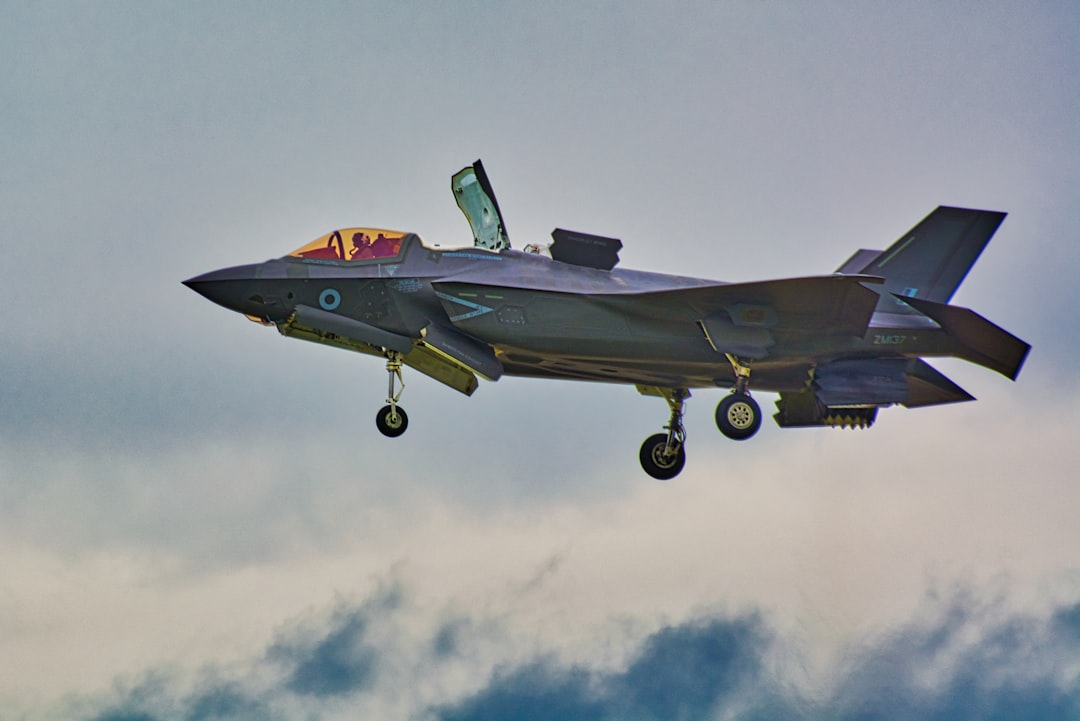
The United States Marine Corps has accepted delivery of six newly built F-35B stealth fighters without their primary radar. Instead of the sensor, the aircraft carry lead ballast to balance the weight. This unprecedented situation stems from delays in the development of the AN/APG-85 radar, which will not be available until 2028 and cannot operate at full capacity until 2031. The aircraft belong to Lot 17, whose redesign eliminated compatibility with the older APG-81 radar, leaving the jets with no interim option.
Six jets delivered with ballast instead of radar
Marine Corps Lieutenant General Gregory Masiello informed Congress on June 23, 2026, that only six Marine aircraft currently lack installed radars. Acceptance testing for those aircraft began in February 2026 after production completion earlier in the year. Without radars, the aircraft can support basic flight familiarization and pilot instruction but remain unsuitable for combat operations. The Joint Program Office defended the decision, stating the Pentagon deliberately undertook a highly concurrent development and production program, fully understanding the risk of having production aircraft ready ahead of capabilities.
Sponsored Protocol
The APG-85 radar delay and lack of alternatives
The APG-85 radar, supplied by Northrop Grumman rather than prime contractor Lockheed Martin, is part of the broader Block 4 modernization package that continues encountering schedule and integration challenges. Future F-35 models will require more cooling capacity, as new systems will draw between 62 and 80 kilowatts, more than double the current 32 kilowatts. A next-generation engine that could have addressed this cooling gap was developed but ultimately defunded due to high costs. Current plans indicate that the APG-85 will enter service around 2028, but meaningful cooling will not arrive until after 2031.
Sponsored Protocol
Operational readiness concerns for the F-35 fleet
The missing radar adds to wider concerns about operational readiness across the broader F-35 fleet. According to a recent U.S. Government Accountability Office assessment, only about 25% of F-35 aircraft achieved fully mission-capable status in 2025. Aircraft capable of performing at least one assigned mission reached 44.1%, well below historical expectations. Masiello said he would not dispute the GAO numbers but argued that using Joint Program Office calculations, the mission-capable figure stood closer to 56% across operational fleets. This situation echoes other public program challenges, such as California paying farmers to turn manure into gas, where the carbon math is broken and Europe risks repeating the same mistake. Read more in the article California pays farmers to turn manure into gas. Additionally, defense program delays have parallels in the travel industry, as seen in the Hopper settlement for hidden fees, a case of transparency failure. See the article Hopper to pay $35 million FTC settlement for hidden fees on travel bookings. For a comprehensive overview of the F-35 program, visit Wikipedia.
Sponsored Protocol
The sight of stealth fighters carrying lead ballast instead of radars may become an enduring symbol of contemporary defense procurement realities. As the Pentagon balances innovation and readiness, taxpayers wonder if such delays are acceptable.