Every time a phone recognizes a face in photos, a gate opens by reading a license plate, or a system counts objects on a conveyor belt,
computer vision is involved. It's the branch of artificial intelligence that tries to give algorithms something akin to sight, transforming images and videos into information usable by software and services.
What is computer vision in simple terms
Computer vision refers to the set of techniques that allow computers to interpret visual content—images, video sequences, streams from cameras. The goal is not just to see but to
understand what's in the scene, where objects are, how they move over time. In the most common academic definitions, computer vision is precisely the bridge between raw pixels and high-level representations useful for decision-making.
For decades, this field was dominated by methods based on rules, filters, and geometry. In recent years, the leap came with
deep learning and convolutional neural networks capable of learning directly from data. Frameworks like
TorchVision or
TensorFlow for images illustrate this paradigm shift well.
How a computer sees an image
For a human, a photo is a subject, a context, perhaps a memory. For a computer, it's a matrix of numbers. Each pixel has a brightness value and, in color images, three components for red, green, and blue. A 1920x1080 pixel image is thus a huge block of values that must be transformed into something more manageable.
The first steps of traditional computer vision involve operations like
filters, edge detection, and keypoint extraction. Libraries like
OpenCV were born precisely to offer these basic building blocks. On top of this layer, deep learning models are now grafted, which automatically learn more abstract representations from millions of examples.
Deep learning and convolutional networks
The recent breakthrough in computer vision comes with
convolutional neural networks, introduced in their modern form in the early 2000s and exploding with image classification competitions. Unlike fully connected networks, convolutional ones work on small regions of the image at a time, learning filters that react to local patterns—edges, textures, shapes.
Subsequent layers combine these patterns into increasingly complex structures, eventually recognizing entire objects or scenes. The documentation of
PyTorch or
TensorFlow includes tutorials showing how to build networks capable of distinguishing between image classes with just a few dozen lines of code, leveraging tools optimized for GPUs and large datasets.
A micro example with OpenCV
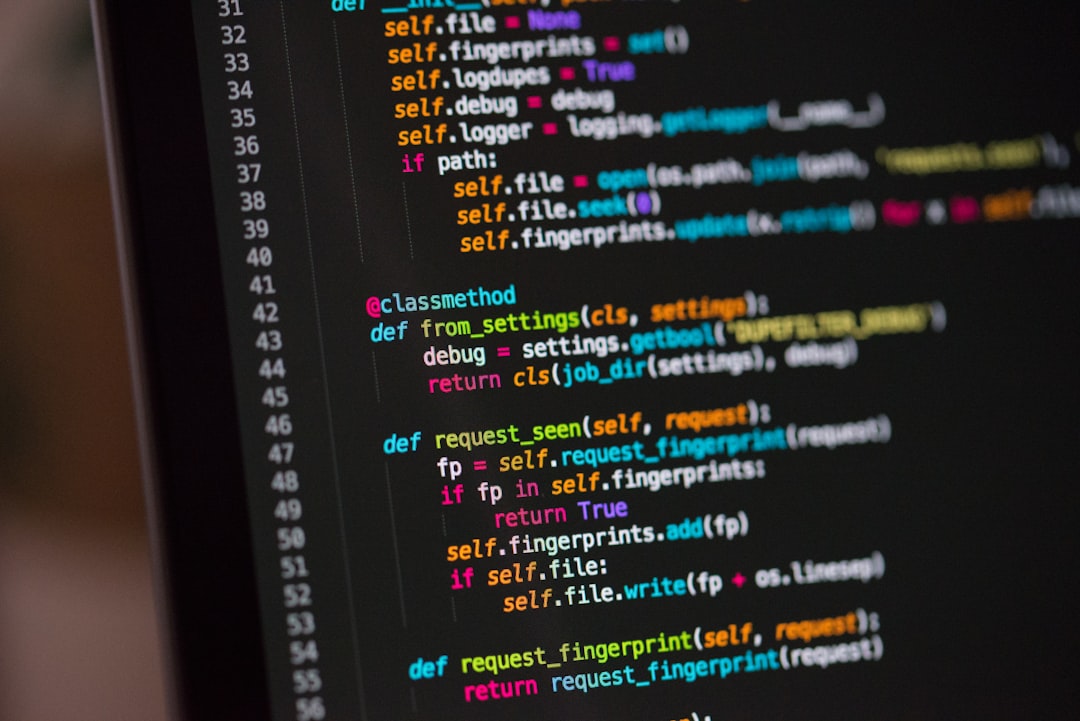
To understand how concrete working with computer vision is, a minimal example is enough. In Python, with OpenCV, reading an image and converting it to grayscale is a matter of a few lines.
import cv2

img = cv2.imread("photo.jpg")
gray = cv2.cvtColor(img, cv2.COLOR_BGR2GRAY)
cv2.imwrite("photo_gray.jpg", gray)
Behind this apparent simplicity hides a long chain of operations on matrices of numbers. From here, the result can be connected to a classification model, an object detection algorithm, or a more complex system that combines vision and other forms of AI.
Where computer vision is used in daily life
Many of the most visible applications live directly in smartphones.
Face unlock, real-time filters, the automatic selection of the "interesting" parts of a scene are all expressions of computer vision. Mobile operating systems and frameworks like
Apple's Vision framework or
Google's ML Kit APIs expose some of these functions directly to app developers.
Another evident front is that of
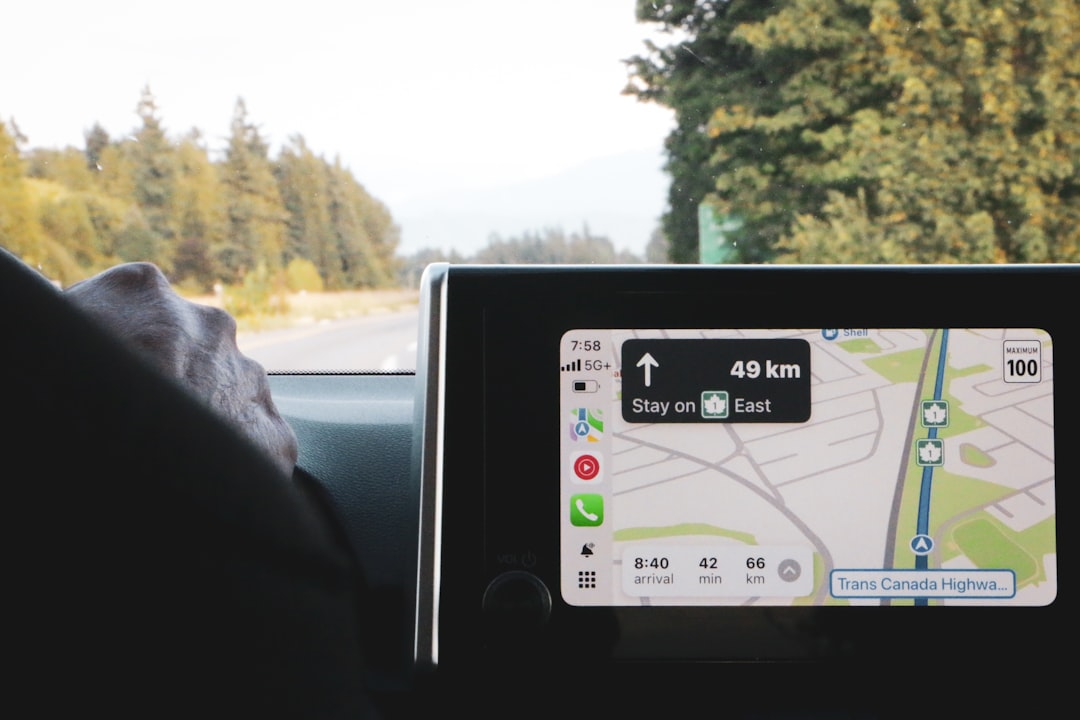
assisted and autonomous driving vehicles. Multiple cameras analyze the road, recognize lanes, pedestrians, signs, and other vehicles. Artificial vision becomes one of the vehicle's primary senses, often working together with radar and lidar. In the retail sector, computer vision helps count people, analyze flows, and enable cashier-less shopping experiences.
Industry, medicine, and security
Outside the consumer perimeter, computer vision is now a standard tool for industrial
quality control. Cameras and analysis models identify production defects impossible to see with the naked eye at large volumes, with a repeatability that reduces errors and waste. Similar systems are also used for monitoring plants and infrastructure, with algorithms that detect anomalies or wear.
In the medical field, work is done on imaging of all types—X-rays, CT scans, MRIs, histological images. Computer vision models assist professionals in identifying lesions, tumors, and anomalies, always with the attention, however, to keeping them as support and not as substitutes for clinical judgment. On the
security front, the same techniques are used for intelligent video surveillance systems, facial recognition, and analysis of suspicious behavior, with all the accompanying ethical and legal questions that arise.
Limitations, bias, and context
As impressive as they are, computer vision systems do not see the world as people do. They recognize statistical patterns based on what they were shown during training. If the data is imbalanced, the models will be too. Cases of facial recognition being less accurate for certain population groups are a concrete example of
bias linked to datasets.
Furthermore, neural networks are often fragile in the face of contextual changes that are trivial for us—different lighting, unusual angles, small obstacles in the scene. The issue of
adversarial examples, i.e., images modified minimally but capable of fooling models, shows how much the concept of "understanding an image" is still very different between humans and algorithms.
Why computer vision will remain central in the coming years
Computer vision is one of the most solid pieces in the mosaic of applied artificial intelligence. Every object with a camera can become an intelligent sensor; every process that currently requires visual inspection is a potential candidate for automation or algorithmic assistance. Open-source libraries, cloud-accessible computing power, and pre-trained models are continuously lowering the entry barrier.
At the same time, the very pervasive nature of these technologies makes a debate on
privacy, data use, surveillance, and responsibility in critical sectors urgent. Knowing what computer vision really is, how it works, and where it is used allows one to participate in this debate with greater awareness, rather than being limited to the wow effect of a well-crafted demo.