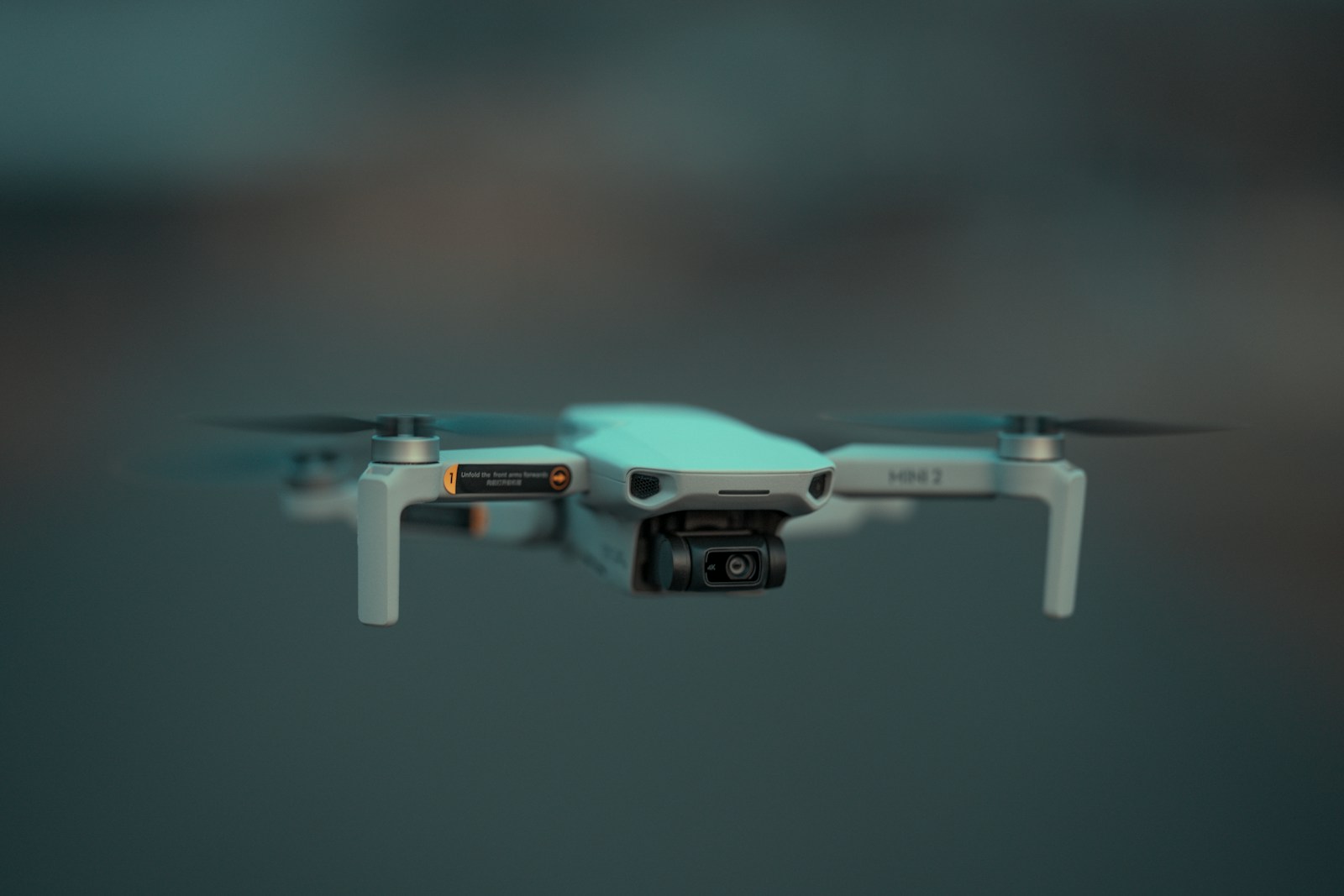
Drones have gone from a technological curiosity for enthusiasts to essential work tools for companies, couriers, warehouse managers, and even public administrations in just a few years. We've seen them at trade shows, in promotional videos, in aerial footage on social media. Today, we increasingly see them in concrete logistics and supply chain projects, where
speed, precision, and automation are not slogans but operational goals.
Understanding what drones really are, how they work, and why they are becoming central to logistics means looking beyond the image of a flying gadget and seeing how the combination of sensors, software, connectivity, and digital platforms is reshaping the way goods move. A topic that also closely concerns those working in web and hosting, because behind operational drones there are always control systems, APIs, and connected applications, often supported by solid infrastructures like
Meteora Web Hosting.
What are drones and where do we really see them in action
When we talk about drones, we technically refer to
remotely piloted aircraft, often multi-rotor, controlled remotely or semi-autonomously. There are lightweight, relatively simple hobbyist versions, but the logistics world is mainly looking at professional drones, designed to carry loads, travel predefined routes, and integrate with broader management systems.
Concretely, we can imagine drones handling deliveries in urban or rural areas, platforms moving samples and medicines between hospitals, systems supporting last-mile delivery in areas difficult to reach with traditional vehicles. Not to mention their use in warehouses, where indoor drones equipped with scanners can verify stock on shelves and reduce inventory errors.
These scenarios no longer belong only to futuristic videos. Many pilot projects are already operational and are demonstrating that, under specific conditions, drones can be a credible piece of the logistics chain, more than just a style exercise.
How they work: hardware, sensors, and software
From a physical point of view, a drone is a combination of
motors, batteries, structure, and sensors. Multi-rotor models use independent propellers to stabilize and control flight. The heart of the system is the control unit, which receives data from sensors and remote commands, calculates necessary adjustments in real-time, and translates them into power variations on individual motors.
The most common sensors include GPS, accelerometers, gyroscopes, barometers, cameras, lidar, or sonar for obstacle detection. Together they build a kind of digital sixth sense, thanks to which the drone can maintain position, follow predefined routes, avoid collisions, and manage emergency landings. In logistics contexts, obstacle detection and safety system redundancy are crucial, as flights often occur near buildings, infrastructure, and people.
However, the real difference compared to toys lies in the software. Drones used in logistics are not simply controlled by a pilot with a remote control. They are connected to
management platforms that plan routes, monitor status and battery, record flight data, and integrate weather information and airspace restrictions. Missions are often programmed through web interfaces or applications that communicate via API with warehouse systems, ERP, CRM, and e-commerce platforms.
All this requires reliable backends, secure databases, authentication, and monitoring systems that stay online even when fleets of drones operate in parallel. This is where infrastructures like those offered by Meteora Web come into play, allowing the hosting of control panels, APIs, and integrated services without turning fleet management into a weak point of the system.
Why drones are redefining logistics
Contemporary logistics lives on a delicate balance between increasingly tight delivery times, pressured costs, and growing attention to environmental impact. In this context, drones offer some interesting levers. The first concerns the
last mile, often the most costly and inefficient segment, especially in congested or underserved areas. A drone can bypass traffic and road constraints, reaching areas as the crow flies where a van would take much longer.
Then there's the aspect of capillarity. In rural, mountainous contexts, or areas with fragile infrastructure, drones can guarantee service continuity where traditional vehicles are impractical or uneconomical. Think of urgent medicines, laboratory samples, critical spare parts. In these cases, speed is not just a competitive advantage but a safety element.
A third element is
data collection. Every mission generates information on times, routes, consumption, obstacles, and operating conditions. Integrated with existing systems, this information allows for route optimization, maintenance planning, and service adaptation to seasonality and demand variations. The drone is no longer just a flying courier but an advanced sensor distributed across the territory.
Naturally, widespread adoption also depends on regulations, dedicated air corridors, drone traffic management systems, and social acceptance. But the trend is clear. More and more projects are experimenting with integrations between traditional fleets and light aerial fleets, in a logic where the drone becomes one of the actors in the logistics chain and not a total replacement for existing vehicles.
For those involved in technology and digital, the lesson is twofold. On one hand, drones show how sensors, connectivity, and automation can transform a traditional sector like logistics. On the other hand, they remind us that every physical innovation relies on a software and infrastructural side that must be designed with the same care, from the real-time tracking system to the web platform through which customers and operators track shipment status.
In this scenario, those designing advanced logistics solutions can no longer think only in terms of vehicles and warehouses. They must reason in terms of
connected ecosystems, where drones, vehicles, applications, and cloud services work together. It's a transformation that starts in the air but inevitably ends up on servers, dashboards, and web interfaces, often hosted on optimized environments like those of Meteora Web Hosting.