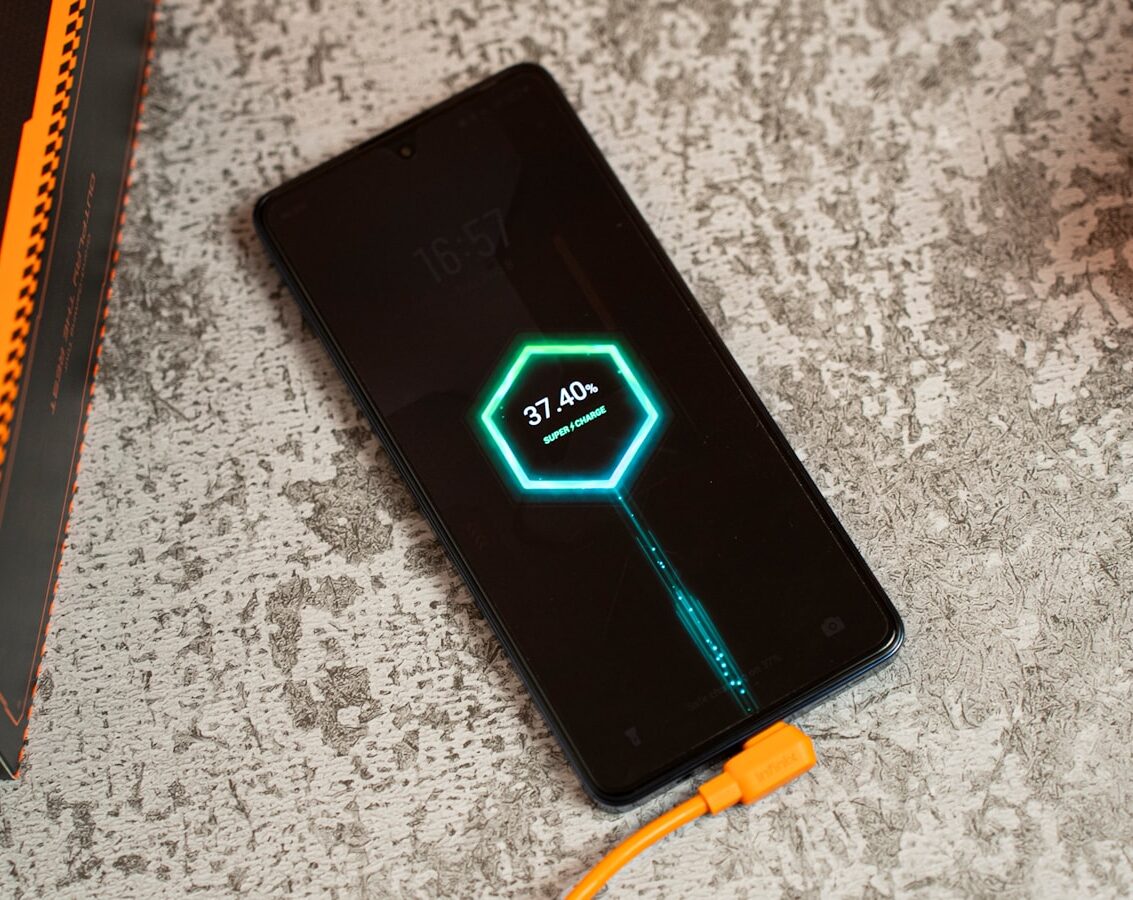
First, we used to leave our smartphones charging all night. Now, just twenty minutes connected to a charger of tens of watts is enough to see the battery shoot up to 70 percent.
Fast charging has become an implicit promise of every new thin phone, tablet, or laptop. Behind that convenience, however, are precise hardware choices and some compromises to be aware of, especially if we want batteries to last more than a handful of cycles.
What is meant by fast charging
From an electrical point of view, fast charging means sending
more power to the battery in less time compared to standard charging. Power is the product of voltage and current, so fast charging plays on these two parameters by raising the voltage, the current, or both. In practice, a 10 W charger and a 60 W charger do the same thing, but the second does it much more aggressively.
Standards like
USB Power Delivery, promoted by the USB IF consortium, define voltage and current profiles negotiated between the power supply and the device
USB Power Delivery. Alongside these exist proprietary protocols, such as
Qualcomm Quick Charge and many variants from Chinese manufacturers, which keep pushing the wattage number printed on the packaging higher and higher.
How the charger and device communicate
Fast charging doesn't work like a fully open tap. The charger and the device
talk to each other, especially with modern connectors like USB-C. As soon as the cable is connected, the device sends a power request through dedicated channels. The charger proposes different profiles, and the device chooses the one most suitable for its battery and thermal conditions.
This dialogue is managed by a
charge controller and, in more serious designs, by an integrated Battery Management System. These components measure voltages, currents, and temperatures in real-time, regulate the power delivered, and interrupt or limit charging if something is off. This is why the same charger can charge one phone at 65 W and another at 18 W, even if both are labeled as fast charging on the box.
Lithium-ion batteries, C-rate, and heat
Under the shell of smartphones, laptops, and many other devices, there are almost always
lithium-ion batteries. These cells do not like to be stressed with currents that are too high for too long. In technical terms, this is referred to as the
C-rate, the ratio between the charging current and the nominal capacity. The faster the charge, the higher the C-rate.
Technical resources like
Battery University remind us that very aggressive charges and high temperatures accelerate unwanted chemical reactions inside the cell, leading to a more rapid loss of capacity. Fast charging is therefore a balancing act between immediate convenience and the long-term health of the battery.
Why fast charging gets so hot
Every time many amperes are moved in a short time, the natural result is
heat. Losses in components, the battery's internal resistance, and cables turn into temperature. Just touch your smartphone during a maximum-power charging session to realize it.
To limit damage, manufacturers adopt multiple strategies: cells split into multiple parallel packs to distribute the current, more generous dissipation systems, and algorithms that reduce power as soon as the temperature rises above a certain threshold. The support pages of Apple, Google, and other manufacturers often explain that the most aggressive charging is concentrated in the first part of the process, then slows down as it approaches 100 percent.
Fast charging and battery lifespan
The inevitable question is whether fast charging ruins the battery. The honest answer is that, all else being equal,
more power means more stress. Repeated fast charges, especially in already hot environments or with devices tucked in pockets or under pillows, can shorten the overall lifespan of the cell.
This doesn't mean every fast session is a death sentence. Modern systems try to limit the most aggressive peaks, and many manufacturers implement optimized charging features that automatically slow down overnight to reduce the time spent at 100 percent. From a chemical standpoint, however, it remains true that a slower, cooler charge is generally more battery-friendly than one constantly pushed to the limit.
Standards, cables, and safety
In fast charging, the weak link is often not the official charger, but the rest of the chain. Poor-quality cables, generic uncertified adapters, and accessories that claim unrealistic power ratings can introduce additional resistance, overheating, and unpredictable behavior.
Organizations like
USB IF promote the use of standards like USB Power Delivery precisely to reduce the risk of dangerous combinations between charger, cable, and device. Using certified accessories, especially when dealing with tens or hundreds of watts, is not a purist's obsession but a measure of hardware common sense.
When it makes sense to use it and when it doesn't
Fast charging was born to solve a real problem. Sometimes you need to leave the house in a few minutes with enough battery life to get through the day. In those cases, using the most powerful profiles makes perfect sense. It's different to use it out of habit in every circumstance, even when the device could stay plugged in for hours without any rush.
A balanced approach is to treat it as a resource to be used judiciously. Fast charge when you really need it, slower charging at other times, paying attention to heat and the accessories used. It's not about demonizing the technology, but remembering that behind every percentage indicator is a physical component with concrete limits, designed for a certain lifespan and sensitive to how we choose to treat it every day.