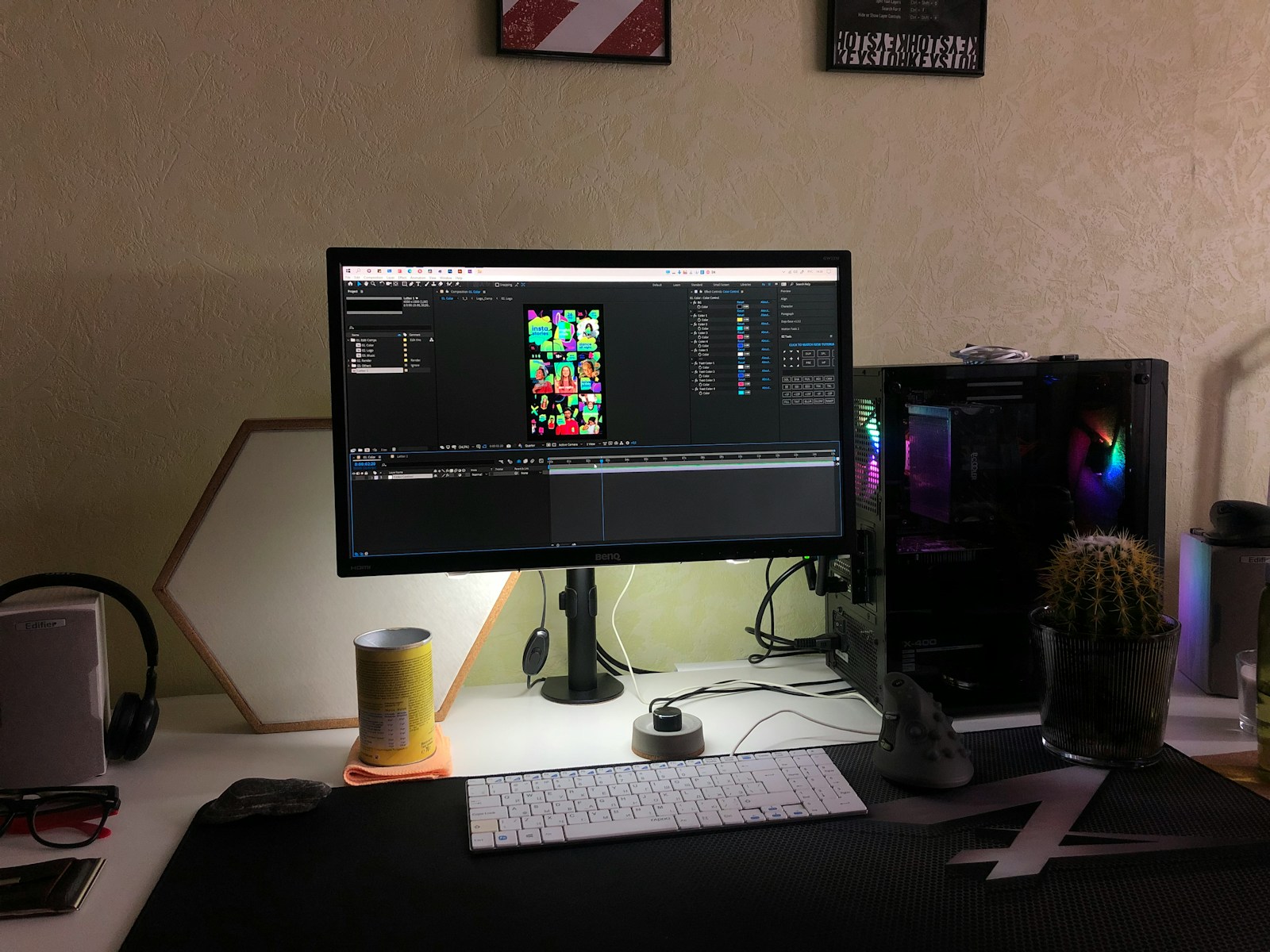
Every time you turn on a console, start a game, or watch a character move in a digital world, you are witnessing a
graphics engine at work. It is the invisible yet vital part of every modern video game, the technical brain that transforms code, physics, and art into motion. Without it, the dynamic shadows of a sunset in "The Last of Us" would not exist, nor would the perfectly simulated explosions of "Call of Duty." But what really is a graphics engine, and how does it bring such realistic universes to life?
What is a Graphics Engine?
A graphics engine is a set of
software tools and
libraries designed to manage everything related to a video game's graphics: rendering, lighting, animations, physics, and interactions. It is the infrastructure on which developers build worlds, characters, and environments. Without having to reinvent the wheel every time. Essentially, the graphics engine is what allows the transition from a 3D model to an immersive real-time experience.
Modern engines like
Unreal Engine and
Unity offer visual interfaces, scripting languages, and tools for managing physics, textures, and sound. Their purpose is to simplify life for development teams, allowing them to focus on creativity rather than technical complexity.
How Does a Graphics Engine Work?
Every frame we see on screen is born from a multi-stage process. The graphics engine receives instructions from the game code—where objects are located, how they move, how they react to light—and translates them into images via the GPU. It is a constant flow of calculations: geometries, shaders, lights, shadows, materials, and textures are combined hundreds of times per second to generate the final scene.
Within a graphics engine, several subsystems coexist: the
renderer, which manages pixel drawing; the
physics engine, which calculates collisions and realistic movements; and the
audio engine, which synchronizes sounds and environment. All of this is orchestrated by the
game loop, a continuous cycle that updates every element of the game in real time. In practice, it's as if dozens of perfectly coordinated paintings were created every second.
Why is it the Heart of Video Games?
Because it determines
experience, aesthetics, and performance. The graphics engine is not just a technology; it is a creative choice. Changing engines can mean completely changing the feel of a game. Unreal Engine aims for photorealism, Unity for versatility,
CryEngine for cinematic impact. Each engine has its own soul that influences how designers think and create their works.
Today, the boundary between game and simulation is becoming increasingly thin thanks to technologies like
ray tracing and
artificial intelligence applied to graphics. Engines are not only used to run video games but also to build virtual experiences for cinema, architecture, and the metaverse. And behind all this are studios and developers who know how much a solid, optimized, and scalable foundation matters. Just like the philosophy of
Meteora Web, which applies the same principle to creating high-performance websites, applications, and digital projects.
Want to understand how graphics engines really work and which technologies drive them? Dive deeper on Meteora Web and discover how digital engineering transforms virtual worlds into real experiences.

 Ing. Calogero Bono
2 min read
Ing. Calogero Bono
2 min read