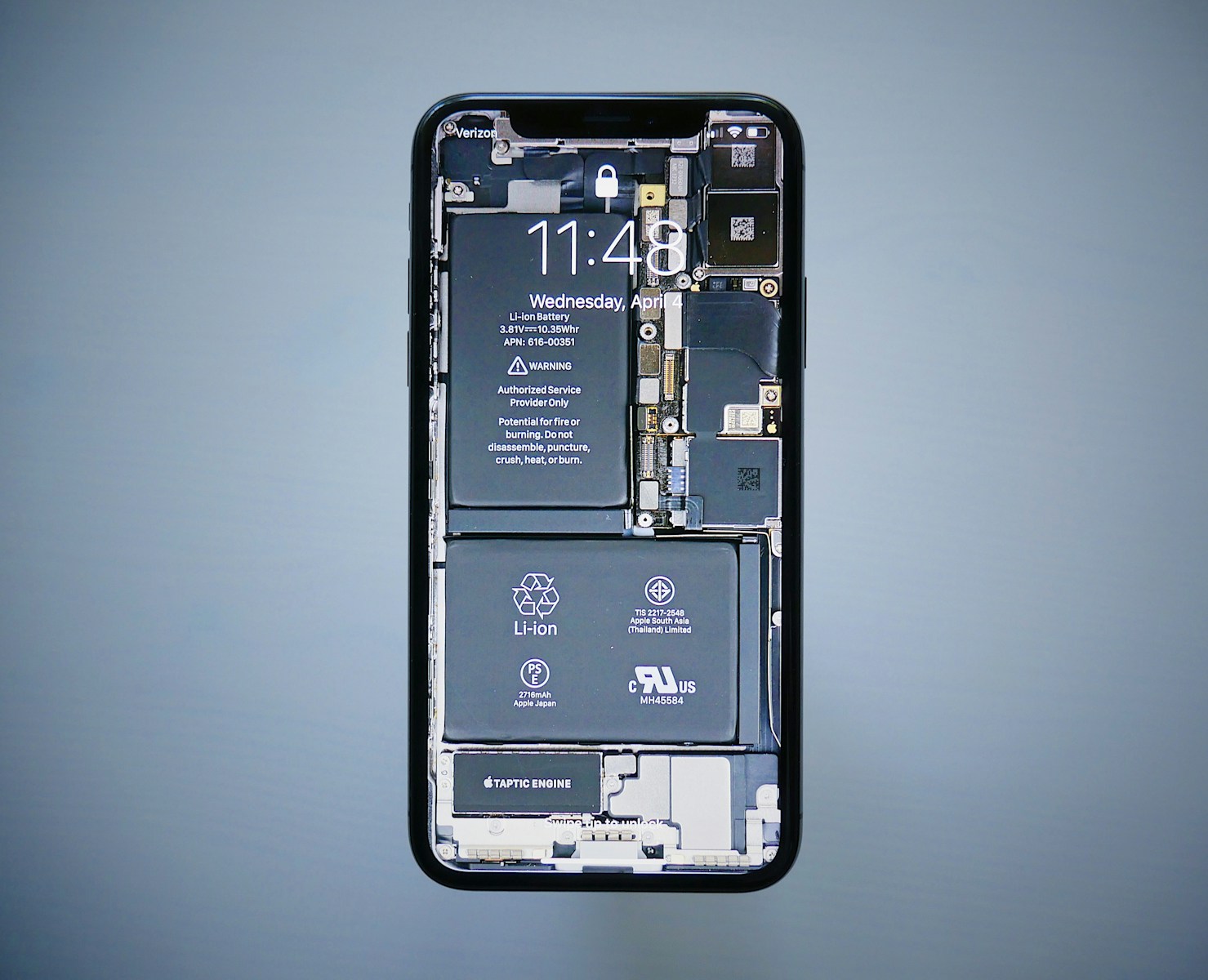
From smartphones to notebooks, through electric cars, drones, and home storage systems, almost everything we consider portable technology relies on the same invention: the
lithium-ion battery. It's not just one component among many; it's the silent heart of modern hardware. Understanding what it is, how it works, and why it has become the standard helps us better interpret the design choices, limitations, and promises of the electronic world we use every day.
What really is a lithium-ion battery
From a technical standpoint, a lithium-ion battery is a system of
rechargeable cells where the protagonist is the lithium ion, which moves between a negative and a positive electrode during charging and discharging. Unlike old nickel-cadmium or lead-acid batteries, it offers higher energy density, lower weight, and better overall efficiency. In the basic definition, also cited by
Wikipedia, we are talking about an electrochemical storage technology that is now dominant in consumer electronics.
Lithium-ion cells have become so central that they earned a
Nobel Prize in Chemistry, awarded in 2019 to John B. Goodenough, M. Stanley Whittingham, and Akira Yoshino for their contribution to the development of this technology
Nobel Prize 2019. This confirms that we are not talking about a simple spare part, but a structural breakthrough in the way mobile devices are designed.
How a cell works between anode, cathode, and electrolyte
Every lithium-ion battery is made of multiple cells connected together. Inside each cell, we find three main actors: the
anode, the
cathode, and the
electrolyte. During
charging, lithium ions move from the cathode to the anode, where they are hosted in the material's structure, while electrons travel through an external circuit, powering the charger. During discharge, the process reverses, and the stored energy is returned to the device.
The exact chemistry varies based on applications—lithium cobalt, lithium iron phosphate, lithium manganese, and other combinations—each with advantages and trade-offs regarding safety, lifespan, and energy density. Technical overviews like those from
Battery University show how much engineering lies behind the codes and acronyms that often go unnoticed on a product's spec sheet.
From cell to battery pack: the work of the Battery Management System
Almost no modern device uses a single bare cell. In practice, cells are connected in series and parallel to form a
battery pack, sized according to the required voltage and capacity. Here, another hidden protagonist comes into play: the
Battery Management System, or BMS, an electronic circuit that controls voltages, currents, and temperatures to prevent dangerous situations.
The BMS measures the state of charge, balances the cells, manages safety thresholds, and communicates with the device the battery powers. Technical documentation from manufacturers and organizations like the
U.S. Department of Energy emphasizes the central role of the BMS in lithium-ion battery safety, especially when scaling up to electric vehicles and stationary storage systems.
Why lithium-ion batteries power almost everything
The success of this technology is no accident. Lithium-ion batteries offer a combination that is hard to match in terms of
energy density, weight, number of charge-discharge cycles, and low self-discharge. In other words, they allow storing a lot of energy in a small space, without weighing down devices and vehicles too much, while maintaining an acceptable lifespan.
For hardware designers, this means design freedom. Thin notebooks, lightweight smartphones, compact electric bikes, and cars with increasing ranges would be unthinkable with more traditional technologies. At the same time, the standardization of formats and chemistries has enabled the construction of global production chains, with all the pros and cons that arise in terms of dependence on specific raw materials.
Degradation, cycles, and myths about battery care
Every lithium-ion battery has a finite number of
cycles. With each full charge and discharge, the internal structure fatigues a bit, and over time, capacity and runtime decline. Degradation depends on many factors: depth of discharge, operating temperature, charging speed, cell age. It's not a defect but an intrinsic characteristic of the system.
Many historical myths, like the idea of fully discharging the device to avoid damaging the battery, come from old nickel-based technologies. Lithium-ion cells are more comfortable at intermediate charge levels and moderate temperatures, as explained by numerous technical guides from manufacturers and specialized sites. Modern operating systems often try to automatically protect the battery with adaptive charging limits and software-side optimizations.
Safety and thermal risk management
The same energy density that makes lithium-ion batteries so interesting also makes them inherently delicate. Short circuits, physical damage, manufacturing defects, or aggressive charging can trigger
thermal runaway phenomena, where the internal temperature rises rapidly until it irreversibly damages the cell, with possible fires.
To reduce these risks, work is done on multiple fronts: more stable materials, more robust separators, increasingly sophisticated control electronics, and strict certification tests. Guidelines and warnings from bodies like the
IEEE Power Electronics Society and transportation safety agencies remind us how important it is to treat quality battery packs and chargers as true critical components, not as interchangeable accessories.
From phone to electric car: the same principle, different scales
The fascinating thing about lithium-ion batteries is that the
same physical principle powers extremely different devices. The cell sizes, chemistries used, pack architecture, and BMS sophistication change, but at the core, ions still move between anode and cathode within an electrolyte.
In a smartphone, compactness is paramount; in a notebook, the balance between weight and runtime; in an electric car, the ability to handle high power; in a home photovoltaic system, the possibility of reliably storing energy for years. Looking at these objects with a hardware eye means recognizing a common thread that links very different projects.
Beyond lithium ions: between evolutions and next steps
No technology dominates forever. Already today, there is much talk about solid-state batteries, new more sustainable chemistries, and alternative solutions for grid storage. But for at least another technological cycle,
lithium-ion batteries will remain the backbone of portable and mobile hardware. Knowing their limits, strengths, and design implications is a form of technological literacy useful both to those who design devices and to those who use them every day.