Almost everyone has had the feeling of being followed by a pair of shoes seen only once on an e-commerce site. You close the site, change pages, open a social media app, and those shoes are still there—your digital "pursuer." Behind this dynamic is
retargeting, one of the most powerful (and debated) techniques in online marketing.
What is retargeting in digital marketing
Retargeting refers to the activity of showing personalized ads to people who have already interacted with a website, app, or content. You don't start from scratch; you work with users who have already taken a step forward—visiting a product page, adding to cart, reading a key page. The logic is simple: try to bring them back to complete an action that was interrupted.
In practice, retargeting is often also called
remarketing, especially within Google Ads tools
Google Ads remarketing. The core idea remains the same: focus on those who have already shown interest, instead of speaking only to a completely cold audience.
How it works behind the scenes: cookies and identifiers
The basic mechanism of retargeting is technical but not magical. When someone visits a site with an installed
tracking tag, a script records certain actions and associates the visitor with an identifier. Historically, this identifier was often a third-party cookie; today, first-party solutions, advertising identifiers, or server-side systems are increasingly used.
This information is sent to advertising platforms, which build
audience lists based on behaviors. Who viewed a page, who added to cart, who completed an order. When that same person browses sites or apps that display ads from that platform, they become eligible to see specific retargeting campaigns.
Retargeting on Google Ads and Meta: the fabric of the platforms
In the real world, retargeting lives within the tools of the major platforms. On
Google Ads, you can create remarketing lists based on website visits, app interactions, YouTube video views, and use them in campaigns on the Display Network, Search, or YouTube itself
remarketing guide.
On
Meta (Facebook and Instagram), retargeting works through the pixel or conversion APIs. You build custom audiences based on website visits, page interactions, video views, or specific actions within the app
Custom Audiences. The principle is identical: an audience that has already encountered the brand and is shown ad-hoc messages.
Segments, time windows, and frequency
One of the strengths of retargeting is the ability to precisely define
who falls into segments and for how long. You can create an audience of those who abandoned their cart in the last seven days, those who visited a certain category in the last month, or long-time customers who haven't returned for a specific period.
Equally important is controlling
frequency. Seeing an ad a few times can be a useful reminder. Seeing it dozens of times a day becomes annoying and counterproductive. Platform planning tools allow you to set repetition limits, distributing ads over the chosen time window instead of concentrating everything immediately.
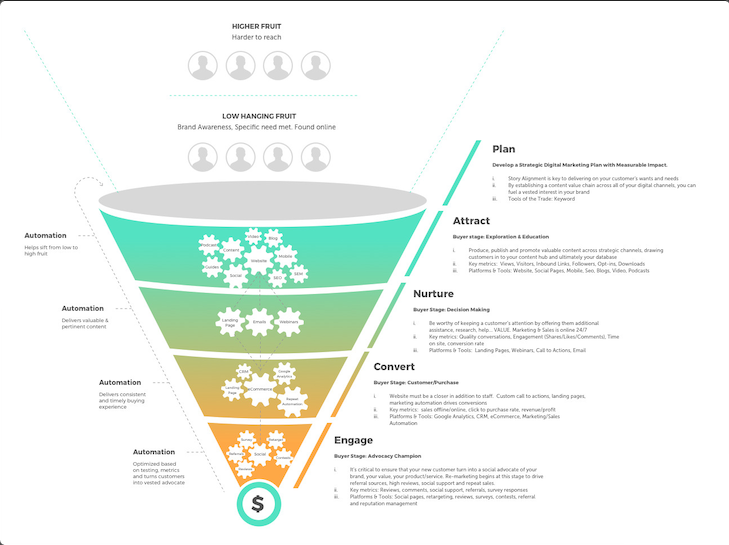
Retargeting, the funnel, and different messages along the journey
Retargeting truly works when integrated into a
funnel strategy. It's not a single ad for everyone, but a series of messages calibrated to the user's stage. Those who only visited the homepage receive more informative or branding content; those who abandoned their cart see more direct reminders about the product left behind.
Tools like Google Analytics, Meta's internal metrics, or marketing automation platforms help track this journey over time. Retargeting thus becomes the bridge between an initial visit and a purchase or contact request decision, reducing the loss of qualified traffic that would otherwise be limited to a single site visit.
Privacy, consent, and regulatory changes
While retargeting is very effective from a marketing standpoint, it is one of the most sensitive areas from a regulatory and user perception perspective. In Europe, the
GDPR and regulations on cookies and tracking require explicit and informed consent for profiling activities for marketing purposes. The guidelines from the Italian Data Protection Authority clearly reiterate this
cookies and other tracking tools.
Technologically, the sector is undergoing changes related to the reduction of third-party cookies, limitations introduced by browsers and mobile operating systems, and new aggregated measurement solutions. For those planning retargeting, this means increasingly working with first-party data, well-managed consents, and less invasive but more sustainable segmentations over time.
When retargeting really works and when it doesn't
Well-designed
retargeting is not the obsessive pursuit with the same banner, but a way to resume an interrupted conversation. It works when the message offered after the visit adds something compared to what the user has already seen—a reasoned incentive, in-depth content, a free trial, credible social proof.
It becomes counterproductive when it ignores context and saturation. Continuing to show ads for a product already purchased, not excluding those who have already converted from lists, and not respecting frequency limits turn a good idea into noise. In a landscape where sensitivity to privacy and data use is high, knowing how to calibrate retargeting is an integral part of a brand's digital reputation.
Why it recovers lost customers and will remain central
From a business perspective, retargeting remains one of the most effective tools for
recovering lost customers. It works on a base of already demonstrated interest, allows better utilization of costs already incurred to drive traffic to the site, and provides clear metrics on incremental conversions compared to more generic campaigns.
In the near future, technologies, regulatory constraints, and the ways browsers allow tracking and measurement will change. But the core insight will remain valid: nurture people who have already encountered the brand instead of endlessly chasing only new audiences. Retargeting, in its more mature and respectful forms, will continue to be one of the keys to turning anonymous visits into more stable and profitable relationships for both parties.