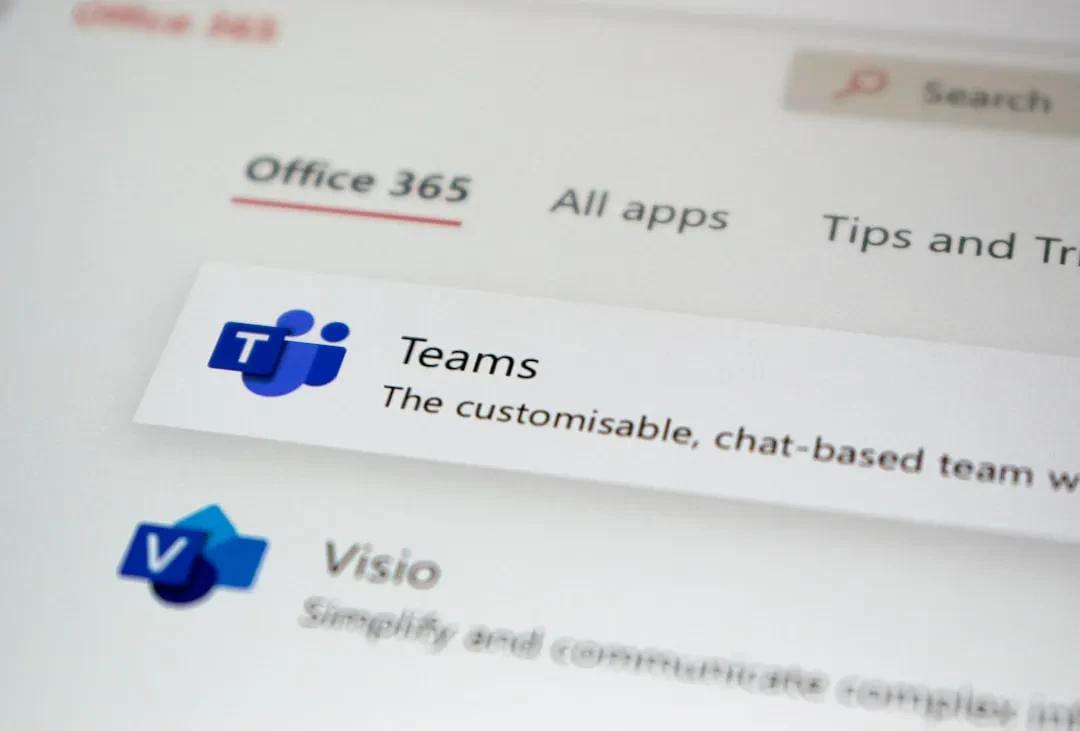
Microsoft has officially announced the removal of ‘Together Mode’ from its Teams platform, one of the most distinctive and visually innovative features introduced during the pandemic era. The decision, communicated through official channels, marks the end of a social and technological experiment aimed at recreating the experience of sitting in the same virtual room during video calls. The company cited excessive implementation complexity as the main reason, stating it will steer users toward the classic gallery view, considered more stable and performant.
To fully grasp the impact of this decision, we need to look back. ‘Together Mode’ used artificial intelligence to cut out participants and place them into a shared scene, such as an auditorium or a coffee shop. The goal was to reduce Zoom fatigue and improve the sense of presence. However, according to Microsoft, the technical complexity of maintaining this feature across all devices and scenarios became unsustainable. In a context where efficiency and reliability are paramount, the company has chosen to focus resources on improving the gallery view, a solution that Microsoft itself described as more robust.
Sponsored Protocol
Implications for the Future of Remote Collaboration
The disappearance of ‘Together Mode’ raises deep questions about the evolution of hybrid work tools. On one hand, it represents a step back from a vision of more immersive and psychologically engaging interaction. On the other hand, it confirms that technical stability and mass adoption often prevail over aesthetic novelties. Unsurprisingly, we are simultaneously witnessing completely different initiatives in the tech landscape: Apple has revolutionized Siri with auto-deleting chats, placing privacy at the core of its new artificial intelligence, showing how attention is shifting from social simulation to personal data protection. Also, in the gaming world, Fortnite revealed a 10-minute sneak peek of The Mandalorian and Grogu, pushing the boundaries of movie marketing through shared virtual environments, almost echoing what Together Mode aimed to achieve in the professional space.
Sponsored Protocol
From a technical standpoint, the removal of Together Mode highlights a crucial challenge for communication platforms: balancing innovation with maintainability. Many companies invest in augmented and spatial reality features, but often face hardware and software limitations. Microsoft seems to bet on a more minimalist approach, betting on the gallery view as the universal standard. This choice could be interpreted as a sign of market maturity, where simplicity trumps spectacle, but also as a renunciation of differentiation in an increasingly crowded segment dominated by Zoom and Google Meet.
Sponsored Protocol
What This Means for Users and Enterprises
For end users, the news does not come as a complete surprise. Many professionals interviewed on specialized forums admitted they never actively used Together Mode after the initial hype. The feature was often perceived as a gadget for informal meetings, unsuitable for formal presentations or large calls. Companies that had customized scenarios may need to adjust their habits, but overall the transition will be painless. Microsoft has assured that the gallery view will soon receive improvements in video stream management and bandwidth optimization, addressing criticism of visual fatigue.
The temporal context is important: we are in the midst of 2026, a year that saw class action lawsuits against Amazon for unrefunded money, geopolitical tensions related to tariffs, and a heated debate on AI regulation. In this scenario, Microsoft’s decision appears consistent with a broader trend toward streamlining software features. Apple’s recent move to eliminate Siri’s persistent chats to strengthen privacy also points in the same direction: cutting what is superfluous or risky to focus on the essential.
Sponsored Protocol
Looking ahead, the disappearance of Together Mode may pave the way for new virtual meeting formats based on generative AI, where avatars and environments are created on the fly to adapt to the context. But for now, Microsoft prefers to walk on safe ground. The lesson for the industry is clear: it is not enough to amaze; one must endure. And endurance, in a hypercompetitive market, is built on solid technical foundations, not special effects.