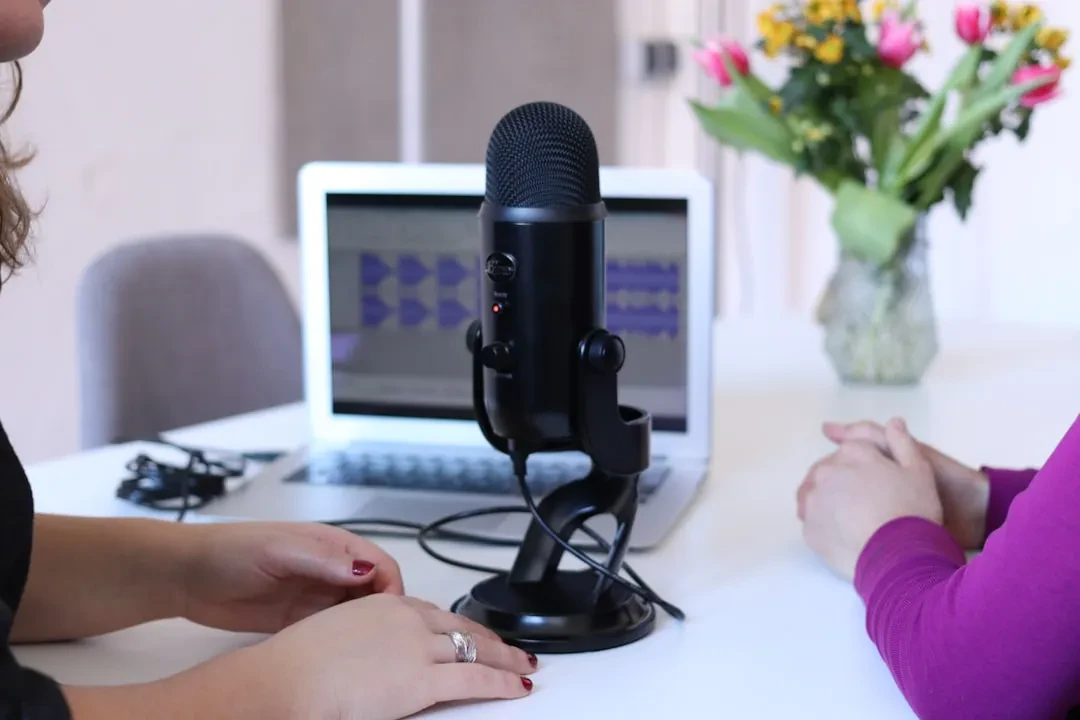
In 2026, the ability to convert speech into text, known as voice dictation, has reached unprecedented levels of sophistication thanks to artificial intelligence. These applications are no longer limited to transcribing simple notes but are becoming essential tools for daily productivity, enabling users to reply to emails, write complex documents, and even generate code. The high accuracy and contextual understanding offered by AI algorithms are reshaping how we interact with our devices.
The Evolution of Voice Dictation
Until recently, voice dictation was often associated with frustrating transcription errors and limitations in understanding accents or specific terminology. Today, AI-powered dictation apps utilize advanced neural networks and machine learning to learn from user interactions, constantly improving their recognition capabilities. This translates into greater accuracy even in noisy environments or when using technical terms, such as in programming.
Practical Applications for Productivity
One of the most significant uses of these technologies is in managing communications. Quickly replying to emails or messages becomes an almost instantaneous process, freeing up valuable time. Similarly, taking notes during meetings or conferences is greatly simplified; instead of focusing on writing, users can actively listen and participate, delegating transcription to AI. The ability to create long, structured documents simply by speaking represents a remarkable leap forward, making content creation more accessible.
Sponsored Protocol
Voice Dictation for Programmers
Perhaps the most surprising innovation is the integration of voice dictation into the workflow of programmers. Some of the best current apps are capable of interpreting voice commands to write code blocks, navigate files and directories, and even perform debugging operations. This opens new frontiers for accessibility and efficiency in software development. While it doesn't completely replace the need for typing, voice dictation can significantly speed up the initial stages of coding or writing repetitive scripts. For deeper insights into how technology is transforming related fields, one can look at the evolution of wearable devices for health, such as the Oura Ring expanding hormonal tracking, demonstrating how AI is permeating every aspect of our digital and physical lives.
Sponsored Protocol
Evaluation Criteria and Selection
Choosing the best voice dictation app depends on several factors, including accuracy, processing speed, language support, additional features (like automatic formatting or learning capabilities), and cost. The most advanced applications often offer integrations with common productivity software and cloud platforms, ensuring access to your data from any device. The current trend sees a growing focus on integrating AI into all aspects of technology, from laptops like the AI-powered LG Gram 2026, to more specific solutions. The most comprehensive solutions can also support the creation of presentations or the composition of complex texts simply by issuing voice commands. An example of how technology is merging different worlds is the possibility of integrating smartphones with controllers for gaming, combining PC and mobile experiences.
Sponsored Protocol
The Future of Voice Dictation
The future of AI voice dictation promises even deeper and more natural integration into our lives. We may see systems capable of understanding not only words but also emotions and nuances in vocal tone, allowing for more empathetic and sophisticated human-machine interactions. Further development of large language models (LLMs) will continue to improve natural language understanding, making these technologies even more powerful and versatile. The impact on personal and professional productivity will be enormous, redefining concepts of accessibility and efficiency in the digital world.