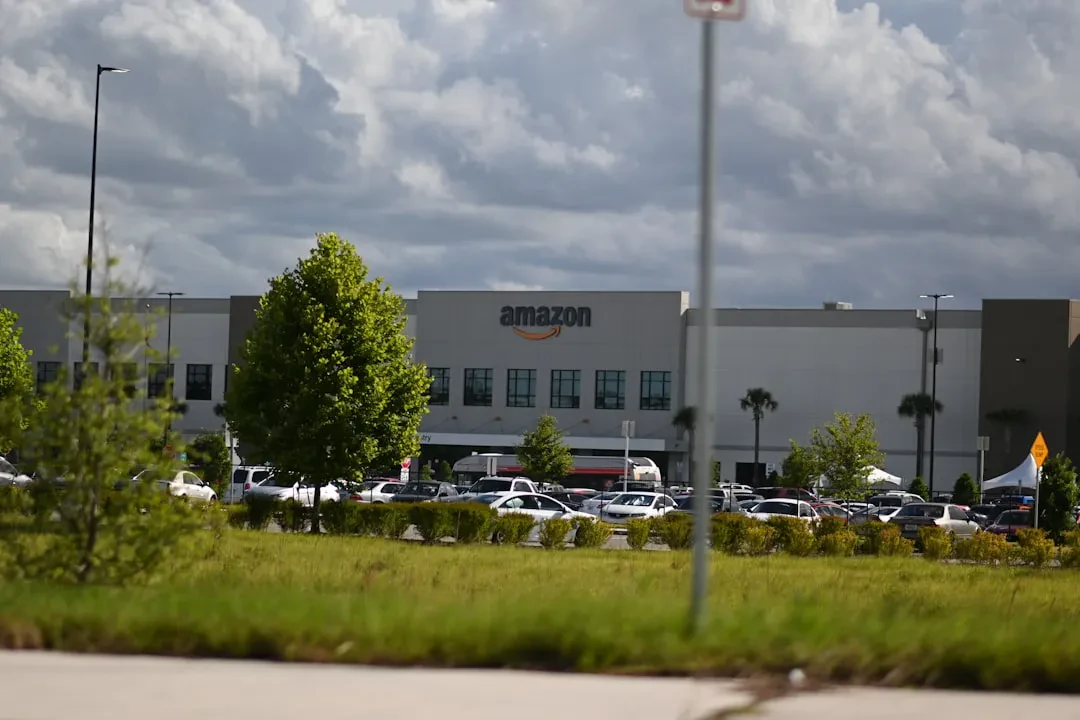
The global logistics landscape is experiencing a seismic shift. With an announcement that redefines the boundaries of the shipping market, Amazon has officially launched Amazon Supply Chain Services, a new division that makes its colossal infrastructure of warehouses, air fleets, and delivery vehicles available to any business. Until yesterday considered an e-commerce giant that used logistics as an internal competitive advantage, Amazon is now transforming into a true third-party logistics operator, going head-to-head with historic giants like UPS and FedEx.
A long awaited strategic move
The announcement, foreshadowed by rumors in recent months, comes at a time when the business-to-business shipping market is booming. With this step, Amazon is not merely offering an additional service but aims to become the backbone infrastructure for all modern commerce. Businesses of any size can entrust Amazon with their entire supply chain management, from storage in distribution centers to last-mile delivery. The model closely resembles what Amazon Web Services achieved in cloud computing: turning an internal asset into a scalable service for third parties.
Sponsored Protocol
Technical details and industry implications
Amazon's logistics network is unrivaled in reach. With over a thousand distribution centers worldwide, a dedicated air fleet, and a workforce of hundreds of thousands of drivers, the company can cover the last mile with a speed few competitors can match. The offering also includes software integration with clients' inventory systems, enabling real-time monitoring and predictive demand management. The threat to UPS and FedEx is tangible. Both companies have already seen their market share in the small package segment eroded by Amazon, but this announcement extends the competition to large corporate accounts and industrial volumes.
Market impact and reactions
Stock markets reacted immediately: Amazon shares rose, while UPS and FedEx saw significant declines. Analysts point out that Amazon Supply Chain Services could disrupt a traditionally low-margin sector with an unprecedented financial lever. Amazon's ability to operate at a loss for years to gain market share is well known, and many fear a price war that could cripple traditional operators. However, concerns remain: some experts warn that the complexity of multinational supply chains could create conflicts of interest, since Amazon remains a major buyer of shipping services for its own products.
Sponsored Protocol
Connections with the broader tech landscape
This move fits into a broader digital transformation trend. As covered in a previous analysis, GameStop challenges financial logic with a $56 billion bid for eBay, signaling that commerce giants are redefining their boundaries. Similarly, Amazon's logistics initiative aligns with innovations in artificial intelligence for route optimization and warehouse management, topics explored in articles like the summer 2026 gaming season, illustrating how diverse platforms are embracing openness to third parties.
Sponsored Protocol
Future outlook and regulation
The question now is whether antitrust authorities, already watchful of Amazon, will intervene. Offering a third-party logistics service could raise issues of unfair competition, given Amazon's access to its clients' sales data. For a deeper look into the legal implications, refer to the Wikipedia page on Amazon logistics. Amazon's decision marks a new frontier for the industry, where the line between seller and service provider is increasingly blurred. With 2026 already underway, we will witness a redefinition of global supply chains that will influence commerce for decades to come.