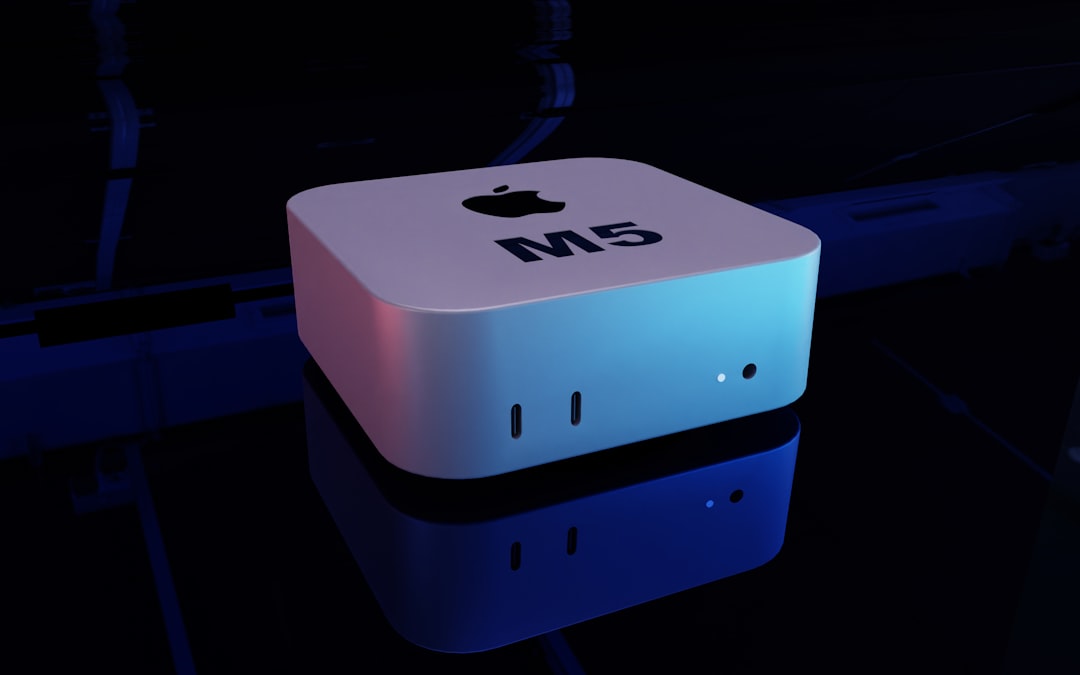
Apple has disclosed that the Mac mini and Mac Studio have become the preferred machines for running AI agents, according to Doug Brooks, senior product manager of Apple Silicon. In an interview published with The Deep View just prior to WWDC 2026 in June, Brooks discussed Apple's chip strategy, highlighting incredible demand for these desktops. For agentic workloads, users often want a system under their control, isolated from their primary machine and capable of running 24 hours a day, seven days a week. Brooks stated that the Mac mini is an amazing system for this purpose.
Many AI tools are Mac-first or Mac-only, which has cemented the Mac's standing among developers, including those at frontier AI labs where Macs are common. Brooks envisions agentic AI as a whole-chip problem rather than a GPU one. It is no longer just about the GPU crunching on an LLM; the entire chip contributes to different parts of the task, such as tool-calling and surrounding workflows. This plays to the strengths of Apple Silicon.
Sponsored Protocol
Neural Engine and neural accelerators foreshadowed the on-device AI era
Brooks ties Apple's strength in modern AI back to chip decisions made long before ChatGPT arrived. The Neural Engine, built for power-efficient matrix math, and lesser-known neural accelerators inside the CPU that handle time-sensitive tasks like speech are examples. Apple recently added neural accelerators to the GPU, extending AI performance from iPhone-class chips to the largest Mac silicon. This progress stems from Apple's design method, where a chip is built for a specific machine and hardware and software are co-developed.
Sponsored Protocol
Toward a hybrid future: on-device and cloud AI together
Brooks described a shift toward running AI locally rather than in the cloud, driven by privacy, security, and the rising cost of inference as agents consume more tokens. However, he envisions a hybrid future where agents decide what runs on-device and what gets sent to the cloud. He also highlighted transparent AI on iPhone and iPad, referring to features scattered throughout the operating system and third-party apps that work quietly without announcing themselves as AI. Examples include Draw Things, an image generator running across iPhone, iPad, and Mac, and SwingVision, which analyzes tennis and pickleball gameplay in real time using iPhone cameras.
Sponsored Protocol
The speed of AI development is crazy, Brooks said, adding that he cannot imagine where things will be in a year, three months, or even one month. The full interview is available on The Deep View. For broader context, technical challenges faced by Apple in the mobile world echo those of Android Auto crashes, though on different platforms. Additionally, real-time feature integration like WhatsApp's green dot shows how transparent AI can be applied to messaging.
For deeper background on Apple Silicon architecture, the Wikipedia page is a valuable resource.
Source: https://www.macrumors.com/2026/07/06/apple-silicon-exec-explains-mac-mini-ai-demand