The autonomous driving sector is experiencing a pivotal week. Two distinct yet complementary announcements show how driverless technology is moving from experimental phases to large-scale operations. On one hand, Aurora Innovation has signed a strategic deal with McLane Company to run driverless truck routes in Texas. On the other hand, Nuro has received approval to test its Uber robotaxis on California roads. Together, these events are redrawing the map of autonomous mobility in the United States.
Aurora and McLane: Autonomous Logistics Becomes Reality
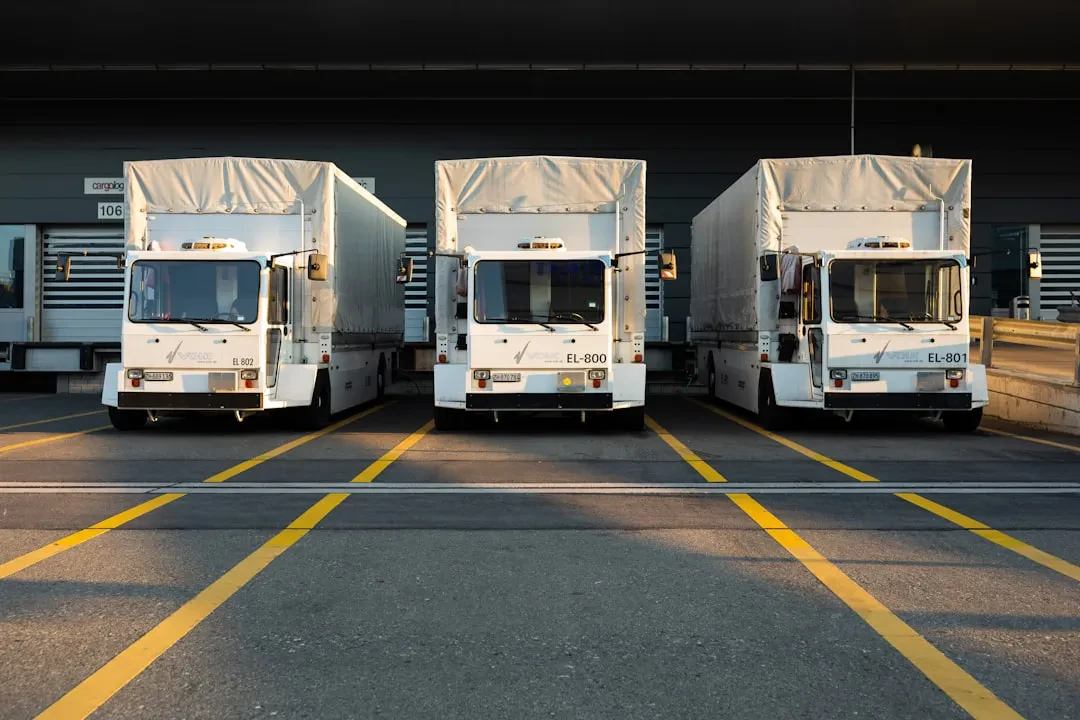
Aurora Innovation, a leader in autonomous driving systems for heavy vehicles, has announced a multi-million dollar agreement with McLane, one of the largest food distributors in the country. The plan involves launching fully driverless commercial routes between McLane distribution centers in Texas, with expansion across the Sun Belt by the end of 2026. The technological core is the Aurora Driver platform, a modular Level 4 system capable of operating without human intervention on predefined routes. Texas was chosen for its favorable regulations and climate, which reduce complications from snow and ice. This agreement marks a concrete step toward automating the supply chain, with profound implications for transportation costs and road safety.
Sponsored Protocol
Nuro Gets Green Light for Uber Robotaxis in California
On the West Coast, Nuro, a company specializing in low-speed autonomous vehicles for deliveries and passenger transport, has obtained authorization from California authorities to test its robotaxis in partnership with Uber. The partnership integrates the Nuro fleet into the ride-hailing app, allowing fully autonomous rides in selected areas of California. Testing will begin in the second half of 2026, following a safety validation period. Nuro vehicles feature a compact design with no steering wheel or pedals, built exclusively for autonomous driving. This approval sets a significant precedent for California, which has historically been more cautious than other states in authorizing driverless operations. Nuro and Uber aim to create a zero-emission shared mobility model, combining energy efficiency with artificial intelligence.
Sponsored Protocol
Technological and Market Implications
Both announcements highlight the maturity of lidar sensors, cameras, and perception algorithms. Aurora trucks use a combination of long-range lidar, radar, and high-resolution cameras to map the environment in real time, while Nuro robotaxis rely on computer vision systems optimized for low-speed urban environments. The convergence between heavy logistics and light urban mobility demonstrates how autonomous driving is colonizing different transport niches. Safety remains the decisive testing ground: both companies have published detailed safety reports and collaborate with regulators to establish shared standards. Not surprisingly, the regulatory landscape remains fragmented, with Texas adopting a more laissez-faire approach and California a controlled authorization model.
The Near Future of Autonomous Driving
While Aurora aims to cut logistics costs for food industry companies, Nuro is redefining the concept of driverless taxis. By 2027, it is plausible that driverless routes will connect not only industrial hubs but also residential neighborhoods. Scalability will depend on reducing hardware costs and gaining public trust. In this dynamic context, innovations in other fields such as digital writing exemplified by the reMarkable Paper Pure and the crypto-AI convergence covered in this article remind us that technological innovation proceeds through simultaneous leaps across very different domains. For those following the sector, the moves by Aurora and Nuro send a clear signal: the driverless future is no longer a hypothesis but a reality under construction.
Sponsored Protocol