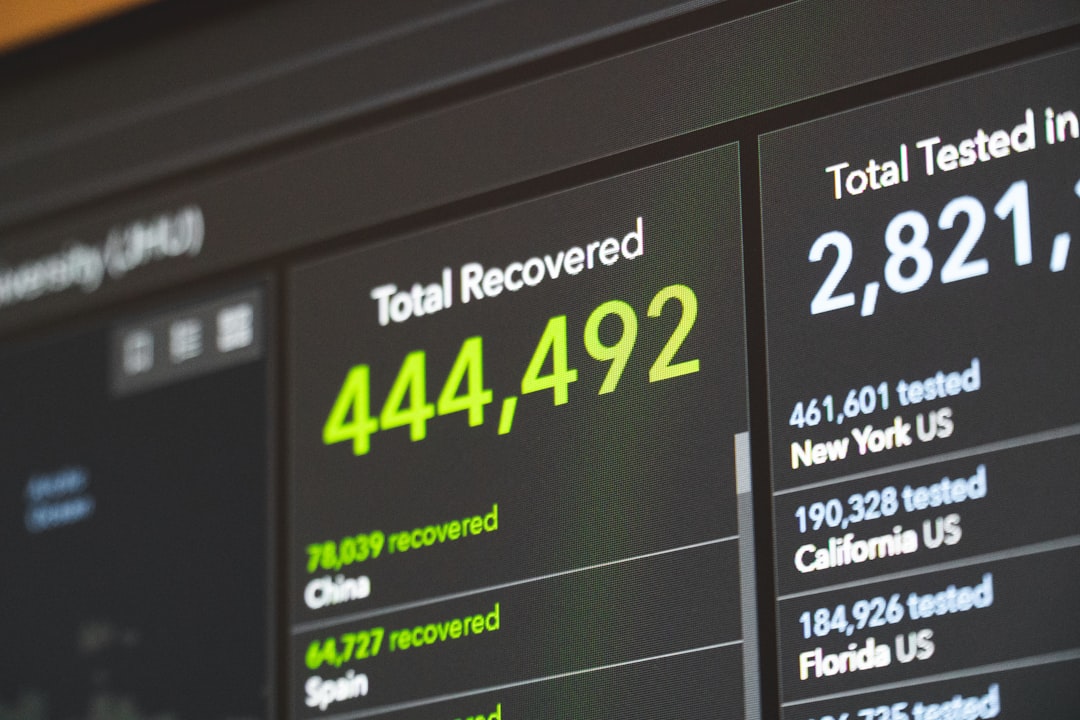
An endpoint agent cannot report its own absence. The 2026 Axonius Actionability Report, conducted with the Ponemon Institute and surveying 662 IT and security professionals, put a number on a gap SOC teams have worked around for years. Across the Axonius customer base, 12.7% of devices in a 298,000-device median inventory are missing their expected security agent. If a device has no agent, no management console shows it. If a CMDB record is stale, no reconciliation flags it. An employee who installed Claude Enterprise outside procurement created a SaaS workspace, identity surface, and API-token footprint that endpoint telemetry alone will not reliably inventory. The coverage percentage on the EDR dashboard is structurally incomplete because the reporting mechanism cannot see what it does not cover.
The Axonius/Ponemon 2026 report quantifies the agent coverage gap
This gap matters more now than it did six months ago. SOC and XDR vendors are pushing more autonomous investigation and remediation into production. Those agents will query the same dashboards, trust the same coverage percentages, and act on the same blind spots human analysts learned to work around. A human analyst second-guesses a 98% coverage number. An autonomous agent treats it as ground truth and moves at machine speed.
Sponsored Protocol
Three independent signals converged on the same gap
Gravitee's 2026 survey of over 900 executives found 88% reported confirmed or suspected AI-related incidents, and only 14.4% sent agents live with full security approval. The Axonius/Ponemon report found 52% of respondents would let autonomous agents act on recommendations, while 63% said the underlying data lacks important information. The CSA's Agentic Trust Framework requires verified data governance before agents act on any finding. Mike Riemer, Field CISO at Ivanti, noted that known vulnerabilities on Azure's honeypot networks are now attacked in under 90 seconds. Traditional security measures continue to work, but only for what they can see. An EDR agent deployed across 87.3% of the device inventory leaves the remaining 12.7% outside that agent's telemetry, policy enforcement, and detection logic.
Sponsored Protocol
Exclusive deployment data quantifies the scale
Joe Diamond, CEO of Axonius, told VentureBeat that the average CISO sees roughly 50% of what is actually on the network. Deployment data from more than 900 Axonius customers confirms those numbers. TransUnion went from 70% to 99% endpoint coverage after out-of-band verification. Western Union went from 85% to 99% by consolidating data from 38 tools and cutting manual workload by half. Lumen discovered 1.1 million assets, where the CMDB showed 17,000. That translates to roughly 37,000 unmanaged endpoints per organization sitting outside every policy, every patch cycle, and every detection rule. Diamond pointed to Mythos, Anthropic's frontier reasoning model, as a sign that machine-speed offensive capability will make any unknown asset far riskier than it is today.
Three approaches compete to close the gap
No single architecture solves the visibility problem today. Three approaches compete, each with named tradeoffs security teams should evaluate before procurement. A dedicated integration layer uses bidirectional API adapters to build an always-current inventory. Axonius runs over 1,400 adapters and now discovers shadow Claude Enterprise installations via its Anthropic adapter (GA June 15, 2026). Platform-native EDR and XDR intelligence builds richer asset context inside the agent footprint, but is bounded by what the agent can see. CMDB modernization requires continuous reconciliation against three or more independent telemetry sources. Only 13% of organizations reconcile daily, according to Axonius/Ponemon data. The remaining 87% operate on stale records that feed incorrect prioritization into any automated remediation pipeline.
Sponsored Protocol
Five readiness gates before autonomous remediation
Before letting autonomous SOC agents close tickets or quarantine assets, this checklist tells you whether your EDR and asset data is solid enough to trust. It is vendor-agnostic and works with any EDR and CMDB. The five risk areas are: asset inventory delta (threshold 10% or less), unmanaged AI services (no high-risk services outside approved procurement), CMDB record accuracy (at least 85% validated), endpoint agent coverage gap (at least 95% verified out-of-band), and asset ownership mapping (owner assigned within 24 hours). Passing all thresholds is necessary before enabling automated remediation.
Sponsored Protocol
Five questions to ask before allowing autonomous SOC action
What independently verifies endpoint-agent coverage outside the EDR console? How does the SOC reconcile conflicts between EDR, CMDB, cloud inventory, IdP, and discovery tools? Can AI agents act on assets with unknown or disputed ownership? Can the system distinguish not vulnerable from not visible? What data-quality gate blocks autonomous remediation when coverage or ownership falls below threshold? Answering these questions is critical to prevent autonomous agents from acting on incomplete data.
Board-ready risk framing
Kayne McGladrey, IEEE Senior Member, has confirmed the pattern across multiple published VentureBeat interviews. The structural gap in self-reported coverage is not new. What is new is that autonomous agents will act on it at machine speed without the institutional workarounds human analysts developed over years of experience. Diamond put the board-level stakes plainly: findings pile up because the data isn't trusted, ownership isn't clear, and entire asset classes aren't even in the picture. The CSA's Agentic Trust Framework requires any agent promoted to a higher autonomy level to pass five gates. The EU AI Act's Article 50 transparency obligations take effect August 2, 2026. Organizations deploying agentic SOC agents on incomplete asset data face immediate operational risk that outpaces any regulatory timeline. The board-ready sentence: our EDR coverage reports are structurally incomplete because an endpoint agent cannot report its own absence, and we are verifying coverage through out-of-band discovery before deploying autonomous agents that would act on those reports at machine speed.
Sponsored Protocol
For further reading, check the original article on VentureBeat and see how OpenAI tightens access in Europe and Paul Meade's move from Apple to OpenAI on Meteoraweb.