A radical innovation in metallurgy is about to change how we build high-end objects, from military drones to chef's knives. Foundation Alloy, an emerging startup based in the United States, has announced it raised $22 million in a new funding round to scale production of its metal alloys created without heat. Instead of melting metals at high temperatures, the company uses an aggressive mechanical deformation process, a kind of cold forging that aligns the crystalline structures of materials to achieve unprecedented strength and lightness.
The Technology That Challenges Traditional Metallurgy Limits
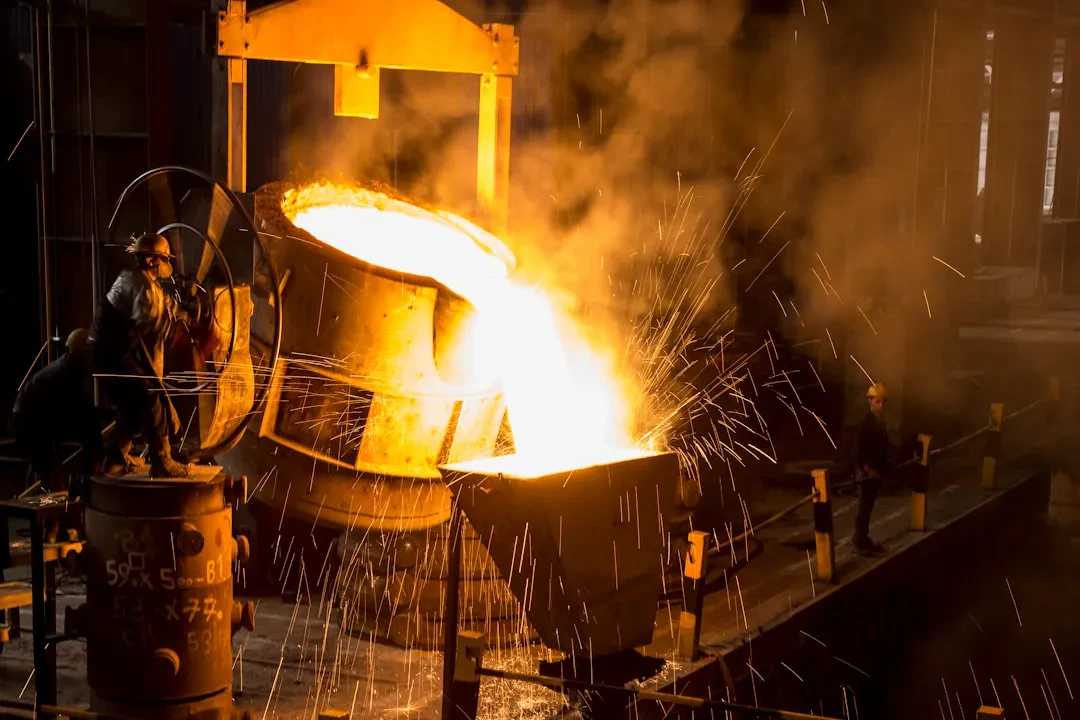
The traditional method for producing high-performance alloys involves heating the metal to its melting point, followed by casting and controlled cooling. This approach consumes enormous amounts of energy and limits the final properties of the material. Foundation Alloy has developed a patented process called controlled severe plastic deformation that presses, twists, and hammers the metal at room temperature or slightly above. The result is a material with an ultrafine microstructure, free from the porosity and inclusions typical of casting, offering hardness and fatigue resistance 30-40% higher than conventional alloys. The startup's CEO stated that this technology could reduce the weight of components in military drones by 25%, while improving operational durability under extreme conditions.
Sponsored Protocol
Concrete Applications Across Luxury and Defense
Foundation Alloy's early customers come from very different industries. Luxury watchmakers are testing these alloys for cases and movements, appreciating the surface brilliance and scratch resistance without additional treatments. In the professional kitchen sector, knives forged with this technique retain their edge much longer than traditional stainless steel, thanks to uniform hardness along the entire blade. But the true strategic market is defense: military drones and lightweight armored vehicles could benefit from alloys that are lighter and stronger, increasing flight range or ballistic protection without added weight. In a geopolitical landscape where advanced material production is considered a national priority, startups like Foundation Alloy attract attention from venture capital funds and government agencies.
Sponsored Protocol
Impact on Manufacturing and Remaining Challenges
The startup's approach could disrupt the entire metallurgy supply chain. If cold forging replaces casting in certain segments, energy consumption and CO2 emissions would drop, aligning with industry sustainability goals. However, scalability remains a challenge: replicating a process that requires extremely precise machinery and longer cycle times at industrial volumes is not trivial. The $22 million will be used precisely to build a pilot production line and to patent further alloy variants. The company expects to reach commercial production by 2027, collaborating with existing foundries to integrate the new technology into current processes.
Sponsored Protocol
Industry experts believe the potential of this technology is comparable to that of metal 3D printing, but with potentially lower per-part costs. If Foundation Alloy succeeds in industrializing, it could become a key supplier for aerospace, defense, and luxury goods. This innovation echoes, in ambition and concreteness, other recent startup successes funded to solve deep technical problems, such as Probably which raised $9 million for a reliable AI without hallucinations. While artificial intelligence improves software, here the solid matter is being upgraded, proving that innovation has no boundaries.
For a deeper understanding of the scientific principles behind severe plastic deformation, the Wikipedia page on severe plastic deformation provides comprehensive information. The materials frontier has just been pushed a little further.