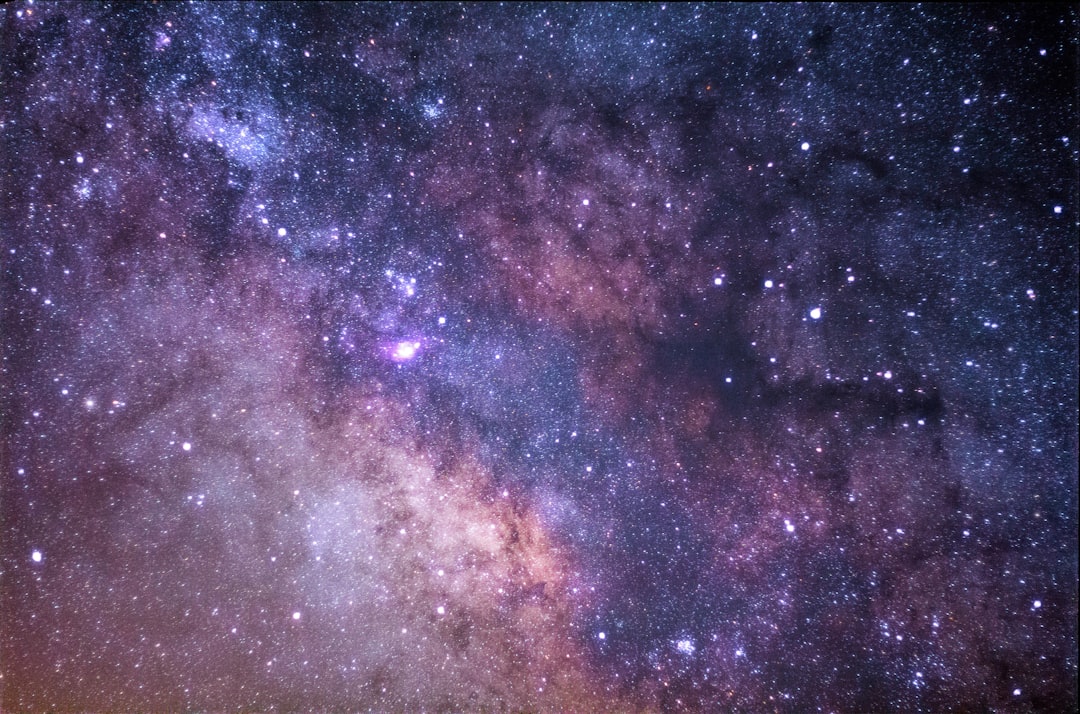
The European Space Agency's Euclid space telescope has captured a portion of the Milky Way's galactic bulge, providing a valuable preview for NASA's upcoming mission. The image, one of the brightest Euclid has taken, was obtained during a detour from its primary goal of mapping the dark universe. The galactic bulge, the dense central region of our galaxy, is a complex environment that astronomers have studied for decades.
Euclid's image reveals the galactic bulge
This photograph, part of a larger mosaic, shows a dense concentration of stars at the center of the Milky Way. Euclid, launched in 2023, is designed to observe billions of galaxies and understand the universe's expansion, but its high-resolution imaging capability also makes it useful for galactic studies. The released image highlights the extraordinary stellar density of the bulge, which appears almost as a single diffuse glow. According to astronomers, this region is difficult to study due to interstellar dust that obscures visible light, but Euclid, operating in the infrared, can penetrate these clouds.
Sponsored Protocol
Collaboration with NASA's Roman Telescope
The timing of this image is particularly significant. Later this summer, NASA will launch the Nancy Grace Roman Space Telescope, a five-year mission dedicated to mapping changes in stars and celestial objects in a small portion of the bulge. The preview provided by Euclid will give scientists broader context before Roman begins data collection. Jason Rhodes, a senior research scientist at NASA's Jet Propulsion Laboratory and a member of the US teams for both Euclid and Roman, stated that adding Euclid's snapshot to Roman's future survey will help map our galaxy better and identify hard-to-find cosmic treasures like isolated black holes and rogue planets more easily. This synergy between telescopes exemplifies how international cooperation can enhance scientific discovery.
Sponsored Protocol
Hunters of black holes and rogue planets
Combined observations could also shed light on so-called "bulge fossil fragments", ancient structures that offer clues about the Milky Way's formation. Similarly, the use of artificial intelligence in drug simulations is accelerating discoveries in other fields, as reported in our article on Stanford and AI. For more context on our galaxy, see the Wikipedia page on the Milky Way. With combined data from Euclid and Roman, astronomers hope to spot otherwise invisible objects, such as isolated black holes and planets wandering without a host star. This collaboration marks a new era in exploring our galaxy.