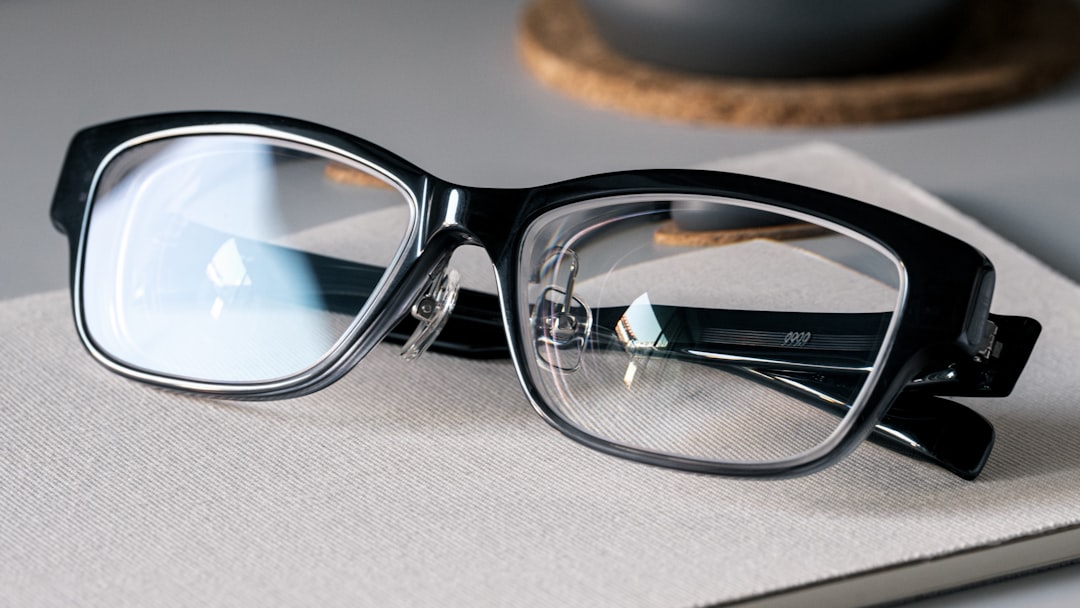
Even Realities has launched the G2 smart glasses, a device that stands out for its lack of camera and speakers, focusing entirely on productivity. Unlike competitors like Meta that integrate cameras for recording, Even Realities has eliminated any privacy concerns by removing cameras, concentrating on features for those who attend meetings, give presentations, or travel abroad. The G2 relies heavily on the smartphone for most functions, but after a rocky start, connectivity has improved significantly with app updates.
Neon heads-up display with 1200 nits readable in any lighting
The G2 features a monochrome heads-up display that projects text and information in green, resembling a neon sign. With a brightness of 1200 nits, up from 1000 nits on the previous G1, and a 60Hz refresh rate (compared to 20Hz on the G1), the screen is legible even in bright environments. The display area is 75% larger than the G1. The materials are high-quality: the frame is magnesium alloy and the temples are titanium alloy, resulting in a weight of just 35 grams, making them comfortable for all-day wear. In a landscape where Apple redesigns the Apple Pencil with replaceable batteries and Apple M7 Ultra supports up to 1.5TB unified RAM, Even Realities bets on lightness and durability.
Sponsored Protocol
Real-time translation and navigation without Google Maps
Key features include Translate, Conversate, and Navigate. Translate lets users set a target language and converse with others, providing accurate enough translations to follow conversations in Chinese, French, or Spanish. The downside is that the other person cannot see the translation unless they also use the app. Navigate offers turn-by-turn directions on the display, but it does not work with Google Maps or Apple Maps; routes must be set through the Even Realities app, which has address accuracy issues. It could be useful for cyclists or motorcyclists once precision improves.
Sponsored Protocol
Even AI assistant and voice commands: mixed results
At the core is Even AI, a voice assistant activated by a wake word. It can answer questions and add items to a to-do list, but often misinterprets commands and provides lengthy responses without the ability to interrupt. Despite four microphones, outdoor activation is unreliable due to ambient noise. There is no automatic brightness sensor; brightness must be adjusted manually via the app, when a physical control on the glasses would be preferable.
R1 companion ring: useful but expensive, better to get a dedicated tracker
Even also launched the R1 ring, a touch controller for the glasses that also includes health tracking (heart rate, calories, steps, sleep, SpO2). It works well, but at $249 it is hard to justify: the glasses' own touch controls suffice, and dedicated health rings like Oura or Ultrahuman are better for fitness tracking. The ring would be more compelling if it included a microphone for voice commands, but as it is, it is better to skip it.
Sponsored Protocol
Daily use case remains uncertain despite solid hardware
The G2 costs $599 and offers solid, lightweight, well-built hardware. Battery life is claimed to last up to two days, and the charging case can recharge the glasses up to seven times. But outside of jobs requiring constant translation or teleprompting, it is hard to find a compelling everyday use case. Even Realities' bet is that productivity, without a camera, can win over professional users. For now, the glasses remain a curious gadget for tech enthusiasts. Learn more about smart glasses on Wikipedia.