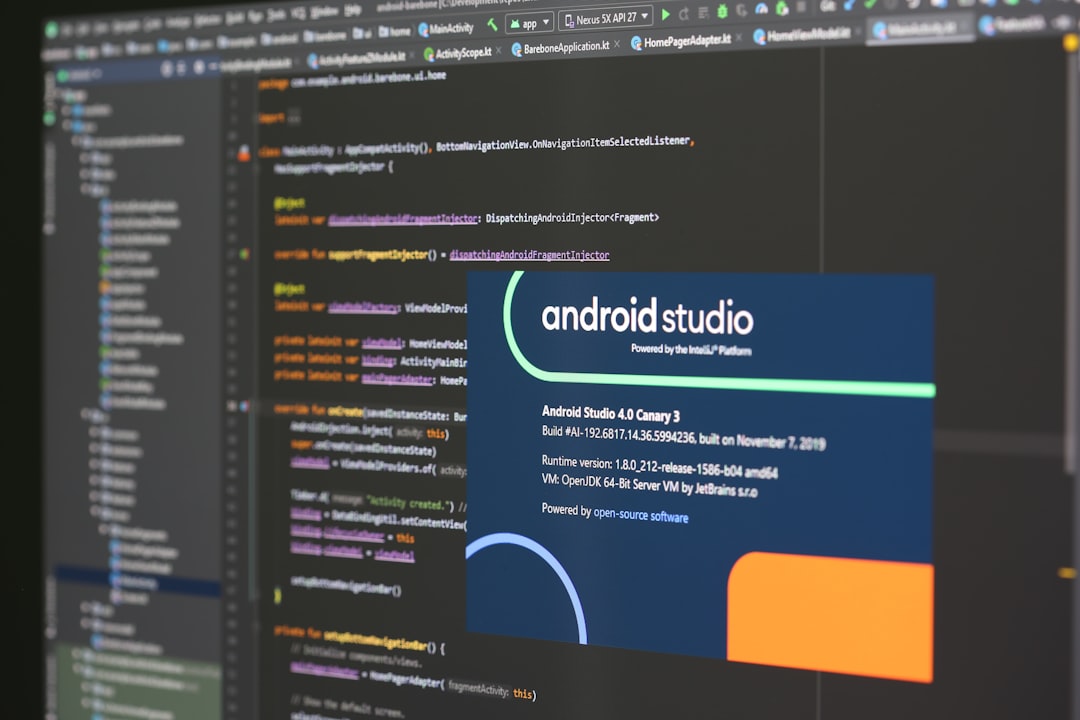
Google has announced a major update to Android Bench, the benchmark designed to evaluate large language models (LLMs) for Android app development. The new version adds eight models, including Claude Fable 5, Claude Sonnet 5, and several Qwen variants, along with new metrics such as cost and efficiency. However, early results show that Google's own Gemini model continues to lag behind competitors like Claude and GLM.
Android Bench expands with new models and evaluation metrics
Launched in March 2026, Android Bench relies on a suite of 100 Android-specific development tasks, from UI code generation to API handling. Today's update introduces open-weight models like GLM 5.2 and Kimi K2.7 Code, broadening the benchmark's coverage. New metrics include cost per task and computational efficiency, giving developers granular data to choose the best model for their needs. According to Google, the goal is to make Android Bench increasingly representative of real-world challenges faced by programmers.
Sponsored Protocol
Gemini struggles while other models advance
Despite Google's massive investments in Gemini, Android Bench results show it has not yet caught up with industry leaders. Anthropic's Claude Fable 5 achieved the highest accuracy scores, followed by Alibaba's Qwen 3.7 Max. Gemini, though improved over its previous version, ranks mid-table for many tasks. The gap is especially evident in complex code generation, where competing models demonstrate a deeper understanding of Android context. Google stated it will continue optimizing Gemini, but the Android Bench update highlights the need for faster progress.
Sponsored Protocol
How to participate in evaluation and contribute to improvement
Google invites developers to run their own tests on Android Bench and submit feedback to refine the benchmark. The framework has been updated for easier setup, with an improved command-line interface. Participants can compare their custom models against those on the official leaderboard. This participatory approach mirrors other Google initiatives, such as the recent Google Search usage record during the 2026 World Cup, demonstrating a focus on real data. For AI practitioners, the benchmark offers an opportunity to test solutions in a standardized environment.
Implications for the future of AI-assisted Android development
The evolution of Android Bench comes at a time when LLM-based coding is booming. Companies like OpenAI, with the launch of GPT-Live for voice conversations on ChatGPT, are pushing the boundaries of development assistance. However, the specificity of the Android context requires models trained on targeted datasets. Google hopes Android Bench will become a reference point like other open-source natural language benchmarks. With the addition of models like MiniMax M3 and Claude Opus 4.8, competition is intensifying, and Gemini's lag may prompt Google to revise its strategy. Experts believe the current gap is surmountable but requires targeted investments in Android code generation.
Sponsored Protocol