The tech industry is witnessing a recurring phenomenon: companies once emblematic of consumer electronics are now looking to the military sector as a lifeline. The latest to join this race is GoPro, the well-known action camera manufacturer. According to sources close to the company, GoPro is actively exploring a potential sale, with a strategic focus shifting toward defense and surveillance applications. This move is not isolated; it represents a wave of transformation reshaping entire industrial sectors, where government demand for robust, miniaturized technologies now surpasses that of the consumer market.
From Action Cam to Connected Soldier
For decades, GoPro dominated the rugged camera market, becoming synonymous with extreme sports footage. Its compact form factor, resistance to shock and water, and high-definition video quality made its devices perfect for athletes and adventurers. However, market saturation and smartphone competition have eroded margins. Now, these same technical features are being viewed differently by the Pentagon. Modern armed forces require lightweight, low-power sensors capable of operating in hostile environments for reconnaissance, training, and intelligence missions. GoPro possesses engineering expertise in this field that few others can claim. The transition from action cam maker to defense solutions provider is a logical leap, but one laden with ethical and commercial implications.
Sponsored Protocol
A Boiling Market: Defense as the New Tech Eldorado
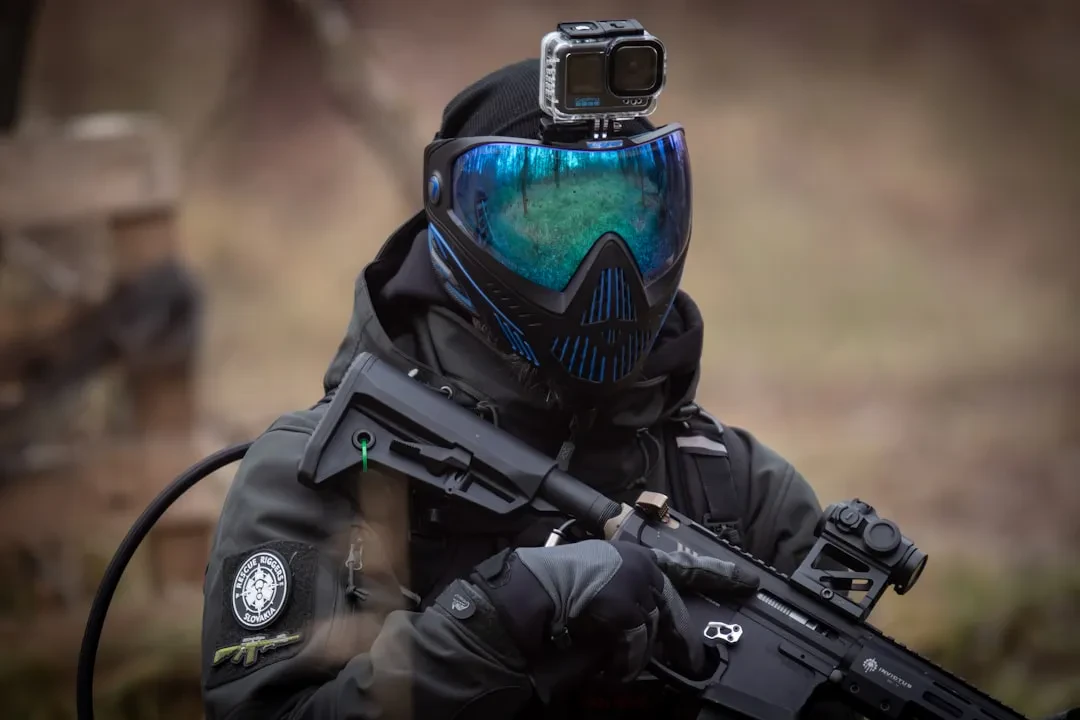
GoPro is not the first to take this step. Companies like Anduril Industries have already shown how Silicon Valley can revolutionize the military sector with AI software and drones. But GoPro's uniqueness lies in its hardware heritage. The company could offer advanced body cameras, sensors for tactical drones, or recording systems for armored vehicles. The potential sale would attract defense giants like L3Harris or Lockheed Martin, as well as private equity funds specializing in dual-use technology. This trend raises questions about the future of privacy and the normalization of mass surveillance. If a device designed to capture a mountain bike descent ends up on soldiers' helmets, the line between consumption and control becomes dangerously thin. As discussed in the in-depth analysis available on Meteoraweb, security and intelligence are rapidly absorbing technologies born for the general public.
Sponsored Protocol
Impact on Supply Chain and Innovation
From a technical standpoint, a defense-oriented GoPro would accelerate the development of low-noise sensors, extreme optical stabilization, and end-to-end video encryption. Consumer cameras would indirectly benefit from technological spillover. However, the risk is that the company loses its civilian soul entirely, abandoning support for third-party developers and the open-source software that fueled its community. Moreover, dependence on government contracts makes companies vulnerable to political cycles and budget cuts. A precedent exists with firms like L3Harris, which built entire businesses on military supplies but suffer from a lack of responsiveness to consumer market changes.
Ethical and Social Consequences
The news comes at a time when the debate over the use of artificial intelligence in armed conflicts is more heated than ever. GoPro, with its ability to capture high-resolution video, could provide valuable data for automatic targeting systems and AI-based behavioral analysis. The convergence of wearable cameras, cloud computing, and facial recognition algorithms creates a scenario of ubiquitous surveillance that many critics fear. Unlike armed drones, a camera on a soldier may seem harmless, but it exponentially multiplies the capacity for information gathering on the battlefield and potentially in civilian contexts. To further explore the parallel with the energy sector and the impact of data centers, see the related article on Meteoraweb.
Sponsored Protocol
GoPro's Future Between Sale and Reorganization
Rumors of a potential sale have already lifted the stock on Wall Street, with speculation on a price that could exceed $2 billion. Analysts suggest the deal could close by the end of the year, with a valuation that rewards growth potential in the defense sector. The company has declined to comment, but internal sources reveal that leadership is already restructuring engineering teams to prioritize ruggedized product development compliant with military standards (MIL-STD). This shift could lead to a dedicated division, separate from the consumer brand, or a full acquisition by a defense conglomerate. Whatever the outcome, the message is clear: consumer technology is no longer a sustainable business for many historical players, and defense represents the only way to preserve industrial skills otherwise destined for extinction.
Sponsored Protocol
As the world watches, GoPro embodies the dilemma of an entire era. The same company that allowed millions to share their most extreme adventures could soon become a tool of military power. To understand the broader dynamics of this transformation, read the analysis on how artificial intelligence is changing traditional sectors. The boundary between innovation and surveillance is becoming ever thinner, and GoPro seems ready to jump to the other side.