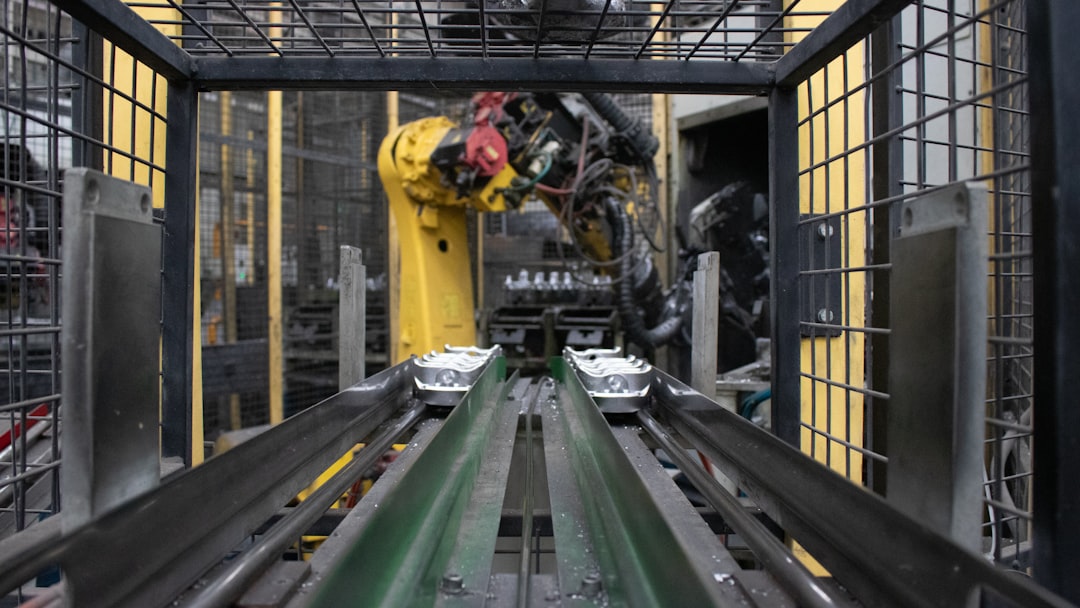
Jeff Bezos, the visionary founder of Amazon, is reportedly planning a bold and far-reaching initiative aimed at transforming the traditional manufacturing sector through the massive adoption of artificial intelligence. According to rumors, the entrepreneur is seeking capital of around 100 billion dollars to finance this ambitious venture. The goal is to acquire and restructure existing manufacturing companies, infusing them with new capabilities through the potential of AI.
A Strategic Investment in the Industrial Future
This move would mark a significant turning point, shifting Bezos's focus, already known for his investments in sectors like aerospace with Blue Origin and e-commerce with Amazon, towards an industrial area long awaiting deep modernization. The underlying idea seems to be leveraging artificial intelligence to optimize production processes, improve efficiency, reduce waste, and potentially create new business models within mature yet still vital sectors for the global economy. AI, in fact, promises to revolutionize every aspect of production, from design to logistics, including quality control and predictive maintenance. This aligns with emerging trends that see AI as an engine of innovation in various fields, as demonstrated by developments in the OpenAI space or applications for video creation with Sora integrated into ChatGPT.
Sponsored Protocol
The Impact of AI on Manufacturing
The integration of artificial intelligence into the manufacturing sector is not a new concept, but the scale of the investment hypothesized by Bezos suggests an unprecedented large-scale approach. Traditional manufacturing companies often rely on outdated infrastructure and established processes that could benefit enormously from intelligent automation, predictive analysis of production data, and supply chain optimization. AI can help identify inefficiencies, predict machine failures before they happen, customize production on a large scale, and improve workplace safety. This could lead to a renaissance of industrial sectors that in recent decades have faced strong international competition or progressive obsolescence. Consider also the impact of AI in the automotive sector, with companies like NVIDIA collaborating to revolutionize European robotaxis, as reported by NVIDIA and Bolt.
Sponsored Protocol
Challenges and Opportunities
Naturally, an endeavor of this scale is not without challenges. Acquiring and transforming manufacturing companies requires a deep understanding of industrial processes, effective change management, and significant investments not only in technology but also in staff training. The transition to an AI-based model could encounter resistance and require considerable effort to adapt the existing workforce to new skills. However, the opportunities are immense. A more efficient and technologically advanced manufacturing industry could strengthen local economies, create new skilled jobs, and improve the global competitiveness of products. The impact could also extend to sustainability, with AI helping to optimize resource use and reduce the environmental impact of production. This also ties into the importance of digital sustainability, as demonstrated by Google's energy strategy for its data centers Google.
Sponsored Protocol
An AI-Driven Future
Bezos's initiative, if confirmed and realized, could represent a catalyst for a wave of innovation in the manufacturing sector, similar to what artificial intelligence is already bringing to other areas. From content creation with ByteDance's Seedance 2.0 to the revolution in gaming with Nvidia DLSS 5, AI is redefining possibilities. The idea of a future driven by AI agents, as hypothesized by Carl Pei of Nothing, seems increasingly closer. Bezos's investment could accelerate this transformation, demonstrating how artificial intelligence can be applied to revitalize established industrial sectors, creating a bridge between the industrial past and the technological future. Consider also the history of computing, where networks like ARPANET laid the foundations for today's Internet, as explored in The Epic of ARPANET.
Our publication thinks that...
Jeff Bezos's ambition to invest 100 billion dollars to transform the manufacturing sector with AI is a move that deserves attention. While on one hand it raises questions about the potential concentration of economic power and the impact on employment, on the other it opens exciting scenarios for innovation and industrial competitiveness. It is crucial that such a project be accompanied by an ethical and responsible vision, considering not only economic efficiency but also worker well-being and environmental sustainability. The ability to successfully integrate AI into traditional sectors could truly mark a new era for industry, making it more resilient and adaptable to future challenges. This type of transformation is an example of how emerging technologies can be applied to solve complex problems and create value, a recurring theme in discussions on innovation, as in the case of launching new startups with support from significant capital backed by Sequoia.
Sponsored Protocol
Source: Original