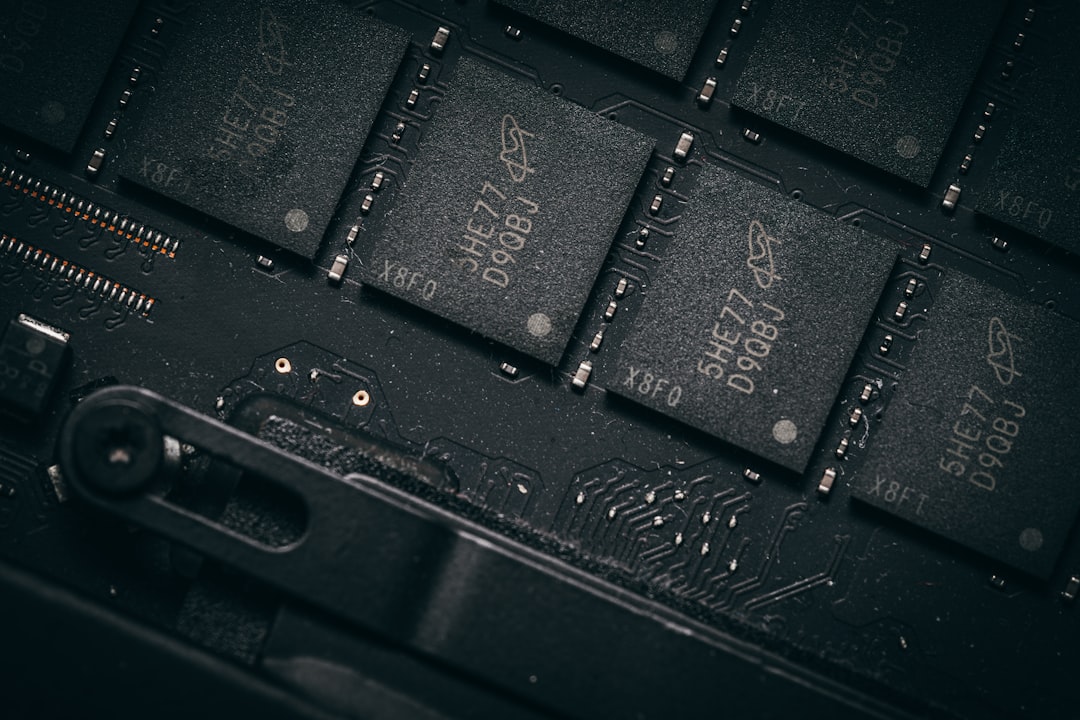
Kioxia and Sandisk have pushed the boundaries of storage technology by officially introducing their new BiCS10 3D QLC NAND device at the Future of Memory and Storage conference. This chip achieves the highest areal density ever recorded, exceeding 37 Gbit/mm², making it the perfect component for data center-grade solid-state drives where space and efficiency are paramount.
A density record that surpasses all previous ones
The new BiCS10 QLC succeeds the previous BiCS 3D TLC device, which offered an areal density of about 29 Gbit/mm². By leaping to over 37 Gbit/mm², Kioxia and Sandisk not only enhance capacity but also set a new benchmark for the entire industry. The chip features 332 active layers, surpassing competing solutions from Samsung, Micron, and SK hynix, and supports an interface of up to 4,800 MT/s, ensuring extremely fast data transfers.
Sponsored Protocol
Advanced architecture for enterprise applications
This new NAND is not intended for the consumer market but for enterprise-level SSDs, particularly those designed for artificial intelligence and data centers, where the combination of high capacity and superior performance is critical. Thanks to the BiCS10 process technology, the two manufacturers achieve not only record density but also reduced production costs once yields reach optimal levels. This could result in ultra-high-capacity SSDs at more competitive prices than rivals or higher margins at similar price points.
Innovative techniques to reduce power consumption
Another important aspect is the focus on energy efficiency. Kioxia and Sandisk have implemented the power-isolated low-tapped termination (PI-LTT) technique, designed to lower the power consumption of high-speed output drivers without compromising signal integrity. This feature is essential in data center environments, where energy savings translate into lower operational costs and reduced environmental impact.
Sponsored Protocol
Future prospects and market impact
Alper Ilkbahar, chief technology officer at Sandisk, emphasized how this product defines a new era for high-capacity storage, offering simultaneous gains in density, bandwidth, and efficiency. The adoption of these chips in data center SSDs could be imminent, while consumer market applications may take longer. Meanwhile, advancements in 3D NAND are closely tied to developments like Starlink Mobile, which require increasingly powerful storage infrastructures. Moreover, the evolution of artificial intelligence, as discussed in this article on AI agents, heavily depends on the ability to store and process massive amounts of data. For more on the latest SSD news, you can check the SSD section of Tom's Hardware.
Sponsored Protocol
With this announcement, Kioxia and Sandisk demonstrate their leadership in the race for memory density, a key factor in supporting the next generation of digital applications and services.