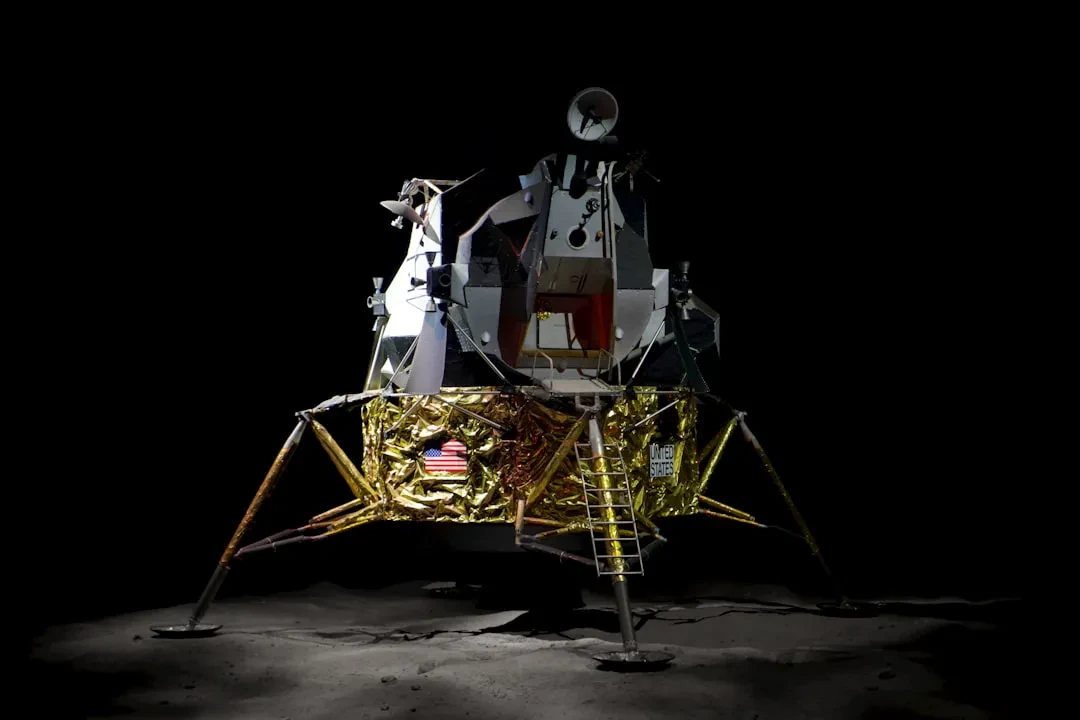
Human space exploration towards the Moon enters a concrete phase. The American space agency has announced plans to begin training sessions using a prototype of the crewed lunar lander developed by Blue Origin. This step marks a significant progress in the Artemis program, with the stated goal of returning astronauts to the lunar surface by 2028. The collaboration between public entities and private industry intensifies, paving the way for technologies and methodologies never before tested in simulated environments.
The Role of Blue Origin and the Lander Prototype
Blue Origin, the company founded by Jeff Bezos, is developing a lander called Blue Moon Mark 2, an upgraded version for transporting astronauts. The prototype used for training is not yet the final version, but it represents a functional model to simulate landing, takeoff, and surface operations. NASA selected Blue Origin as the second provider for the human landing system, alongside SpaceX and its Starship. This choice ensures redundancy and competition in the lunar program.
Sponsored Protocol
The training involves astronauts familiarizing themselves with onboard systems, control panels, and emergency procedures. Conditions of partial microgravity and the dusty lunar environment are simulated. The initial phase takes place in specialized centers on Earth, using computer simulations and full-scale physical models. This is a mandatory step to reduce risks during real missions, which must face communication delays and uneven terrain.
Technical Implications for Lunar Landing
The Blue Moon lander uses hybrid propulsion, with BE-7 engines powered by liquid hydrogen and oxygen. This choice offers high specific efficiency and the ability to reignite for precise maneuvers. The prototype allows validation of the integration between navigation systems, altitude sensors, and autonomous landing software. NASA aims to use this data to update technical requirements and refine mission profiles.
Sponsored Protocol
A crucial aspect concerns resource management. The lander must transport not only astronauts but also scientific samples and equipment for experiments. Cargo capacity and energy autonomy are determining factors. Blue Origin has stated that its lander can carry up to 30 metric tons to the lunar surface, exceeding the limits of previous models. However, success depends on synchronization with the upper stage of the New Glenn rocket, still in qualification phase.
The training with the prototype also includes communication tests with the Lunar Gateway, the future orbital station around the Moon. Astronauts must learn to operate in an environment where signals experience a delay of about 1.3 seconds. This latency affects landing procedures and extravehicular activities. Current simulations try to replicate these conditions to prepare crews for every scenario.
Sponsored Protocol
Strategic Context and Next Milestones
This announcement comes at a time when the race to the Moon also involves other international players. China plans crewed missions by 2030, while India and Japan accelerate their own programs. Choosing Blue Origin as a partner strengthens the American industrial base and stimulates innovation. NASA has already allocated funds for the lander development, with contracts worth over 3 billion dollars.
The path to 2028 includes intermediate steps: an uncrewed test of the lander on the Moon is scheduled for 2027. Only after demonstrating the safety of the system will astronauts be able to board. Current training aims to reduce familiarization time and identify any design issues before flight.
Sponsored Protocol
For those following the evolution of the space program, it is interesting to note how information transparency has improved. The Pentagon recently launched a website to make UAP data public, a sign of openness that also involves scientific agencies. Furthermore, the resurgence of analog technology in other fields, such as photography with Instax Wide 400 and Boox Tappy, shows that innovation does not always follow a linear path. The collaboration between Blue Origin and NASA represents a balance between engineering tradition and commercial drive, capable of redefining the frontiers of human exploration.
To delve into the history of Blue Origin and its lunar ambitions, check the page on Wikipedia.