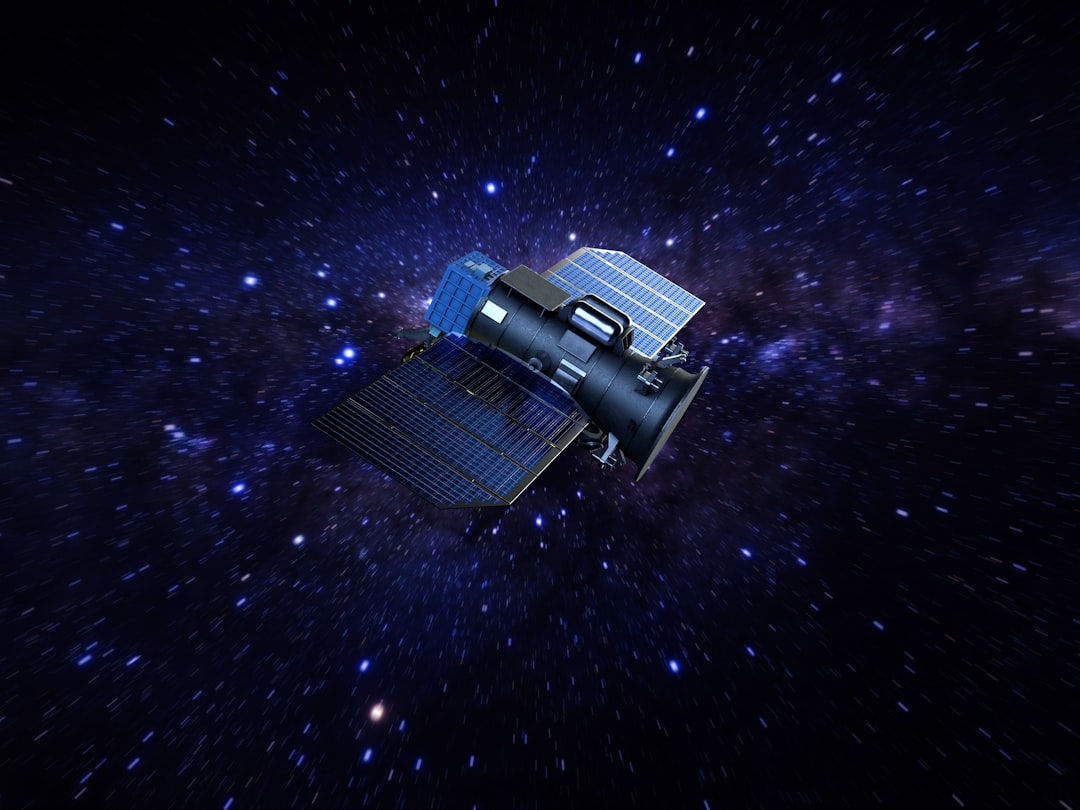
A robotic spacecraft named LINK has launched to dock with and boost the Neil Gehrels Swift Observatory, which is decaying faster than expected due to solar activity. The NASA Swift Boost mission lifted off from the Marshall Islands on July 3 at 4:36 AM Eastern time after a couple of delays. Ground teams have already established communication with LINK, the robotic vehicle designed by Arizona-based Katalyst Space, tasked with capturing the telescope and tugging it to a higher orbit.
An unconventional launch with Pegasus XL rocket
LINK's launch was far from ordinary. The spacecraft was attached to a Northrop Grumman Pegasus XL rocket, which in turn was mounted under the belly of an aircraft called Stargazer. The plane took off from Kwajalein Atoll in the Marshall Islands and released the rocket at an altitude of about 40,000 feet. After a few seconds of freefall, the Pegasus XL engines ignited and delivered LINK to space. NASA confirmed that the first objective, making contact with LINK, was successful. Over the next several weeks, Katalyst will perform health checks on LINK's propulsion, sensor, and navigation systems.
Sponsored Protocol
How LINK will rescue the Swift observatory
After the health checks, LINK will head toward the Swift observatory to survey it. Using its three robotic arms, LINK will capture Swift, dock with it, and then tug the telescope upward until they reach an altitude of approximately 370 miles, extending its life by about a decade. The orbital boost maneuver is expected to take 10 to 12 weeks. Without LINK's help, the observatory would fall from orbit by the end of this year due to accelerated orbital decay caused by recent solar activity. A similar concept of robotic assistance is seen in Tesla's robotaxi service in a small area of Miami, highlighting how docking and towing technology is becoming vital across industries.
Sponsored Protocol
Over two decades of gamma-ray burst discoveries
The Neil Gehrels Swift Observatory has been studying gamma-ray bursts for more than 20 years. Brad Cenko, Swift's principal investigator, describes these bursts as short-lived flashes of high-energy light that release more energy in a few seconds than the Sun will in its entire lifetime. Data from Swift confirmed that the heaviest elements in the periodic table, including the gold and platinum in our jewelry, are forged in these systems. Scientists also use Swift as a first responder to gather critical information when sudden cosmic events occur. The Swift Boost mission marks a significant step for on-orbit servicing of valuable scientific satellites.
Source: https://www.engadget.com/2207959/nasa-boost-mission-rescue-falling-swift-observatory-launched