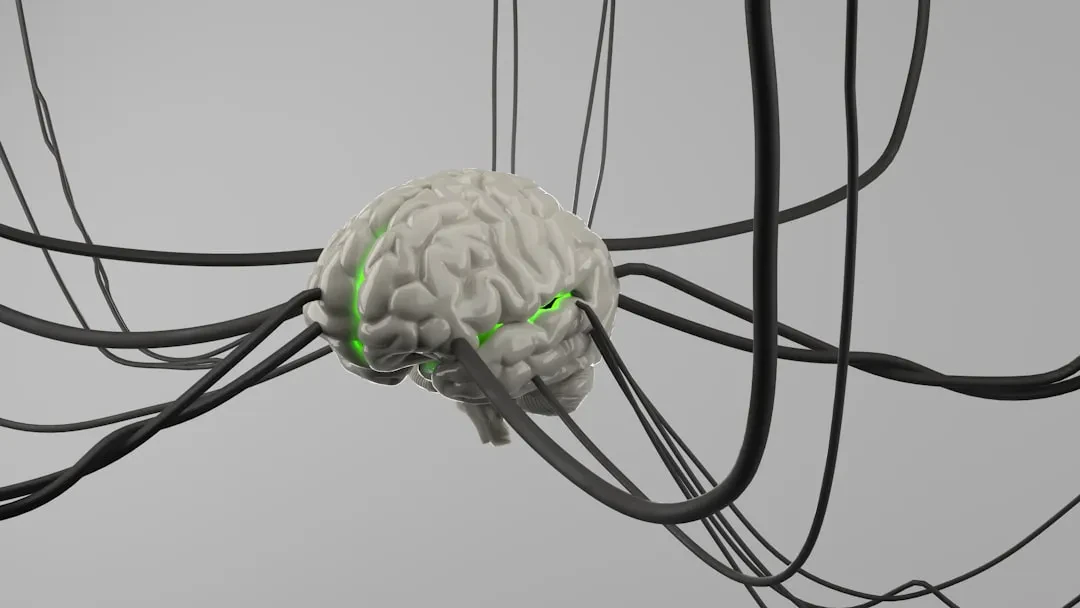
In the rapidly evolving landscape of robotics, one name is emerging strongly on April 17, 2026 Physical Intelligence. This innovative startup today announced the launch of its new robotic brain, named π0.7, which promises to redefine the very concept of artificial intelligence applied to robots. The ambitious goal is clear to create a general-purpose robotic brain capable of learning and adapting to tasks never seen before, a long-sought achievement by the scientific and technological community.
The Challenge of Autonomous Learning
Until now, robots have been primarily trained to perform specific tasks. The introduction of π0.7 by Physical Intelligence marks a significant leap forward. This new model does not require pre-defined programming for every single operation. Instead, it has been designed to analyze and understand novel tasks based on its intrinsic learning architecture. This means a robot equipped with π0.7 could, for example, learn to fold a garment by observing it just once, without a detailed sequence of instructions for that specific action. This is a qualitative leap that brings machines closer to a form of autonomy and flexibility previously relegated to science fiction.
Sponsored Protocol
Implications for the Future of Robotics
The potential applications of this technology are vast. Consider industrial manufacturing where robots could quickly adapt to new assembly lines, or logistics, where they could handle packages of different shapes and sizes with unprecedented agility. In the home sector, robots capable of autonomously learning domestic tasks could significantly lighten the daily workload. The analogy with the development of advanced artificial intelligences like those discussed in relation to OpenAI Codex and Google's Gemini, which aim for greater versatility, is evident. Physical Intelligence with π0.7 is exploring a similar frontier but in the physical domain.
A Step Towards Artificial General Intelligence
The success of π0.7 is seen as an early but meaningful step towards the realization of artificial general robotic intelligence (AGI). Unlike current models, which excel at specific tasks, a general-purpose robotic brain would open up unprecedented scenarios. The learning and adaptation capability of π0.7, although still in its early stages according to the company, suggests a promising trajectory. The implications for automation and human-machine interaction are profound. While startups like OpenAI work on increasingly sophisticated AI agents, Physical Intelligence focuses on integrating such intelligence into the physical world, a field equally crucial for technological progress. Inspiration might also stem from recent developments in human-computer interaction on desktop platforms, as demonstrated by the integration of AI assistants into operating systems and browsers, but now applied to manipulation and interaction with the surrounding environment.
Sponsored Protocol
Comparison with Other AI Frontiers
While Apple continues to shape the future of spatial computing with its vision on artificial intelligence, as discussed during its recent conference, Physical Intelligence focuses on a different but complementary aspect of AI physical intelligence. The ability of a robot to learn and act autonomously in the real world could have an impact comparable to the evolution of language or image generation models. The challenge now for Physical Intelligence will be to scale this technology, demonstrate its reliability in complex contexts, and ensure its adoption by the industry. The road to truly intelligent and autonomous robots is still long, but π0.7 represents a fundamental milestone on this journey.
Sponsored Protocol