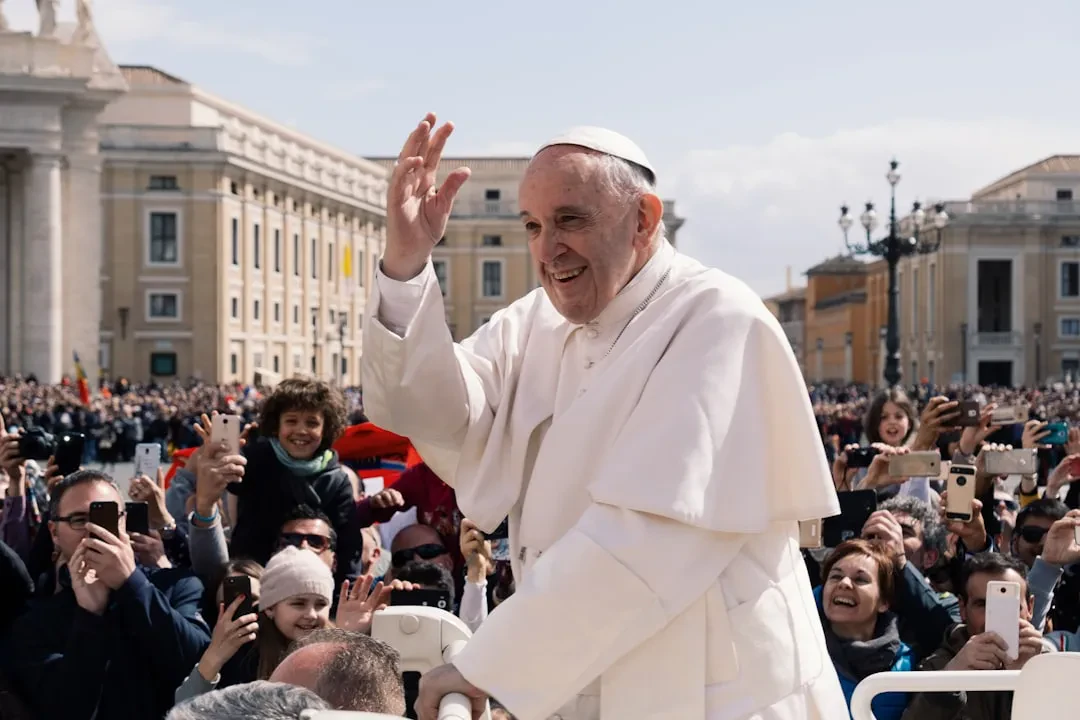
In a world where artificial intelligence is rewriting the rules of economy, defense, and daily life, an authoritative voice has drawn clear ethical boundaries. Pope Leo, with a surprising encyclical exceeding 42,300 words, has issued a warning that resonates far beyond Vatican walls. The document, titled 'Veritas et Machina', is not a simple theological treatise but a genuine roadmap for AI development, with a central message that leaves no room for ambiguity: technology must serve humanity and not become a tool to concentrate power in the hands of a few.
The Four Pillars of the Pontifical Appeal
The text revolves around four major concerns that the pontiff defines as 'non-negotiable'. The first concerns education. The encyclical emphasizes how generative AI systems can amplify educational inequalities if not guided by principles of fairness. The second pillar is child safety, a hot topic in an era where recommendation algorithms and chatbots influence the psychological development of the youngest. Pope Leo calls for strict rules to prevent AI from becoming a new vector of exploitation. The third critical point is the concentration of economic and political power: the pontiff warns that a few tech corporations risk becoming 'digital superstates', controlling data and critical infrastructure. Finally, the most controversial chapter deals with autonomous weapons, defined as 'an existential threat' requiring a binding international treaty. These themes echo the challenges raised by the recent evolution of the sector, as analyzed in the article on AI security, which highlights how even Google is part of this continuous transition.
Sponsored Protocol
The Tech Landscape of 2026
The encyclical arrives at a precise historical moment. With the advent of platforms like iOS 27 and watchOS 27, AI has become pervasive in the lives of billions. The integration of satellite connectivity and increasingly powerful voice assistants makes an ethical reflection urgent, going beyond mere efficiency. The papal document does not demonize technology but highlights systemic risks, inviting governments and companies to collaborate in creating a 'digital humanism'. Pope Leo explicitly mentions the concept of 'algorithmic dignity', according to which every automated decision must be explainable and contestable by a human being. This principle directly connects to the challenges of satellite connectivity and personal data management, issues already addressed in the analysis of watchOS 27.
Sponsored Protocol
Implications for the Tech Industry
Reactions from the tech world were immediate. While some large companies welcomed the invitation to dialogue, others fear that the encyclical might accelerate overly rigid regulations. The crucial point is the demand for algorithm transparency, especially in education and military applications. The Pope's appeal fits into a global debate involving not only Silicon Valley giants but also European and American institutions. To understand the scope of this ethical call to arms, it is useful to compare it with recent hardware innovations, such as those described in the article on the MacBook Ultra, where computing power reaches levels that demand responsible governance. The encyclical is not an attack on technology but an invitation to rethink the social contract in the age of AI.
Sponsored Protocol
Ultimately, Pope Leo's message represents a milestone in the dialogue between faith and technology. The real challenge is to transform these principles into concrete laws without stifling innovation. As the pontiff writes, 'Artificial intelligence is neither good nor evil, but its use reveals the heart of those who govern it.' A warning that echoes in an era where the encyclical becomes a reference point for anyone working with data and algorithms. To delve deeper into the history and meaning of this literary genre, one can consult the encyclical Wikipedia entry.