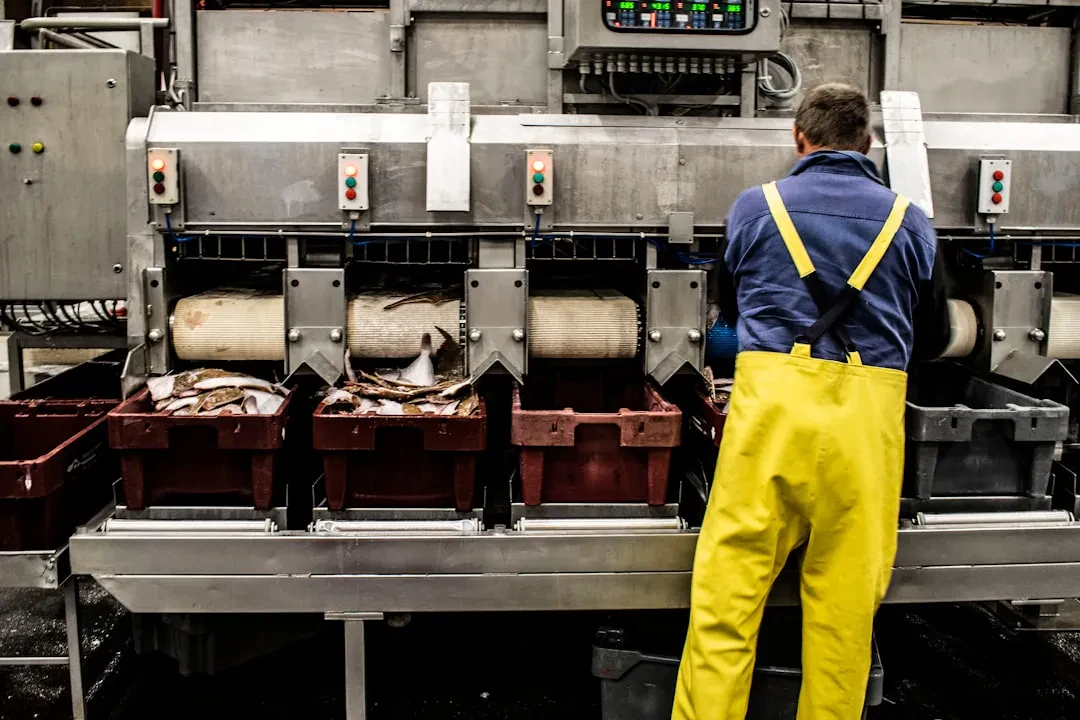
Startup Shinkei Systems has developed a refrigerator-sized robot called Poseidon that fishermen install on their boats to kill fish quickly and humanely. Using computer vision, the machine scans each fish, identifies the species, and locates the brain. It then pierces the brain and severs the gills, causing instant death before the fish can thrash or suffocate. This process prevents the buildup of stress hormones and lactic acid, which dull flavor and shorten shelf life.
The technique is inspired by ike jime, a centuries-old Japanese method traditionally performed dockside by trained fishermen. By killing the fish instantly and draining its blood, ike jime delays decomposition long enough for the flesh to be aged for days, developing concentrated umami flavor. Founder Saif Khawaja, who grew up fishing in the Middle East, got the idea after reading an animal rights philosophy essay titled "If Fish Could Scream," highlighting the invisible suffering of fish due to their lack of vocal cords.
Sponsored Protocol
An Integrated Business Model
Shinkei goes beyond the robot. The company describes itself as a vertically integrated fish harvester and processor. It gives Poseidon machines to fishermen for free, paying them a premium for the fish processed, well above market price. In return, Shinkei takes full possession of the catch and ships it to a 16,000-square-foot plant in Tacoma, Washington, where it is processed and sold under the consumer brand Seremoni, marketed as "ceremony grade" fish. The first retail outlet is Erewhon in Los Angeles, which sells the fish as Miso Black Cod. Shinkei already supplies fish to restaurants holding a combined 50 Michelin stars and has achieved what reportedly never happened before: Japan importing American-caught fish, historically considered inferior.
The real selling point, according to Khawaja, is not just animal welfare but practical quality. A catch that normally has a 5-to-7-day shelf life can stretch to 12 or 14 days, and the company has cooked fish three weeks after capture with no issue. A new in-plant sensor system scans each fish and projects an individual shelf life, reducing spoilage losses, which Khawaja estimates at 18% between dock and store.
Sponsored Protocol
A Challenge to Global Supply Chain
The American seafood supply chain is surprising: much of the fish caught in U.S. waters is frozen and shipped abroad, often to China, for heading, gutting, scaling, and filleting, then returned to the United States. An estimated 90% of seafood consumed in America is imported, though roughly half originates domestically after a round trip. This system has faced scrutiny for forced labor in China, prompting efforts to reshore processing. Shinkei and its investor Founders Fund are betting that the entire chain, from catch to distribution, can be profitably brought under one roof in Tacoma.
Sponsored Protocol
For Founders Fund, this bet fits a pattern of backing founders in unfashionable categories. Partner Delian Asparouhov stated the firm limits exposure to crowded areas like AI, focusing on hardware and physical-world businesses. Shinkei joins other bets like Halter, making GPS cattle collars, and Ohalo Genetics in crop genetics.
Whether consumers will pay a premium for "humanely killed" fish remains an open question, but superior quality and reduced waste may sway them. With Founders Fund backing and growing sustainability focus, Shinkei could revolutionize the seafood industry, proving technology can improve both animal welfare and taste. For more on stress monitoring in humans, check our article on Ultrahuman M2 Live. To learn about the ike jime technique, visit Wikipedia.
Source: https://techcrunch.com/2026/06/20/founders-funds-outlier-bet-on-humanely-killed-fish