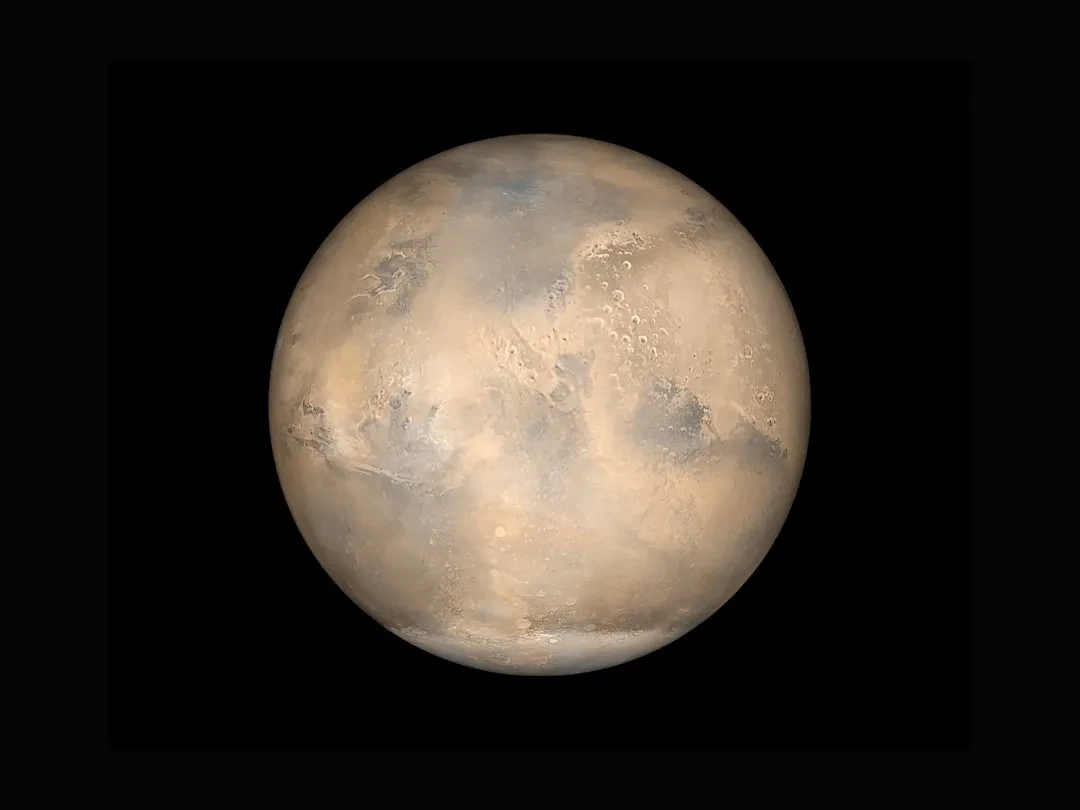
Mars has gifted us with another stunning self portrait. NASA's Perseverance rover has beamed back a breathtaking image from the southern rim of Jezero Crater, a picture that not only celebrates the vehicle's resilience after more than four years on the Red Planet but also offers scientists invaluable data about the state of its instruments. Meanwhile, another NASA mission, the Psyche spacecraft, has just executed a critical Mars gravity assist maneuver, a key step on its journey to the metal rich asteroid 16 Psyche. Both events highlight the relentless pace of space exploration, but a new wave of scientific studies reminds us that this race comes with a growing environmental cost.
Perseverance Selfie and Rover Health Check
The rover's self portrait, stitched together from dozens of individual frames, shows it perched on rocky terrain with the ancient lakebed of Jezero Crater in the background. Each image is more than a captivating postcard it is a visual diagnostic report. Engineers can inspect wheel wear, dust accumulation on solar panels, and the precise position of the robotic arm. This selfie arrives as Perseverance explores one of the most geologically rich areas of the crater, where scientists believe an ancient lake deposited clay minerals that could preserve traces of microbial life. The mission, in collaboration with the now retired Ingenuity helicopter, has already collected dozens of rock samples awaiting retrieval by a future Mars Sample Return mission.
Sponsored Protocol
Psyche Mars Gravity Assist
The Psyche spacecraft, launched in October 2023, used Mars gravity to gain kinetic energy and alter its trajectory toward the main asteroid belt. The gravity assist was executed with millimeter precision, passing within a few hundred kilometers of the Red Planet. This flyby saved tons of propellant, a crucial advantage for a mission targeting a unique object in the Solar System the asteroid 16 Psyche, composed primarily of nickel and iron, possibly the exposed core of an ancient planetesimal. Studying this asteroid could provide profound insights into the formation of Earth's core, a process we cannot observe directly. The maneuver was a success, and the spacecraft is now traveling faster than expected, with an estimated arrival in 2029.
Sponsored Protocol
The Environmental Price of Satellite Megaconstellations
As robotic exploration advances, another science story this week has highlighted a growing concern the pollution generated by satellite launches. A recent study quantified the impact of satellite megaconstellations, such as SpaceX's Starlink, on the upper atmosphere. When decommissioned satellites re enter, their materials vaporize and release metal oxides into the upper layers, with effects on the radiative balance and ozone chemistry that are not yet fully understood. According to researchers, the concentration of aluminum and other metals in the stratosphere has already increased significantly, and with tens of thousands of new satellites planned, the situation could worsen. This phenomenon adds to existing concerns about light pollution and space debris, raising questions about how to balance global internet access with protecting the Earth's environment.
Sponsored Protocol
The Future Between Innovation and Sustainability
The two faces of space exploration are more evident than ever. On one hand, missions like Psyche and Perseverance push the boundaries of human knowledge and bring us closer to fundamental answers. On the other hand, commercial space infrastructure is altering our sky and atmosphere in ways that demand urgent regulation. 2026 marks a turning point we can no longer ignore the environmental consequences of our celestial ambitions. Space agencies and private companies are already cooperating to develop more biodegradable materials and reusable launch vehicles, but the speed of satellite deployment requires an acceleration of solutions. As scientists analyze Martian selfies and plan new flybys, the global community is called to write a new chapter of space responsibility. For more tech insights that intertwine with scientific discoveries, read our article on Apple's Big Week with iOS 26 5 and iPhone 18 Pro hints and the latest updates on Windows 11 with new Start Menu sizes. For official scientific context, check the Wikipedia pages for the Psyche mission and the Perseverance Rover.
Sponsored Protocol