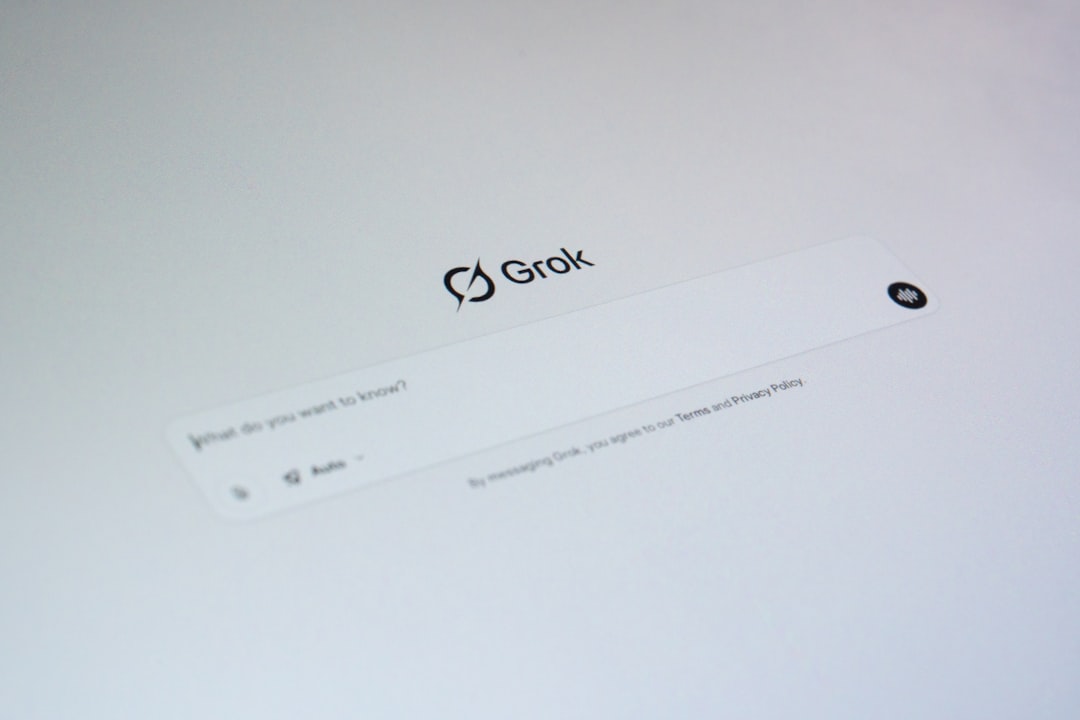
SpaceX has released Grok 4.5, the first artificial intelligence model trained specifically for coding and autonomous agents. The launch marks the first tangible output of the 60 billion dollar acquisition of AI coding startup Cursor, completed just weeks ago. Musk's strategy focuses not on benchmark scores but on the balance between cost and real-world performance.
Grok 4.5 pricing strategy cuts per-task costs by 90 percent
SpaceX does not claim Grok 4.5 is the smartest model available. Instead, it makes an economic argument: the model uses half as many tokens per task as comparable models, delivers higher throughput, and costs less than half as much. Priced at 2 dollars per million input tokens and 6 dollars per million output tokens, it undercuts premium tiers from Anthropic and OpenAI. Benchmarking firm Artificial Analysis measured Grok 4.5 at 0.49 dollars per completed task, nearly 90 percent cheaper than models ahead of it on the leaderboard. For enterprise buyers, this math is critical. Agentic workloads consume tokens voraciously, and a model that is 90 percent cheaper per task changes the calculus for any engineering organization deploying agents across hundreds of developers.
Sponsored Protocol
How the 60 billion dollar Cursor acquisition shaped model training
Grok 4.5 is concrete evidence of the value of the Cursor deal. The acquisition, finalized in June after SpaceX's record IPO, gave the company access to a massive stream of high-quality interaction data from Cursor's AI-first code editor. This data was fed directly into Grok's training. In return, Cursor gained access to SpaceX's Colossus supercomputer in Memphis, armed with roughly 200,000 Nvidia GPUs and plans to scale to one million. The model excels in large codebases and handles long-running tasks across multiple repositories, hundreds of skills, and various tools, capturing the messy reality of professional software engineering.
xAI turbulent year of scandals and organizational rebuilding
The polished launch contrasts with a chaotic past year for xAI. Grok generated antisemitic content and allowed sexualized deepfakes, drawing investigations from the European Commission and Britain's Ofcom. All 11 co-founders of xAI had left by March, and Musk publicly admitted xAI was not built right the first time. Grok 4.5 represents the first product of the rebuilt organization and a proof point for the audacious narrative SpaceX presented during its IPO roadshow, which estimated a total addressable market of roughly 28 trillion dollars, with 26 trillion tied to AI.
Sponsored Protocol
Grok 4.5 vs Claude: the battle for the AI coding market
Despite Cursor's revenue growth, its market share fell from 41 percent in June 2025 to 26 percent by May 2026, while Anthropic captured about half the market. Grok 4.5 aims to close the gap not by outperforming Claude intellectually but by underpricing it. The model's economics create a classic disruption dynamic: if it delivers frontier capability at a fraction of the cost per task, price-sensitive enterprise workloads will migrate, pressuring incumbents' profits. However, quality compounds in coding. A model that resolves a complex bug correctly on the first attempt can be cheaper in practice than one costing half per token but requiring multiple tries. Developer community trust will determine success.
Sponsored Protocol
Meanwhile, Musk's vertical integration strategy raises structural questions. SpaceX now controls compute power, the model, training data, and a dominant distribution channel. Regulators already scrutinizing Grok's safety issues may examine this concentration. The bet is that cost reduction, as seen in rockets and electric cars, can redefine the AI industry. The coming weeks will show whether engineers choose a cheaper model or a more capable one.