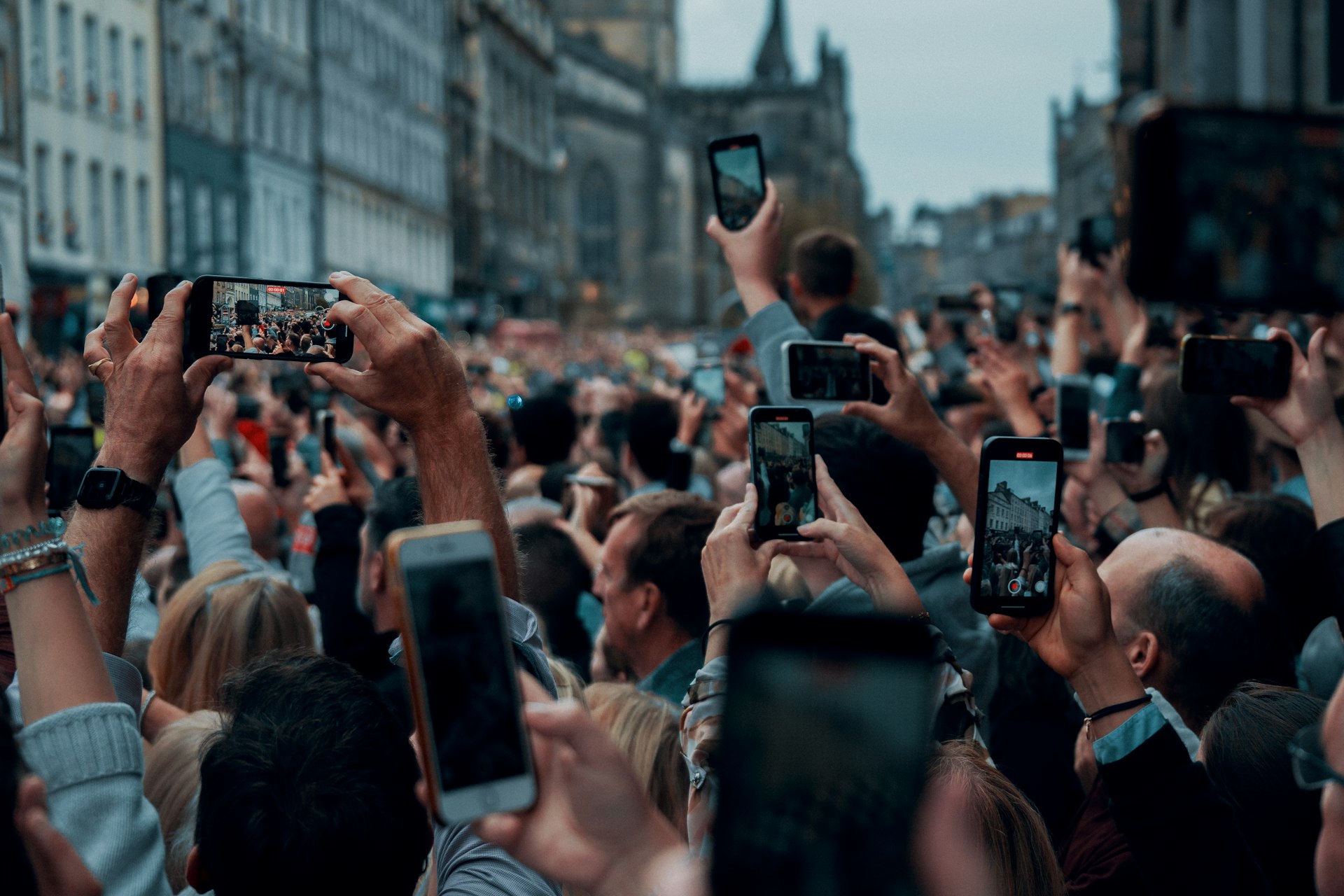
For an entire week, a group of young New Yorkers chose to abandon smartphones, social networks, and digital platforms to rediscover real human contact. The Summer of Ludd, a festival organized in the heart of the East Village, Manhattan, attracted hundreds of participants eager to experience an offline lifestyle in open rebellion against Big Tech's dominance. The event, mainly held in Tompkins Square Park, offered activities like mending, shortwave radio, 16 mm film screenings, and even a class on flirting without apps. All without phones, photos, or recordings: the rules demanded full presence.
Roots in the Luddite movement and the legacy of artisan resistance
The festival's name draws inspiration from the Luddites, English textile workers who early in the Industrial Revolution opposed the destruction of their livelihoods by machines. Today, that symbol is reinterpreted as a critique of ubiquitous technology. Andrew Maynard, professor of advanced technology transitions at Arizona State University, notes that the original movement was not anti-technology but was about workers' control and autonomy. This new wave, heavily represented by Gen Z, fights to reclaim time and attention stolen by algorithms and notifications.
Sponsored Protocol
A festival built on rejection of online virality
No online advertising, no promotional posts. Flyers for the Summer of Ludd appeared only in physical neighborhood spots: community bulletin boards, small local museums, independent shops. One attendee, who asked to be identified by the pseudonym staoue, discovered the festival through a booklet found at the Museum of Reclaimed Urban Space during a summer downpour. "Society is getting faster, and we are pressured to get faster," staoue said. "We scroll to cope, but what we really might want is to learn a new language or hobby." The festival also included workshops on how to find events without using social media, led by Damian Thomas, a web developer running Unplatform, a guide to leaving social media and joining the indie web.
Sponsored Protocol
Palpable unease from those who worked in Big Tech
Former employees of major tech companies were also among the participants. One, a security engineer who requested anonymity for fear of retaliation, said he quit his last job because management encouraged non-technical staff to write code with AI tools and push it to production. "As a security engineer, that's very concerning," he commented. Another former tech worker expressed skepticism about real change: "If you leave Facebook but all your friends are still there, you've cut yourself off from your friend circle." The event also featured a "Google in Real Life" session, where participants could ask each other questions about their personal expertise without digital mediation.
A cultural signal beyond the festival
The Summer of Ludd is not an isolated event. According to a 2025 Pew Research study, 48% of U.S. teens believe social media have negative effects on their peers, up from 32% in 2022. More people are quitting dating apps to meet at run clubs or in-person gatherings. The festival also partnered with the Museum of Interesting Things for film screenings and the School of Radical Attention, a nonprofit helping people resist the "fracking of human attention" by tech products. For those interested in exploring a conscious digital life, on MeteoraWeb we covered a journalist's attempt to survive a week without Google Play Store: an experiment showing the limits and possibilities of a partially offline existence.
Sponsored Protocol
The festival ended with a July 4 cookout, but the message remained: technology can be a tool, not a master. As one organizer explained, "we believe that the event is the medium for social change." For more on the historical Luddite movement, the Wikipedia entry offers a comprehensive overview.
Source: https://www.wired.com/story/inside-the-luddite-festival-harnessing-gen-zs-rage-against-big-tech