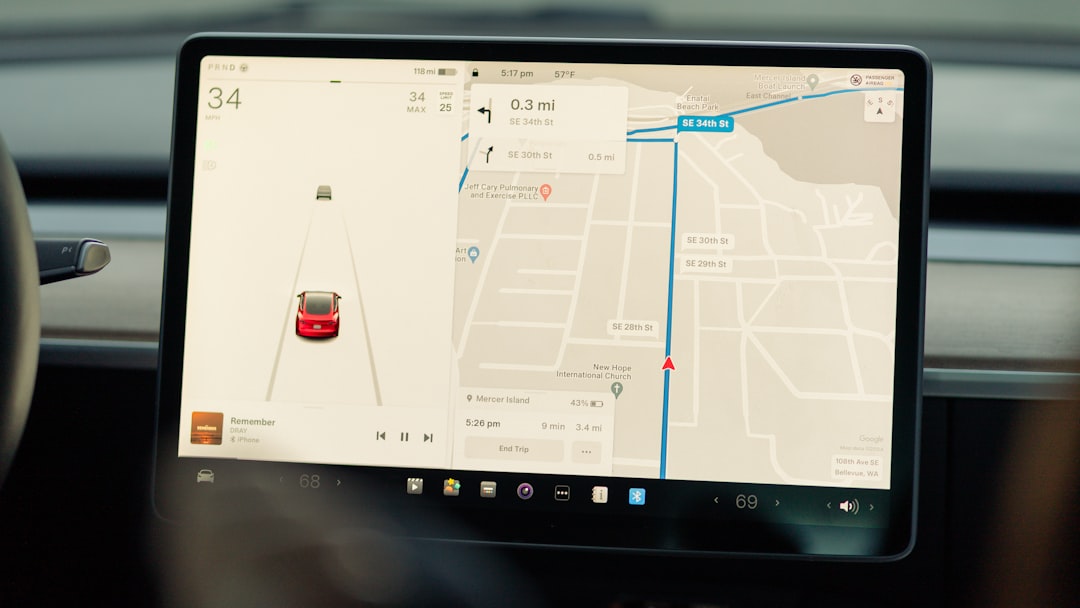
Tesla's Full Self-Driving (FSD) system is under renewed federal scrutiny after a fatal crash in Texas where a Tesla struck a house, killing a 76-year-old woman. The driver told police that Autopilot, Tesla's basic driver-assistance system (now discontinued), was engaged. However, Ashok Elluswamy, Tesla's vice president of AI software, claimed on X that the driver manually overrode the self-driving system by pressing the accelerator to 100% in a residential area. His comments suggest the vehicle was equipped with FSD (Supervised), not Autopilot. Without an independent investigation, the truth remains unclear. The National Highway Traffic Safety Administration (NHTSA) and the National Transportation Safety Board (NTSB) have both opened investigations into the crash.
Fatal Texas Crash Triggers Federal Investigations
The incident occurred in a Texas residential neighborhood. The Tesla left the road and hit a house, killing the elderly occupant. The driver claimed Autopilot was active, but Elluswamy contradicted that account. The outcome of the investigations could have significant implications for Tesla's autonomous driving future and industry regulations. NHTSA and NTSB are gathering data from the vehicle and surveillance cameras.
Sponsored Protocol
Lawsuit Settlement and Probe on Reduced Visibility Conditions
Separately, Tesla settled a lawsuit related to a 2023 fatal crash involving a vehicle using FSD (Supervised). That crash was part of another NHTSA investigation focusing on whether FSD can detect and respond to low-visibility conditions such as sun glare, fog, or airborne dust. These concurrent events put pressure on Tesla as it pivots to an AI and robotics company, with FSD as its flagship revenue-generating product.
Sponsored Protocol
Waymo Imports Thousands of Ojai Robotaxis from China
While Tesla faces scrutiny, Waymo is expanding its robotaxi fleet. The company partnered with Zeekr, a brand under China's Geely Holding, to supply the Ojai electric vehicle designed as a robotaxi. The vehicles are assembled in China and imported without communication modules to comply with a U.S. ban on Chinese connected vehicle technology. Once in the U.S., Waymo installs its sixth-generation autonomous system featuring 13 cameras, 4 lidars, 6 radars, and external audio receivers. According to a MoffettNathanson report, Waymo is on pace to import 3,156 vehicles this year, roughly 300 per month, as reported by TechCrunch.
Meanwhile, Terawatt Infrastructure, a provider of EV charging for fleets (including Waymo), secured a $300 million credit facility to develop charging depots. This differs from the battery-swapping approach of Swaptopus, a joint venture between Octopus and CATL for electric trucks in Europe: read the article on Swaptopus.
Sponsored Protocol
Lyft Bans Camera-Only Robotaxis
Lyft announced a policy requiring autonomous vehicles on its platform to use multiple sensor types. Robotaxis relying solely on cameras, such as the Tesla Cybercab and future FSD (Unsupervised) vehicles, will not be allowed. The decision follows incidents where camera-only technology showed limitations in low visibility. Lyft clarified that the rule does not apply to advanced driver-assistance systems, so human-driven Teslas on the app are unaffected.
Federal Rule Change for Vehicles Without Brake Pedals
The U.S. Department of Transportation proposed regulatory changes allowing vehicles designed exclusively for automated driving to omit brake pedals. This could benefit companies like Tesla and Zoox, which are developing robotaxis without pedals or steering wheels. Zoox recently refreshed its robotaxis ahead of commercial service.
Sponsored Protocol
Other Industry Moves: Lucid Layoffs, Startups, and Funding
Lucid Motors announced layoffs of 18% of its workforce (about 1,500 employees) and a reduction in the second production shift in Arizona, following a 12% cut four months earlier. Meanwhile, startups like Aseon Labs (autonomous inspection and charging pods) raised $10 million, and Spiro (African EV platform) secured $55 million. The autonomous mobility industry is in flux, with companies pursuing diverse hardware, software, and business models.
For more on Tesla's autonomous driving technology, see the Wikipedia page on Tesla Full Self-Driving.
Source: https://techcrunch.com/2026/06/28/techcrunch-mobility-all-eyes-on-tesla-fsd