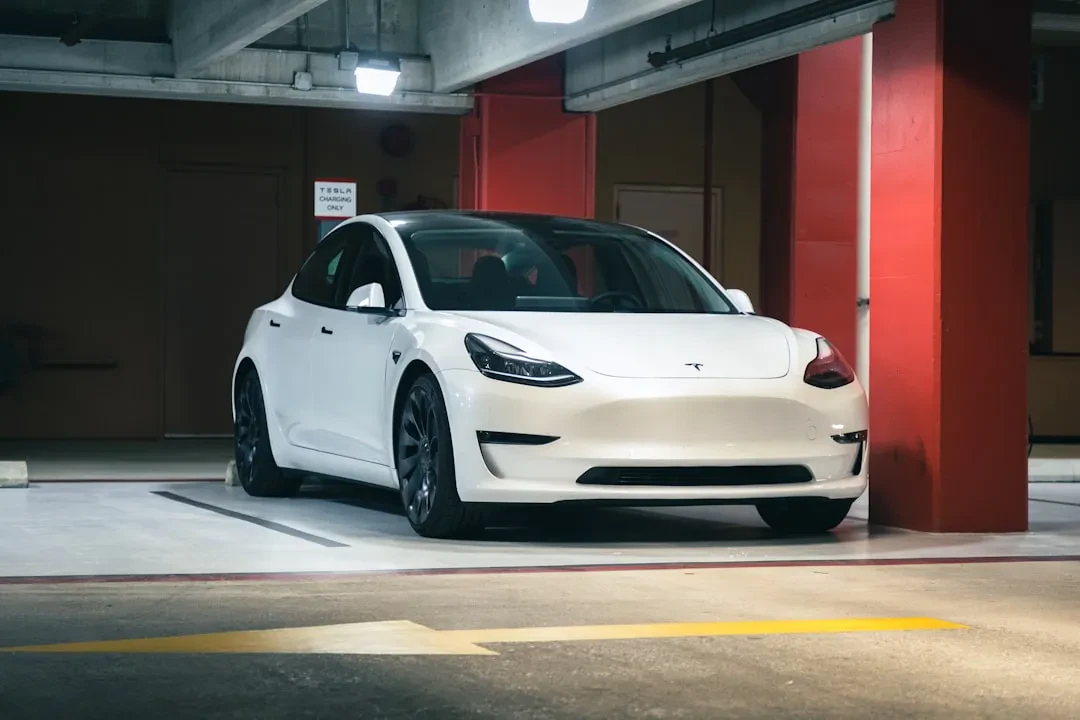
A fatal crash in which a Tesla Model 3 plowed through a brick home in Katy, Texas, killing a 76-year-old woman, has reignited the debate over Tesla's driver-assistance technology. The driver, Michael Butler, told Harris County sheriff's deputies that the vehicle was on Autopilot at the time of the accident. But Tesla, a company known for dismantling its PR department years ago, broke its usual silence Monday to push back against that narrative.
Tesla's data tells a different story
Ashok Elluswamy, Tesla's vice president of AI software and the first engineer hired for the Autopilot team, took to X to offer a very different account. "In this case, the driver manually overrode self-driving by pressing the accelerator all the way to 100% of the accel pedal in this residential area," he wrote. "They reached a speed of 73 mph during the crash, and had the accelerator pressed even after the crash." Elon Musk amplified the point, emphasizing that Full Self-Driving (Supervised) drives slowly through neighborhoods and that this was a high-speed crash.
Sponsored Protocol
Regulatory scrutiny and ongoing investigation
The National Highway Traffic Safety Administration (NHTSA) confirmed it is opening a special investigation into the crash, the latest in over 40 such probes into Tesla crashes believed to involve advanced driver-assistance systems. The Harris County Sheriff's Office will present its findings to the local district attorney to determine whether criminal charges are warranted. Tesla discontinued its basic Autopilot system in January following a California ruling that the name was misleading, while Full Self-Driving (Supervised), available for a $99 monthly subscription, still requires active driver supervision.
This incident highlights the ongoing tension between human responsibility and automated systems. While Tesla insists the driver was at fault, federal regulators are determined to reach their own conclusions. The outcome could have significant implications for the regulation of ADAS technologies worldwide.
Sponsored Protocol
For those interested in AI safety, a related article covers how OpenAI launched Patch the Planet to secure open source code, demonstrating the importance of software reliability across industries. Additionally, the Microsoft and Chevron 2.67 GW gas plant in Texas underscores the growing energy demands of advanced technologies.
For authoritative external context, the Wikipedia page on Tesla Autopilot provides a detailed history of controversies surrounding the system, helping readers understand the broader implications of this crash.
Source: https://techcrunch.com/2026/06/22/tesla-pushes-back-on-autopilot-narrative-after-fatal-texas-crash