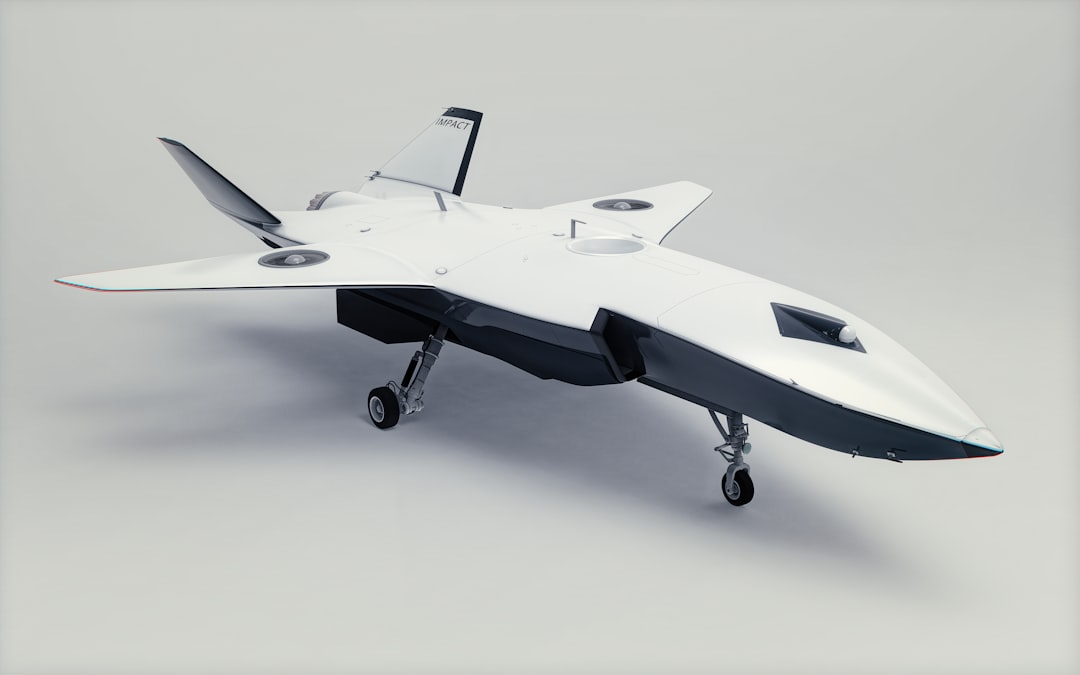
Trevor Milton, the founder of Nikola Corporation who was pardoned after a fraud conviction, is once again attempting to make his mark on the world of innovation. This time, his goal is ambitious and futuristic: developing AI-powered aircraft. To realize this vision, Milton is reportedly seeking to raise the considerable sum of $1 billion, a signal of his determination to return to the tech scene with a disruptive project.
The Return of a Controversial Innovator
The figure of Trevor Milton is inextricably linked to Nikola, a company that promised to revolutionize the heavy transport sector with electric and hydrogen trucks. However, accusations of misleading investors led to a conviction, from which he was later pardoned. This return to the scene, although controversial, demonstrates remarkable resilience and a clear will to pursue new technological frontiers. The idea of AI-guided aircraft is not science fiction, but a rapidly evolving sector. Consider how artificial intelligence is already transforming other areas, such as visual content creation with tools like those from OpenAI integrating Sora into ChatGPT, or the automation of processes in sectors like robotaxis, where entities such as NVIDIA and Bolt are joining forces.
Sponsored Protocol
Artificial Intelligence in the Aerospace Sector
The application of artificial intelligence in the aerospace sector is not entirely new. For some time now, there has been talk of autonomous drones and advanced navigation systems that leverage complex algorithms. However, the idea of fully autonomous passenger or cargo aircraft, managed by AI, represents a significant qualitative leap. This could lead to greater efficiency, reduced operational costs, and potentially increased safety by eliminating human error in certain phases of flight. AI is becoming a fundamental pillar for innovation in almost all sectors, from gaming with Nvidia DLSS 5 revolutionizing photorealism, to data management and data center sustainability, as demonstrated by Google's strategy for Data Centers.
Sponsored Protocol
The Challenges and Opportunities
The path to making fully autonomous aircraft operational is fraught with challenges. Beyond the technological aspects related to developing robust and reliable AI systems, there are enormous regulatory and safety hurdles to overcome. Aviation authorities worldwide will need to establish rigorous standards and certification protocols to ensure the safety of passengers and air traffic. Furthermore, public perception and acceptance of flying on aircraft without a human pilot on board will be crucial factors. Despite these difficulties, the potential is immense. A more efficient and automated air transport system could transform global logistics and the way we travel. This project fits into a broader context of AI-driven innovation, which sees companies like Google with Gemini unlocking personal intelligence, or OpenAI itself with its increasingly advanced language models, like GPT-5.4 Mini.
Sponsored Protocol
An AI-Driven Future
Milton's initiative, although starting from a controversial figure, reflects an unstoppable trend. Artificial intelligence is no longer a futuristic concept but a reality shaping the present and future. From home automation with Matter-compatible devices like the Kasa Smart Plugs, to the revolution in the world of AI agents as predicted by Carl Pei of Nothing, the future seems increasingly driven by intelligent systems. The history of computing itself, from ancient algorithms to quantum code, is a continuous journey towards greater automation and intelligence, as explored in the journey of Programming Languages.
Our publication thinks that...
Trevor Milton's return to the technology sector, this time with a focus on AI-powered aviation, raises complex questions. On one hand, his audacity and vision of a more efficient and automated aerial future are undeniable. On the other, his past raises legitimate concerns regarding transparency and investment management. However, it is undeniable that artificial intelligence is opening up unimaginable scenarios in almost all fields. The real challenge will be balancing bold innovation with ethical responsibility and safety. If Milton can overcome the technical, regulatory, and trust challenges, he could truly help redefine the future of air transport. It is a fascinating experiment to observe, reminding us that the most revolutionary ideas often come from unconventional paths, even if sometimes controversial. Technological evolution, like that which saw the birth of the Internet from the first ARPANET experiments The Epic of ARPANET, is a continuous process of challenges and discoveries.
Sponsored Protocol
Source: Original