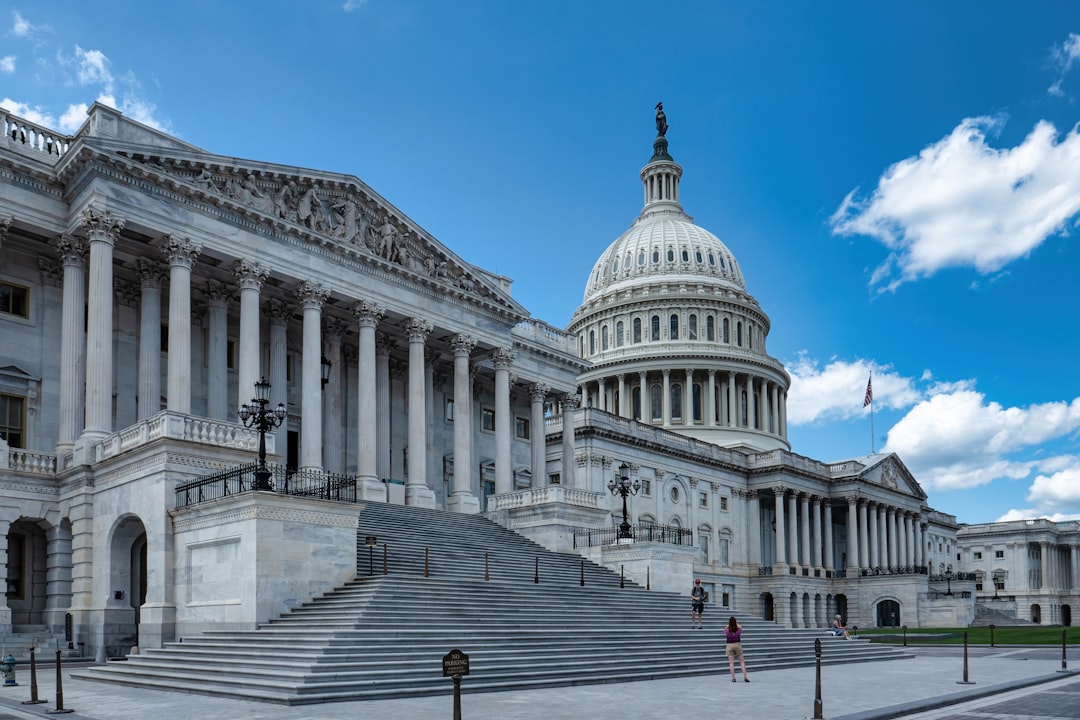
The United States Congress is seriously considering a move that could rewrite the rules for the entire digital ecosystem. At the heart of the debate is Section 230 of the Communications Decency Act, a foundational piece of legislation that for decades has protected online platforms from legal liability for content posted by their users. This law, often called the "Internet's saving clause," has been the subject of intense discussion and pressure for reform or even repeal.
The Legislative Context and Political Pressures
Section 230, passed in 1996, enabled the exponential growth of platforms like Facebook, Twitter (now X), YouTube, and countless other services, allowing them to moderate content without being constantly threatened by lawsuits for every single post or comment. However, in recent years, this protection has become a focal point for bipartisan criticism. On one side, conservatives accuse platforms of censorship and favoring certain political narratives. On the other, progressives lament the spread of misinformation, hate speech, and harmful content, arguing that companies are not doing enough to protect users. This dual pressure has created fertile ground for legislative proposals aimed at modifying or eliminating Section 230.
Implications of Reform or Repeal
The consequences of a potential dismantling of Section 230 would be profound and far-reaching. Online platforms could be forced to become full-fledged publishers, assuming full responsibility for every piece of content published. This would lead to an exponential increase in legal and operational costs, pushing many companies to implement extremely restrictive moderation systems, potentially stifling freedom of expression. We could witness a drastic reduction in user-generated content, with a negative impact on innovation and the diversity of voices online. Services like forums, blogs, and even news site comment sections could become unsustainable. The ecosystem of apps and online services, which relies on the ability to handle large volumes of data and interactions, would undergo a radical transformation. Consider also how this could affect generative artificial intelligence, which relies on vast amounts of data for its training, as in the case of GPT-5.4 Mini or other advanced models.
The Challenge of Moderation and Free Speech
The central issue remains the difficult balance between protecting users from harmful content and safeguarding freedom of expression. Reform proposals often aim to make platforms more transparent in their moderation processes or to introduce gradations of liability depending on the type of content. However, finding a solution that satisfies all parties is proving to be a daunting task. The complexity of the digital landscape, with the rapid evolution of technologies and forms of communication, makes every attempt at regulation an ongoing challenge. Consider the implications for cybersecurity, where the speed at which new threats emerge, as in the case of supply chain attacks with invisible code, requires agile responses that overly rigid regulation could hinder.
The Future of Internet Under Scrutiny
The debate over Section 230 is not just about an American law but has global implications. Decisions made in Washington could influence how the Internet is regulated worldwide, with potential repercussions for the free flow of information and technological innovation. The discussion is still ongoing, and the future of Section 230 remains uncertain. What is certain is that Congress is facing one of the most complex challenges of our time, trying to adapt laws that are decades old to an ever-changing digital world. The search for a balance between accountability and freedom is a tortuous path, but essential to ensure a safe and open digital future. The story of how the Internet was born, for example with ARPANET, reminds us how important it is to preserve the spirit of innovation that guided its creation.
Our Opinion
It is undeniable that Section 230 has played a crucial role in the development of the Internet as we know it today, allowing the birth and growth of countless services that have enriched our lives. However, ignoring legitimate concerns about the spread of harmful content and the potential manipulation of information would be shortsighted. The real challenge is not so much to dismantle a law that has worked for years, but rather to find intelligent ways to update it, making it more suitable for current challenges. Perhaps the solution lies in a more granular approach, distinguishing between different types of content and platforms, while encouraging transparency and accountability without stifling innovation or freedom of expression. Excessive regulatory caution could lead to a safer but also more sterile Internet, limiting the creative and communicative potential that has made this network such a powerful tool. It is a delicate balance, requiring in-depth analysis and continuous dialogue between legislators, technology companies, and civil society.
Original source: Click here for the source
Sponsored Protocol