Robotics is one of those words that seems to belong to the future, yet it already walks beside us. It makes no noise, asks for no attention, and does not aim to replace the human being: it aims to transform them. Every time a mechanical arm welds a frame, a surgical robot assists in an operating room, or a small rover traverses a distant planet, we are observing the convergence of engineering, electronics, and software. It is the science that gives movement to intelligence, form to abstraction, and precision to intuition. And it is changing more than we admit.
What Robotics Really Is
Manuals speak of multidisciplinary fields that unite mechanics, computer science, electronics, and automation. But this definition is a shell. Robotics is the art of building creatures that perform movements and tasks autonomously or semi-autonomously. It is the act of delegating to the machine what the human body does with effort, slowness, or risk. An industrial robot does not think, but performs actions that no worker could repeat with the same perfection. A service robot has no empathy, but it can lift weights, navigate corridors, and deliver materials. Robotics is born to expand possibilities, not to imitate nature.
Sponsored Protocol
And what distinguishes it from simple automated machines is the level of adaptation. True robots do not just execute: they perceive. They receive data from sensors, translate it into actions, and react to the environment. A traditional assembly line follows a pattern. A robot can modify its behavior based on what it sees, analyzes, and recognizes.
The Functioning: Where the Magic Happens
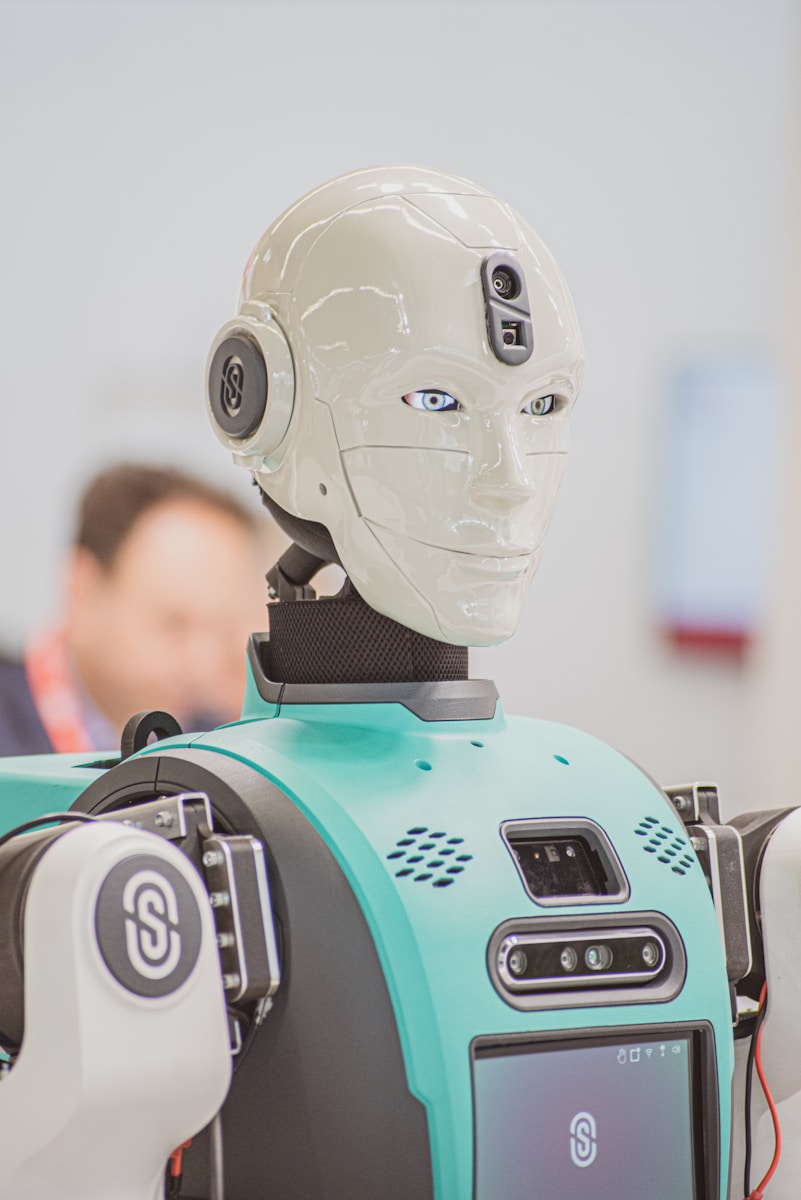
A robot lives in four layers. The first is the physical one: arms, wheels, actuators, joints—everything that allows it to move in space. The second is perception, entrusted to sensors that replicate in a technical form what human senses do biologically: cameras, lidar, sonar, gyroscopes, accelerometers. The third layer is the brain, often powered by complex algorithms and neural networks that interpret signals and the environment. The fourth, the most invisible, is the control software: the part that decides whether to move a millimeter or a meter, whether to stop, deviate, accelerate, or perform repetitive movements.
Sponsored Protocol
When an industrial robot moves a component with a precision of tenths of a millimeter, it is not just executing an order. It is integrating the strength of the actuators, the sensitivity of the sensors, the speed of the processors, and the logic of the software that translates the environment into a set of dynamic instructions. It is a perfect dance between electronics and computation.
Where Modern Robotics is Heading
Today's robotics no longer resembles that of the 1990s. Industry giants, like Boston Dynamics, have shown what a mechanical system can do when allowed to learn through movement. In the industrial world, companies like KUKA and ABB Robotics have transformed production into an automated ecosystem where humans and machines collaborate closely. Collaborative robotics, so-called cobots, is the real revolution: systems designed not to replace workers, but to work with them, sharing spaces and tasks with safety levels unthinkable just a few years ago.
Sponsored Protocol
It will not be a sudden change, but a progressive one. Many professions will be rewritten, not eliminated. Repetitive and dangerous jobs will pass to machines. Human roles will shift towards supervision, programming, management, and maintenance. And this reveals the point: robotics does not take away jobs, it takes away tasks. What remains is more skilled.
Sponsored Protocol
Why Robotics Will Change Human Work
In industrial sectors, the transition has already begun. In healthcare, it is accelerating thanks to surgical robots and assistance systems. In logistics, autonomous warehouses, like those of Amazon Robotics, have rewritten the timing and precision of operations. But the real transformation will be cultural: robots will become everyday tools. We will no longer look at them with curiosity, but with the naturalness with which we turn on a smartphone today.
In Meteora Web's vision, robotics is an ecosystem that dialogues with software, infrastructure, cloud, and artificial intelligence. And it is precisely the union of these worlds that defines the future of work: fewer physical tasks, more strategic capabilities. Less effort, more control. Less repetition, more creativity. It is the direction we are heading, whether we like it or not.