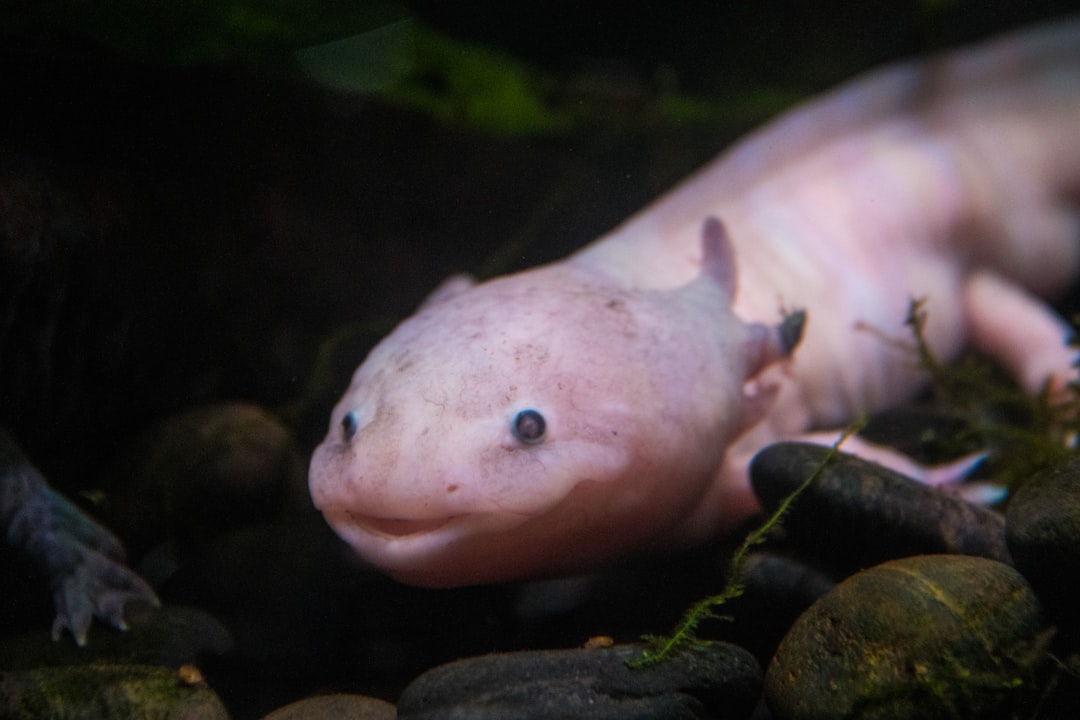
A team of Mexican paleontologists has identified a new fossil species of axolotl, named Ambystoma quetzalcoatli, which lived approximately 5 million years ago in the ancient lake system of Atotonilco el Grande in Hidalgo state. The discovery, published in Palaeontologia Electronica, is the first fossil salamander species formally described in Mexico and the oldest known record of the genus Ambystoma in the country.
A Pliocene lake ecosystem preserved in exquisite detail
The fossils come from an area that once hosted a vast freshwater lake covering roughly 85 square kilometers, formed when the course of the Amajac River was temporarily blocked. In this temperate, subhumid environment, the research group from the Facultad de Estudios Superiores Zaragoza (UNAM) collected a dozen salamander fossils in the early 2000s, many with complete, articulated skeletons. Initial identification placed them in the genus Ambystoma, but a modern re-examination revealed their true identity.
Sponsored Protocol
CT scanning and comparative anatomy unveil a new species
Researchers Jorge Herrera Flores and María Patricia Velasco de León used computed tomography (CT) and detailed anatomical comparisons with 13 living Ambystoma species, including the Xochimilco axolotl (Ambystoma mexicanum) and tiger salamanders. The fossils show significant differences in the skull and skeleton: an elongated opening on top of the skull, a differently structured palate, variations in cranial bone arrangement, and 17 trunk vertebrae, whereas modern axolotls have 16 or fewer. For more on analytical techniques in science, see the article on Log Analysis for Incident Response.
Sponsored Protocol
Neoteny was already present in Pliocene axolotls
Evolutionary analysis showed that Ambystoma quetzalcoatli exhibited neoteny, the retention of larval traits in adulthood, a hallmark of modern axolotls. This adaptation evolves in stable, isolated lake environments where complete metamorphosis is unnecessary. The finding confirms that this life strategy was already present in Mexican axolotls millions of years ago. According to a statement from UNAM, the discovery shows that the evolutionary history of axolotls is much older than previously thought, with deep roots in Pliocene ecosystems. For external context, visit the Wikipedia page on axolotls.
Sponsored Protocol
A key piece for understanding Mexican biodiversity
The researchers integrated morphological data with previous genetic studies to reconstruct evolutionary relationships. The new species fits into a picture where modern Mexican biodiversity has ancient origins in now-vanished ecosystems. As UNAM explains, the discovery of Ambystoma quetzalcoatli underscores that Mexico's modern fauna has deep evolutionary roots. This story originally appeared on WIRED en Español and has been translated. For more on current biodiversity threats, read the related article on Uber puts five European market launches on hold.
Source: https://www.wired.com/story/scientists-have-identified-a-new-fossil-species-of-axolotl-in-mexico