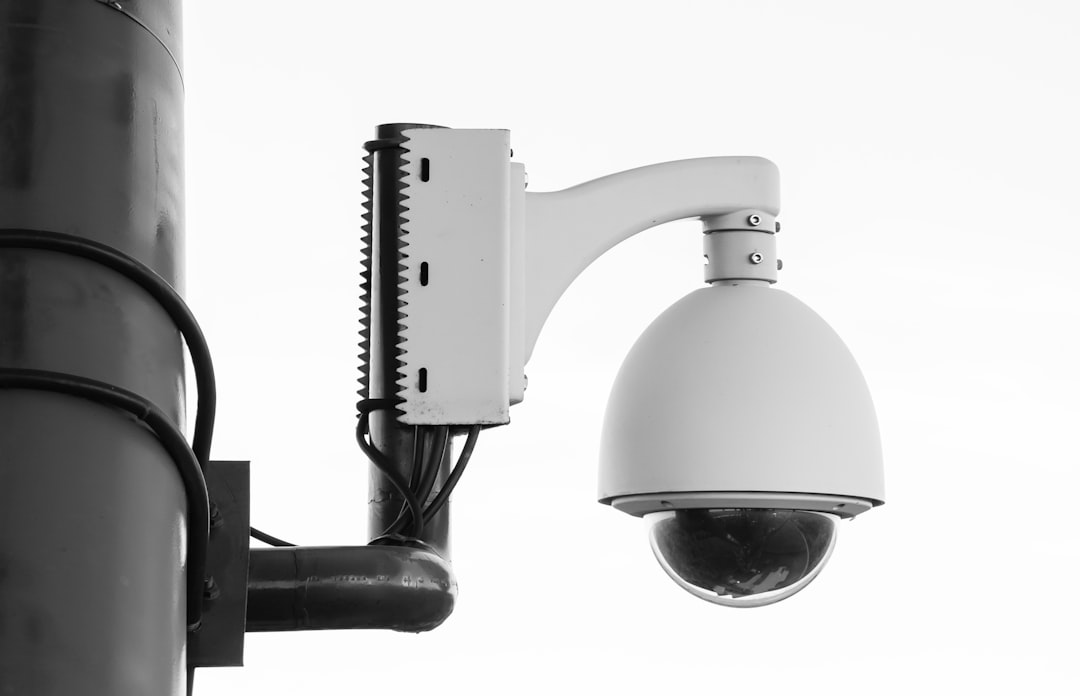
The American Civil Liberties Union of Massachusetts has released an unprecedented legal toolkit designed to force prosecutors to disclose the use of surveillance technologies against defendants. The package, described as the first of its kind, contains handcrafted legal motions that, when granted by a judge, compel the prosecution to reveal whether tools such as Stingray phone trackers, commercial location data, AI-written police reports, and forensic software were used in a case. The initiative addresses a chronic information asymmetry: defense attorneys often do not know which technologies have been employed, preventing effective cross-examination.
An Arsenal of Legal Motions Against Covert Surveillance
The toolkit includes preservation motions that require government agencies and private vendors to save surveillance data before it is automatically deleted. It rests on a bedrock rule of American criminal law, established in 1963, that prosecutors must turn over all evidence favorable to the defense. The motions will be distributed through a password-protected library accessible only to verified defense attorneys. According to Jennifer Herrmann, a staff attorney at the ACLU of Massachusetts and co-author of the toolkit, the organization fights on two fronts: pressuring cities to abolish tools like Flock license plate readers and ShotSpotter gunshot detectors, while equipping lawyers to expose surveillance in court. The time lag between technology adoption and constitutional challenge is long, Herrmann says, and these motions allow attorneys to "challenge what has already happened in the past," building a record for future tools.
Sponsored Protocol
The Problem of Lag Between Adoption and Judicial Review
The project responds to a chronic lag between police adoption of new surveillance tools and court decisions on their legality. Most Americans carried cell phones by the late 1990s, but the U.S. Supreme Court required a warrant for cell phone location records only in 2018. The lag is not just due to slow courts; technologies with the worst disclosure records have faced fewer rulings precisely because a defendant cannot challenge a tool they were never told about. In the past, the FBI required local police departments to sign secrecy agreements before using cell-site simulators, commonly called Stingrays. In Baltimore, one agreement ordered prosecutors to drop cases rather than reveal the device in court, even as police used it over 4,300 times between 2007 and 2015. FBI records later obtained by the ACLU show these agreements persisted until at least 2020. In Missouri, Fog Reveal, a tool that maps movements using app location data, was used in a 2017 murder investigation but never appeared in trial exhibits. In Louisiana, a 2022 arrest warrant for Randal Quran Reid, misidentified by facial recognition, attributed the identification to a "credible source" rather than the software. The very document that authorized his arrest obscured how police suspected him. These cases underscore the need for the ACLU toolkit.
Sponsored Protocol
The Challenge of Data Preservation
A subtle but crucial issue is surveillance data that self-destructs. Axon's Draft One, an AI tool that writes police reports from body camera audio, discards the machine-written first draft by design. An Axon product manager told the Electronic Frontier Foundation that this choice avoids "disclosure headaches" for police and prosecutors. California responded with a law requiring agencies to keep original drafts. Flock Safety deletes license plate images after 30 days by default, and Chicago's contract for ShotSpotter declared gunfire data the vendor's property, not the city's. In each case, the digital material a defendant needs can vanish before a defense attorney is appointed. The ACLU is careful to note that it generally wants this data to disappear quickly, lobbying to cut license plate reader retention to as little as two days. But once someone is charged, that data can be exculpatory evidence, and preservation motions are designed to protect it.
Sponsored Protocol
Recent Judicial Precedents in Massachusetts
The toolkit's approach is not merely theoretical: Massachusetts's highest court has recently upheld ACLU positions. In 2024, the Supreme Judicial Court permanently dismissed drug and firearm charges against a Boston man after police defied a court order to turn over records of fake social media profiles used to surveil him, built with predominantly Black and brown avatars. Last year, the same court ruled that defendants can demand a hearing to prove ShotSpotter actually works before its evidence reaches a jury. These rulings explain why the toolkit is built on Massachusetts law, which the ACLU says can be adapted for other states, as the state high court has run years ahead of the U.S. Supreme Court on digital privacy, requiring warrants for cell phone location data back in 2014.
Sponsored Protocol
Recent U.S. Supreme Court Ruling on Geofence Warrants
Three weeks ago, the U.S. Supreme Court ruled 6-3 that when police use a geofence warrant, forcing Google to identify all phones near a crime scene, they are conducting a "search" under the Fourth Amendment. The justices sent the case back for lower courts to define what a valid geofence warrant looks like. The ACLU toolkit includes a geofencing motion ready for those unsettled waters. The motions are meant to be adapted and filed in real criminal cases, and the ACLU asks attorneys who use them to report back. As Herrmann says, the goal is to take good lawyering that already exists and put it "at the fingertips of every attorney for every defendant," while continuing to flag gaps where new strategies are needed. This toolkit represents a significant step forward in criminal justice transparency in an era where technology outpaces constitutional safeguards. For related insights on technology vulnerabilities, see the article on US military apps containing Chinese and Russian code, and the decision by France to block Polymarket shows how states attempt to regulate opaque platforms. For technical context, consult the Wikipedia page on the Stingray phone tracker.
Sponsored Protocol
Source: https://www.wired.com/story/the-aclu-is-arming-lawyers-to-expose-state-surveillance-secrets