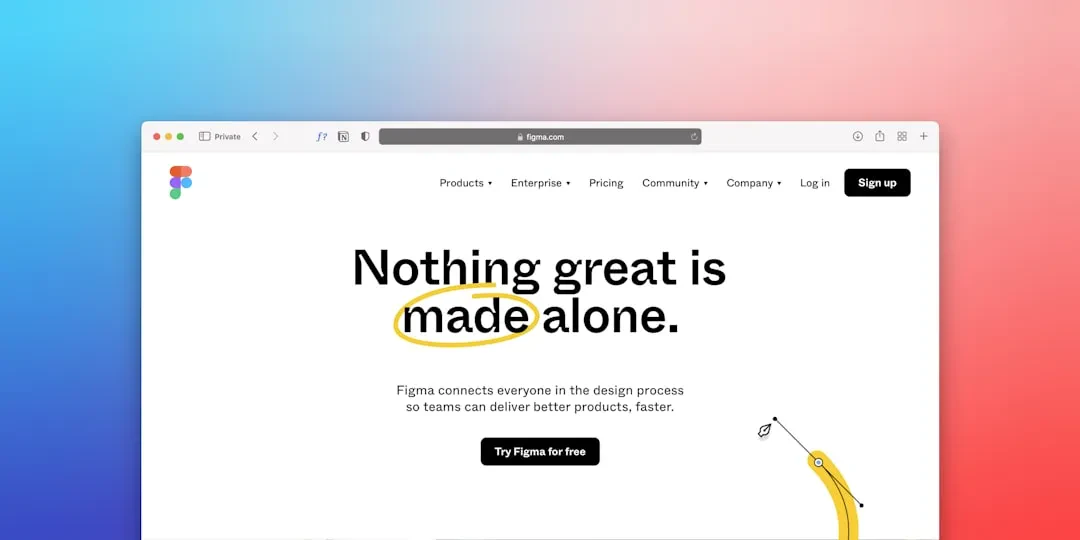
The software development landscape is undergoing a radical shift. On one side, Figma Make introduces a two-way GitHub integration that turns design projects into live production code with built-in governance. On the other, creators of AI coding agents like Devin and orchestration experts like Temporal warn that the real challenge is not replacing programmers, but building reliable, collaborative systems.
Figma Make: Design Becomes Development
Figma, after its turbulent IPO, delivers a crucial update for Figma Make. The platform now allows importing an existing Git repository, visually editing the user interface, and pushing changes as standard GitHub pull requests. This does not bypass engineering guardrails; the generated code must pass the same CI pipelines, reviews, and security tests. It is a step toward a workflow where designers and product managers can contribute directly to code, offloading backend engineers. Figma Make positions itself as a specialized frontend tool, ideal for teams with mature design systems.
Sponsored Protocol
AI Agents: Collaboration, Not Replacement
Scott Wu, CEO of Cognition and creator of Devin, stated that AI coding agents are not designed to replace humans. In an exclusive interview, Wu emphasized that Devin is a productivity booster, not a job eliminator. The real value emerges when the agent handles repetitive and complex tasks, leaving architectural design and oversight to engineers. Human-machine collaboration becomes the dominant paradigm, reinforced by enterprise trends where 76% of organizations say their infrastructure cannot support autonomous AI agents.
Sponsored Protocol
Reliability and Orchestration: The Achilles' Heel
The first wave of production AI agents revealed a critical problem: reliability. Preeti Somal of Temporal explains that many teams are rewriting version 2.0 of the same agents because the initial version lacked orchestration, state management, and error recovery. Long-running AI workflows require a deterministic spine to handle crashes, token costs, and visibility. Companies ignoring these fundamentals risk multiplying inference expenses and delivering poor customer experiences.
The implication is clear: the future of software development is not a human vs. AI conflict but a hybrid ecosystem where design, AI agents, and orchestration converge on robust foundations. Tools like Figma Make and Devin, combined with reliable orchestration platforms, define the new frontier of collaborative engineering.
Sponsored Protocol
Read also: OpenAI Challenges Apple With AI Agent Smartphone in 2027
External source: TechCrunch interviews Scott Wu on AI agents