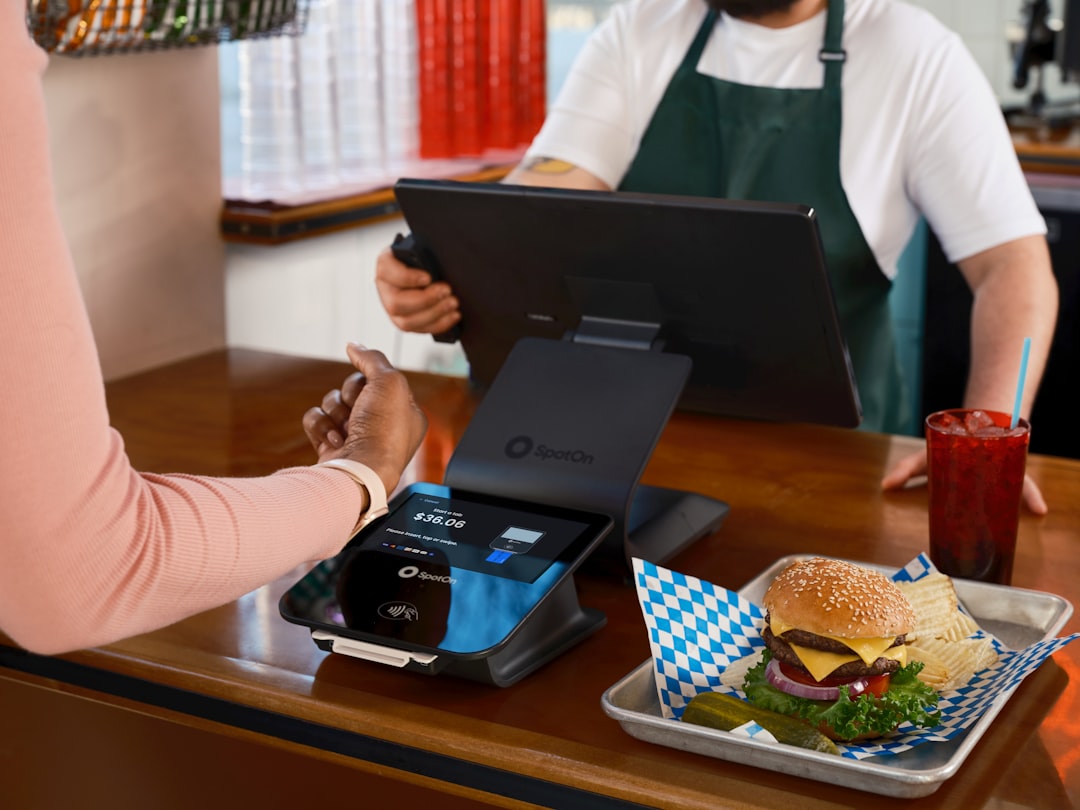
Artificial intelligence is transforming the fast food industry, with a growing number of chains adopting AI-powered voice ordering systems. According to the latest Intouch Insight survey, around 6% of fast food restaurants in the United States now use this technology in 2026, up from 4% in 2024.
The transition is often imperceptible for customers, as Katie Charpentier recounts. She ordered a Blizzard at the Dairy Queen drive-thru in North Carolina without realizing she was talking to a bot. "There was no communication delay or weirdness to it. It felt completely natural," Charpentier says. "But just a little too pleasant to be human." Only when she asked the window employee did she discover she had been served by AI.
Taco Bell and Dairy Queen lead the AI drive-thru expansion
Taco Bell announced in July that it has rolled out AI to 890 drive-thru lanes, over 10% of its US locations. Dairy Queen is implementing the tech in 25 states, with plans to cover all restaurants. White Castle uses an AI named "Julia" in 12% of its drive-thrus, and all new locations now open with Julia taking orders. These numbers indicate a clear trend toward full automation.
Sponsored Protocol
Sarah Beckett, vice president at Intouch Insight, notes that "brands that have invested and tested this technology over the last three years are ready to scale it massively." The pandemic accelerated digitalization, but only now has the technology reached a reliability level sufficient for mass deployment.
However, the path has not been smooth. In 2023, viral videos showed AI systems making embarrassing mistakes, like adding 260 Chicken McNuggets to a McDonald's order or bacon to an ice cream cone. More recently, some customers have tried to "troll" the bots, such as the one who ordered 18,000 cups of water at Taco Bell.
Challenges and errors of AI: accent comprehension and order accuracy
The main challenge remains understanding different accents and dialects. Chains often solve this with a remote human intervention, but that increases costs. Moreover, Intouch Insight tests show that AI tends to be less friendly and less accurate than humans, making the overall experience less satisfying.
Sponsored Protocol
Michael Schatzberg, cofounder of Branded Hospitality, said that "restaurants ended up spending more time smoothing over the problem they created." His company sold early AI drive-thru investments, but is now back betting on this technology, this time with a more mature approach.
Second-generation AI drive-thru solves initial problems
Despite initial failures, many chains have continued testing AI quietly. McDonald's has relaunched trials with Google at five locations, supporting English and Spanish. Branded Hospitality partnered with Arc, a voice AI drive-thru company working with chains like Jack's and Pollo Campero.
Service times are improving: Intouch Insight finds that AI drive-thrus are on average 21 seconds faster than the industry average. Jamie Richardson, CMO of White Castle, says "Julia" has made employee shifts run smoother and increased staff satisfaction. The chain even made Fortune's top 20 best retail workplaces, a result Richardson attributes partly to its AI approach.
Sponsored Protocol
AI doesn't steal jobs but boosts sales with upselling
Contrary to fears, data shows that AI is not replacing workers. Most staff are multitasking, and fully replacing cashiers and cooks is complex. White Castle has kept employment levels steady during AI rollout. Taco Bell has even reported higher employee retention at AI locations.
One of the most interesting aspects is the use of AI for upselling. According to the Intouch Insight survey, AI agents use suggestive selling 71% of the time, compared to the industry average of 58%. This allows chains to boost margins without annoying customers, convincing them to add extras like a Diet Coke or extra Snickers to a Blizzard.
Sponsored Protocol
AI can also handle orders in dozens of languages, improving accessibility and customer experience. This flexibility is a competitive advantage in an increasingly globalized market where linguistic diversity is a daily reality.
Not every chain is embracing AI. Chick-fil-A, known for excellent customer service, has never announced plans to replace its human workers with robots. Coffee shops Dutch Bros and 7Brew have also chosen to keep a human touch. Nick Chavez, CMO of 7Brew, says "hospitality starts with genuine human connection," a value customers appreciate.
Consumers like Schereé Reed, interviewed by WIRED, express concern about losing human interactions. "I want to be able to say hi to a human being," he says. Some experts worry that massive AI use could erode community bonds. However, for chains focusing on efficiency and cost reduction, AI represents an inevitable solution.
The future of the drive-thru seems set: AI is destined to become the norm, not the exception. Chains investing in this technology are laying the groundwork for a more automated and efficient industry, but they will need to balance innovation with the need to maintain authentic human contact. As data shows, AI is not perfect, but improvements are steady. The coming years will be crucial to see how this technology evolves and how it will impact the overall consumer experience.
Sponsored Protocol
For those interested in technologies shaping the future, it's interesting to note how other sectors are experiencing similar transformations. For instance, mobile gaming is benefiting from increasingly powerful hardware, while AI finds applications in creative fields like running video games on drawing programs. Technology never ceases to amaze.
For further reading, you can check the original source on WIRED.
Source: https://www.wired.com/story/ai-conquered-coding-fast-food-is-next