The world of audio technology and wearable devices is poised for a significant transformation thanks to Anker's recent move. The company has announced the development of its proprietary chip, named 'Thus', designed to integrate artificial intelligence capabilities directly into small, wearable products. This innovation promises to bring AI processing directly onto the device, eliminating reliance on external connections and improving performance and privacy.
The 'Thus' Chip An Innovation in Compute-in-Memory
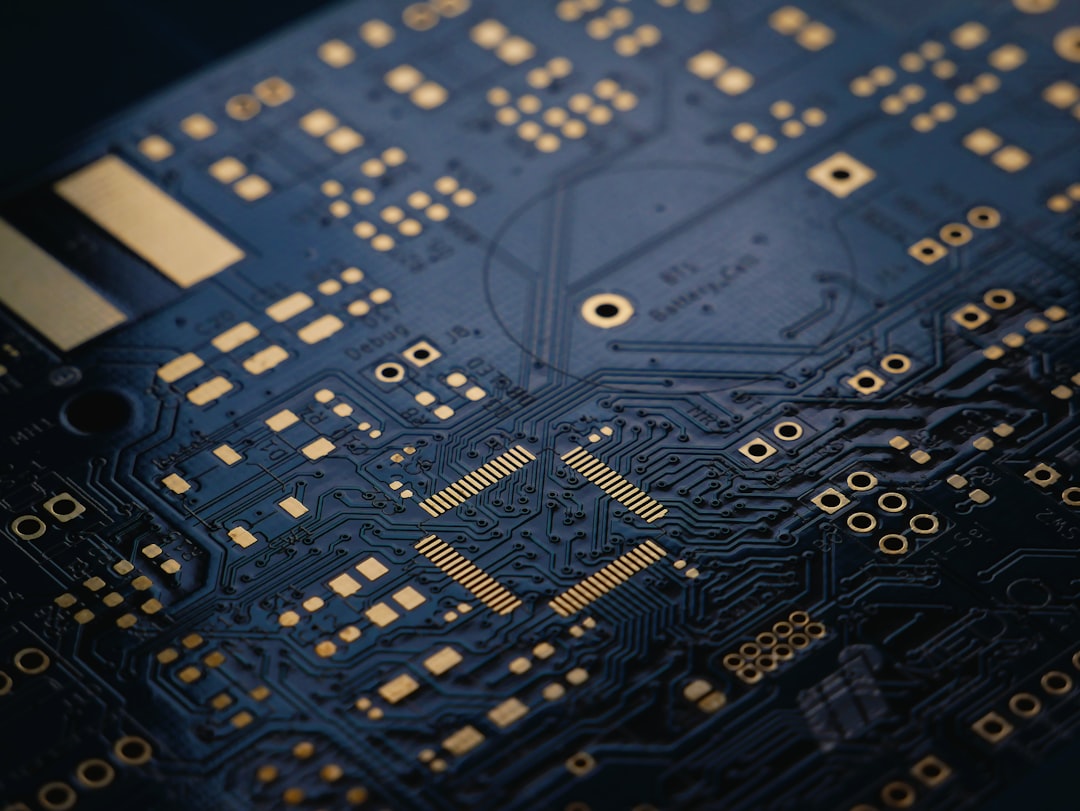
The 'Thus' chip stands out as the first Compute-in-Memory (CIM) AI audio chip equipped with neural networks. Anker has stated that its design is inspired by the workings of the human brain, where information processing and storage occur in a single location. Unlike traditional chips that separate these two functions, 'Thus' integrates computing power directly into NOR flash memory cells. This approach not only increases read speeds compared to NAND memory but also requires minimal physical space, making it ideal for compact devices like headphones.
Sponsored Protocol
Advanced Applications in Headphones and Beyond
Anker has chosen headphones as the initial proving ground for the 'Thus' chip, a notoriously challenging environment for any AI chip due to limited component space and extremely low power requirements, despite the need to handle complex features like noise cancellation. The 'Thus' chip was specifically engineered to meet these challenges. One of the announced AI features is 'Clear Calls', an advanced noise cancellation system that utilizes a large neural network processed entirely on the device. Supported by eight MEMS microphones and two bone conduction sensors, 'Clear Calls' promises significantly clearer conversations even in noisy environments, surpassing the performance of conventional noise cancellation systems. This technology could be a huge endorsement for 'Thus', paving the way for its integration into a wide range of mobile accessories and IoT devices. The ability to process AI data locally opens exciting scenarios for the future of these devices, from personalized user experiences to enhanced security and efficiency. This aligns with emerging trends in the industry, where the integration of artificial intelligence into everyday devices is becoming increasingly common, as evidenced by innovations in diverse fields, from advanced voice assistance in local services to the processing of complex images via models like ChatGPT Images 2.0.
Sponsored Protocol
Implications for the Future of Wearable Technology
Anker's introduction of the 'Thus' chip marks a significant step towards more accessible and integrated artificial intelligence. The ability to run AI algorithms directly on the device offers tangible benefits in terms of reduced latency, increased power efficiency, and enhanced user privacy, as sensitive data does not need to be transmitted to external servers. Companies operating in the wearable technology and audio device sectors should keep a close eye on this development, as it could set new standards for performance and functionality. The race for on-device AI innovation is intense, with companies like OpenAI pushing the boundaries of content generation and others seeking to implement AI in useful and practical ways for daily life. Anker, with its 'Thus' chip, is firmly positioning itself at the forefront of this exciting field.
Sponsored Protocol