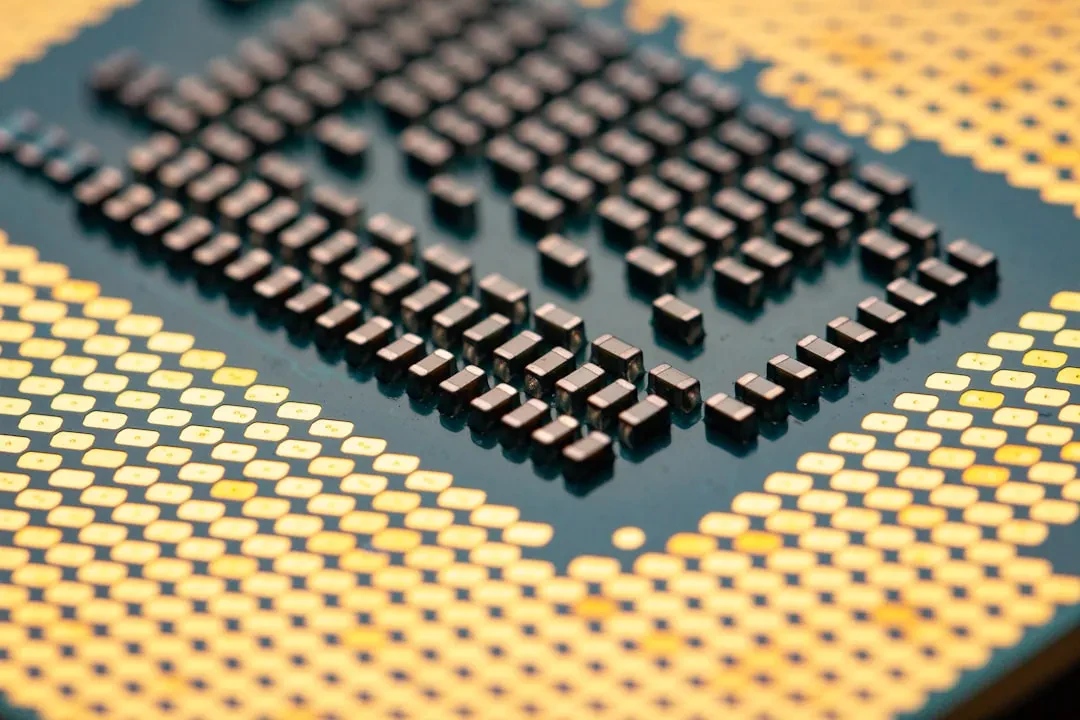
U.S. President Donald Trump announced on Thursday that Apple has agreed to work with Intel to manufacture some of its chips in the United States. The news, shared via a social media post, sent Intel's stock up 9% in premarket trading, while Apple rose 0.6%. Neither Apple nor Intel have officially commented, but The Wall Street Journal reported last month that a preliminary agreement between the two companies would see Intel fabricating processors for Apple devices.
Intel would produce chips based on Apple's designs, much like TSMC currently does. Earlier rumors suggested Intel could handle lower-end processors, including the entry-level M-series chip used in select iPad and Mac models. This marks a significant shift for Apple, which before adopting Apple Silicon used Intel-designed chips for Macs but faced continual delays. Today, Apple designs its own Arm-based chips and relies on TSMC for manufacturing, giving it a predictable update schedule.
Sponsored Protocol
Intel's Turnaround Under Lip-Bu Tan
Apple has not considered Intel as a supplier before, partly because the chipmaker lagged behind rivals like TSMC and Samsung, and due to a rocky history between the two firms. However, that picture may be changing under CEO Lip-Bu Tan, who took over last year after the ouster of Pat Gelsinger. Tan has pushed to revive Intel's struggling chip manufacturing arm, and the results are striking: the stock surged 464% over the past 12 months, reaching a market cap of $608.7 billion. The U.S. government also took a 10% stake in Intel last year, converting $8.9 billion in unpaid Chips Act grants into equity. As we reported in our article on the A22 Pro chip, Intel could become a strategic partner for future Apple processors.
Sponsored Protocol
TSMC Challenges and Taiwan Dependence
Apple has been trying to diversify its supply chain, as TSMC, based in Taiwan, is currently its sole manufacturer of Apple Silicon. On the latest earnings call, CEO Tim Cook said iPhone 17 supply was constrained in the quarter because the company could not secure enough A19 and A19 Pro chips from TSMC. With the AI boom driving massive demand for AI servers, TSMC has less capacity for consumer-device chips, weakening Apple's negotiating position. Meanwhile, Apple is also innovating in software, but relying on a single supplier remains a risk. The Intel deal could ease this pressure, at least for lower-end chips. The move aligns with U.S. efforts to reduce dependence on Asian semiconductor production, backed by the Chips Act. For more background, see Wikipedia's entry on Intel.
Sponsored Protocol
The agreement between Apple and Intel marks a potential turning point for the semiconductor industry. After years of dominance by TSMC and Samsung, Intel might reclaim a leading role in advanced chip manufacturing, while Apple gains supply flexibility and security. Whether the partnership extends to high-end chips remains to be seen, but markets have reacted positively so far.
Source: https://www.macrumors.com/2026/06/18/apple-make-chips-us-intel-trump-says