In the vast and ever-shifting landscape of technology, few companies have wielded an influence as pervasive and audacious as Apple. For over fifty years, the Cupertino giant has not merely introduced innovations; it has redefined entire paradigms, often with decisions that have shaken the industry, ignited fierce controversies, and frequently proven prophetic. This is the story of how Apple, with an almost messianic vision of progress, has repeatedly 'murdered its darlings,' eliminating established technologies to push humanity towards a digital future it itself envisioned.
The echo of Sir Arthur Quiller-Couch's famous quote, 'murder your darlings,' resonates powerfully throughout Apple's history. A ruthless yet incredibly effective mantra. The removal of beloved and functional elements, often met with an initial wave of outrage, has become a distinctive signature of the tech giant. This strategy, while painful for some in the short term, has almost always allowed Apple to anticipate trends, pave the way for greater innovations, and shape the market in its own image. Let us analyze some of these 'disappearances' that have marked milestones in technological development.
The Unexpected Death of the Floppy Disk and the USB Revolution in 1998
Steve Jobs' return to Apple in 1997 heralded the beginning of a new era, culminating in 1998 with the introduction of the iMac G3. This computer, with its revolutionary design and vibrant colors, was not just an aesthetic statement. It was a technological manifesto. Apple unreservedly abandoned the standard ports and myriad cable types that plagued personal computers of the time, fully embracing USB and a then little-known technology called the Internet. The famous 'i' in iMac was an explicit homage. But the most controversial innovation was the elimination of the 3.5-inch floppy disk drive. A colossal gamble, considering the ubiquity of this medium. Despite still slow internet connections and far-from-blazing USB transfer speeds at the time, the convenience of the new solutions was plain to see. This move anticipated the rise of USB thumb drives, with ever-increasing storage capacities, and rendered bridging attempts like Zip disks obsolete. Apple was, once again, simply a little ahead of its time, but the direction was unequivocal.
Sponsored Protocol
The iPod Eaten by the iPhone and the Birth of the Touch in 2007
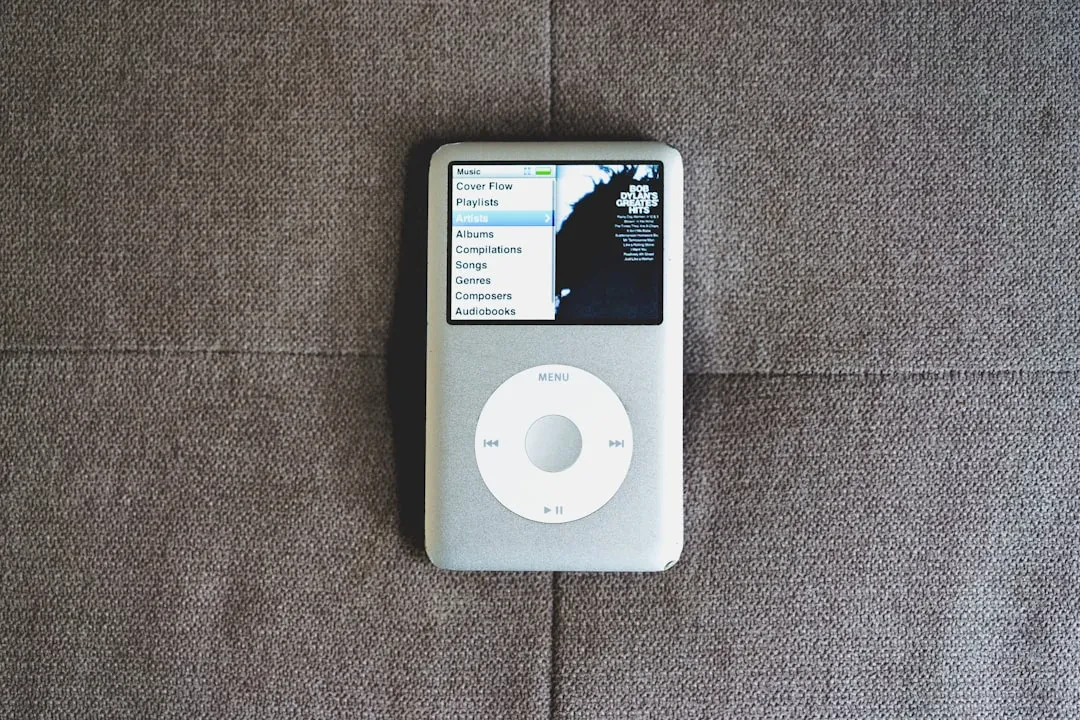
The iPod was, for years, the very synonym for portable music player, the machine that transformed Apple into the cultural icon it is today. At its peak in 2006, it accounted for 40 percent of the company's revenue. Then, in June 2007, the iPhone arrived. A true stroke of self-cannibalizing genius. Shortly after, in September, the iPod Touch was launched, essentially an iPhone without the phone part. This clearly indicated Apple's vision for the future of music listening. Why have a separate iPod when the iPhone in your pocket could do all that and much more? It was the perfect example of how Apple was willing to cannibalize a product that had defined a decade with something infinitely more impressive and, ultimately, more successful. The classic iPod's demise occurred in 2014, followed by the Nano and Shuffle in 2017, concluding with the iPod Touch in May 2022. A slow, but inexorable transition.
Sponsored Protocol
The Farewell to the Physical Smartphone Keyboard in 2007 and Beyond
When the iPhone introduced its capacitive screen and touch keyboard, there was a significant learning curve. Moving from physical keys, whether a 9-key alphanumeric version or BlackBerry's QWERTY experience, to a touchscreen, especially on the tiny 3.5-inch panel of the first iPhone, was not easy. However, it was the future. Physical keyboards took up precious physical space on devices, space that increasingly larger screens would reclaim. The adoption of touch keyboards accelerated thanks to third-party apps on Android, like Swype and SwiftKey, which introduced different input methods, smarter predictive text, and advanced typing algorithms. Software keyboards proved intrinsically more versatile, supporting multiple languages, infinite key arrangements, and eventually emoji galleries. The flexibility of software decisively prevailed over dedicated hardware.
The 2008 MacBook Air and the Optical Drive's Second Death
In 2008, Steve Jobs famously pulled the MacBook Air from a manila envelope, an iconic image demonstrating its ultraportable nature. To achieve such slimness, it was necessary to completely eliminate the internal optical drive, making it the first MacBook without one. This move kicked off an era of ultraportable laptops, but it was a significant break from user expectations. Apple sought to mitigate the impact with 'Remote Disc,' a feature allowing the MacBook Air to wirelessly use the optical drive of a nearby Mac or PC, and offered an external USB SuperDrive as an optional accessory. Although initially considered underpowered compared to Windows competitors, the original MacBook Air set a new design standard for the industry, positioning Macs for a future dominated by App Store software installations, faster internet connectivity, and the rise of streaming media and cloud storage. MacBook Pro and other Macs followed suit, ditching optical drives in 2012.
Sponsored Protocol
The Campaign Against Adobe Flash in 2010
In the early days of the iPhone, Apple famously refused to support Adobe Flash, a monumental decision given its ubiquity on the web for animations and video. In April 2010, with the arrival of the iPad, Steve Jobs published his celebrated open letter 'Thoughts on Flash,' criticizing its poor security and lack of touch-friendliness. Many Flash games and interfaces were designed for the precise mouse cursor, an element non-existent on touchscreens. But it was also a strategically calculated move. By denying Adobe access to the rapidly growing iOS user base, Apple forced developers to choose between the aging Flash and open standards like HTML5. Furthermore, by making Flash-based content incompatible, it nudged developers and users towards the App Store, where Apple could curate and monetize creations. It was a slow but inevitable death, with Adobe finally discontinuing it in 2020.
Sponsored Protocol
The 'Courage' of Eliminating the Headphone Jack in 2016
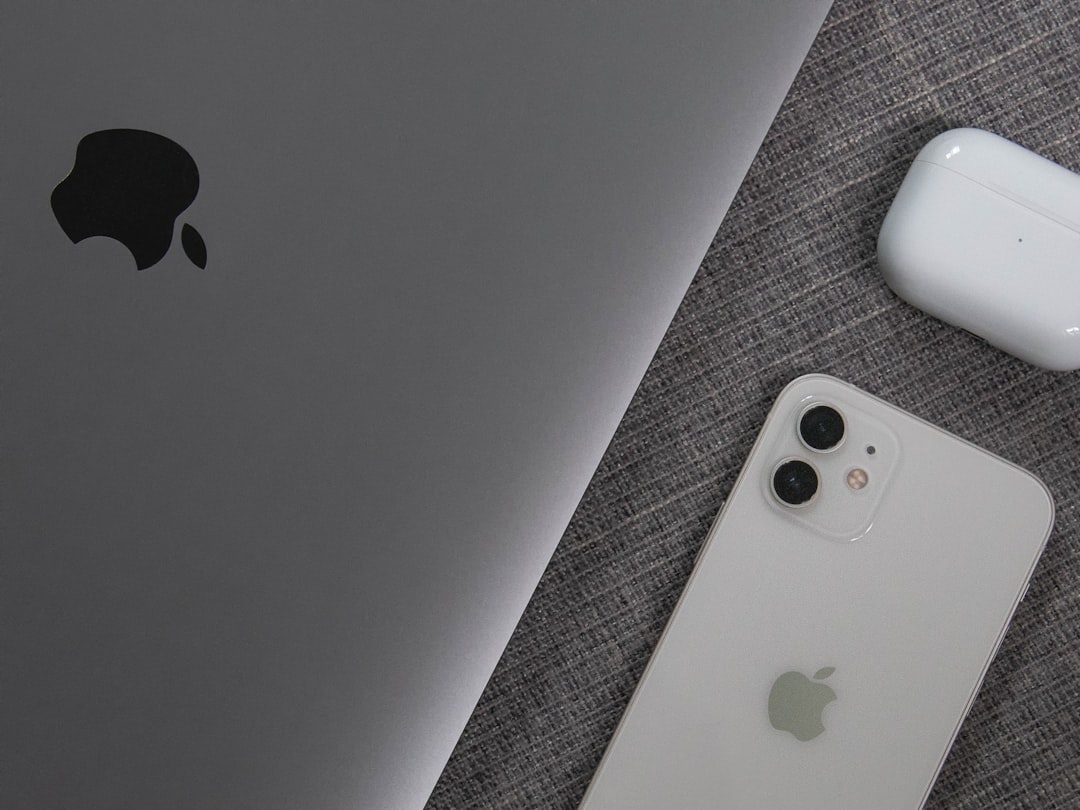
In 2016, Phil Schiller, Apple's marketing executive, described the decision to remove the 3.5mm headphone jack from the iPhone 7 as 'courage.' This move became the main headline of the launch, and every subsequent flagship iPhone has followed this path. To make the change more palatable, Apple included a Lightning-to-3.5mm adapter and Lightning-connected headphones. This meant you couldn't charge the phone while listening to music unless you owned wireless headphones. This decision, however, was instrumental in making true wireless earbuds ubiquitous. While Apple was by no means the first to introduce wireless earbuds, the removal of the jack undeniably accelerated their adoption. Concurrently with the iPhone 7, Apple launched AirPods, which, with their one-tap setup and automatic pairing, offered the convenience users expected. Despite initial resistance and rivals' 'boasting,' the jack is now confined to budget smartphones or niche devices. This was another bold move that paid enormous dividends for Apple.
The Bespoke Ports Controversy in the 2016 MacBook Pro and Its Correction
2016 was also the year of 'donglegate.' Apple's MacBook Pro redesign that year was another drastic shift. In pursuit of ever-thinner profiles and less port clutter, Apple stripped away nearly every legacy connector that professionals relied upon. This was particularly jarring after the previous-generation MacBook Pro (2015) was often cited as the peak of utility, featuring MagSafe, two Thunderbolt 2 ports, two USB-A ports, a full-size HDMI port, and an SD card slot. These were replaced by four (or just two on the cheapest 13-inch model) Thunderbolt 3 USB-C ports and a headphone jack. For power users, this meant a reliance on 'dongles' to connect anything from USB-A drives to external monitors. The loss of MagSafe was particularly keenly felt. This decision accelerated the availability of USB-C peripherals, but frustration was palpable. Fortunately, Apple later course-corrected. The 2021 MacBook Pro redesign reintroduced the SD card reader, HDMI port, and even MagSafe, freeing up valuable USB-C ports. A rare admission that, sometimes, even the most forward-thinking vision may require recalibration.
Sponsored Protocol
In conclusion, Apple's history is a fascinating study in innovation through destruction. Its radical decisions, though often contested, have demonstrated an extraordinary ability to read the future, sacrificing present comfort for a progress deemed inevitable. From the floppy disk to the headphone jack, each 'darling' abandoned has paved the way for new possibilities, shaping not only Apple's products but the entire global technological ecosystem. This audacity, this willingness to 'murder its darlings,' is not just a commercial strategy but a philosophical mantra that continues to push the company and the industry forward, for better or worse, but undoubtedly towards an increasingly integrated and seemingly uncompromising future.