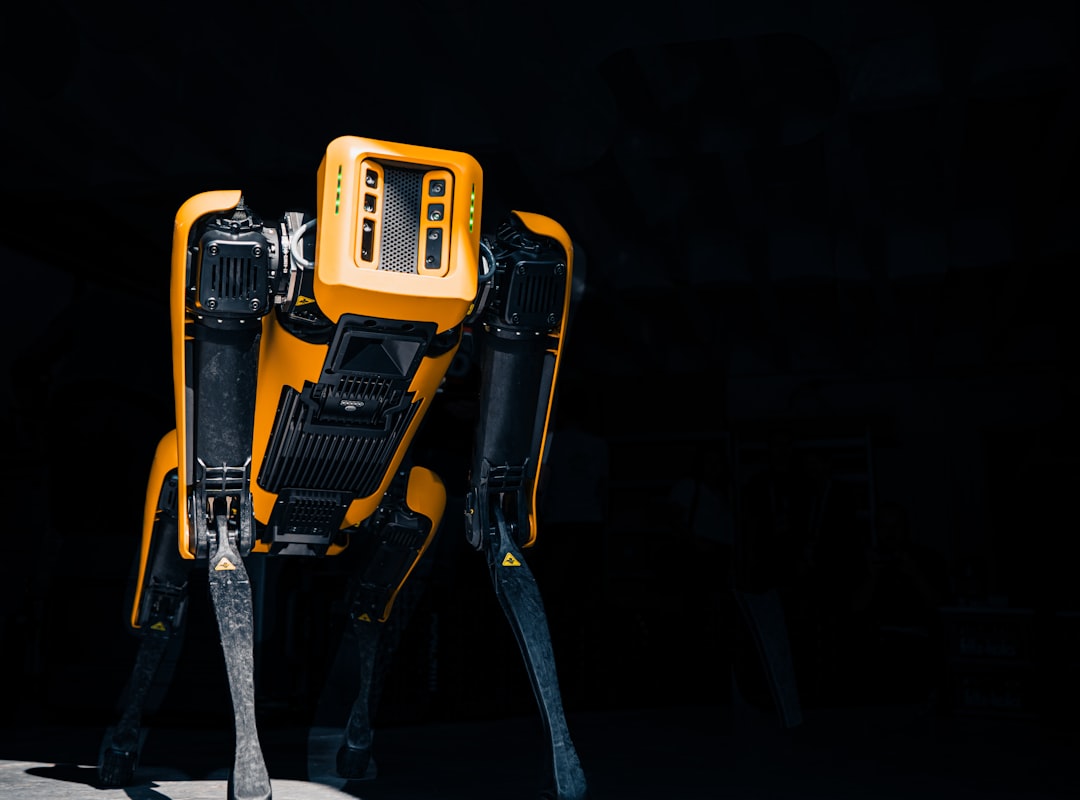
The tenth AI for Good Summit, organized by the United Nations' International Telecommunication Union (ITU), took place in Geneva, bringing together public and private sector representatives. The stated goal was to discuss how artificial intelligence can serve humanity, but the event highlighted a growing gap between technological innovation and the ability to regulate it. Amid robot dogs, Tesla Cybertrucks, and rescue helicopters, participants witnessed breathtaking demos while sessions grappled with thorny issues such as equitable access to compute and the risk that big tech companies consolidate their power.
Doreen Bogdan-Martin opens with a warning on responsibility
In her keynote, ITU Secretary-General Doreen Bogdan-Martin emphasized the conviction that AI, if used responsibly, can solve urgent problems like hunger, disease, and climate change. However, she warned that this idea is being tested by the very challenges AI itself creates. The summit aimed to translate good intentions into concrete actions, but the road is steep.
Sponsored Protocol
Access Now criticizes overreliance on big tech
On the sidelines, Giulio Coppi, senior humanitarian officer at Access Now, denounced the humanitarian sector's dependence on large tech companies. According to Coppi, we are still in an age of innocence that we can no longer afford. He highlighted how opaque multimillion-dollar contracts and constantly evolving technologies make it impossible to even explain what one's infrastructure contains. His words echoed in other interventions, such as pro-Palestinian activists interrupting Amazon CTO Werner Vogels' keynote to protest Amazon technology used by Israel.
The problem of defining 'good' in AI engineering
Vijay Janapa Reddi, an engineering professor at Harvard, brought a pragmatic perspective: the term 'good' is too vague to be translated into technical specifications. A plane that flies for only five minutes is not good, he explained. The difficulty of defining concrete standards is a major obstacle to equitable AI deployment. This theme connects to the race for the latest OpenAI models, which promise ever-higher performance but risk widening the gap between those with access to resources and those excluded.
Sponsored Protocol
Compute access as a global development issue
In a session on AI hardware and the digital divide, several speakers agreed that compute is no longer just a technology problem but a development infrastructure issue. Syed Munir Khasru from the Institute for Policy, Advocacy, and Governance stated that if we want AI for good, we must recognize that compute is development infrastructure. Others noted that most large language models remain predominantly English, making smaller, local models running on cheaper hardware essential to serve communities beyond the richest markets. This dynamic echoes the geopolitical tensions described in the article on China eyeing Nvidia chips and US betting on nuclear, where Europe risks becoming a spectator.
Sponsored Protocol
The governance challenge: technical rules and human rights
Gilles Thonet, deputy secretary-general of the International Electrotechnical Commission, observed that traditionally engineers consider human rights someone else's business. Anja Kaspersen from IEEE argued that the most consequential decisions are not made at UN assemblies but are built into hidden architecture, technical standards, and procurement choices. To fix this, she proposed creating middleware that translates human rights principles into verifiable technical requirements. Jeremy Ng from the World Bank insisted on AI impact assessments that are not just governance theater but practical tools with real teeth.
Sponsored Protocol
Robots running fast while consensus is sought
As debates continued, on the bustling convention floor, humanoid robots ran between booths, drawing stares and curiosity. The technology seemed to already be sprinting far ahead of the ability to reach consensus on what 'good' means. The UN announced the formation of a 44-member commission, co-chaired by Rwandan President Paul Kagame and Salesforce CEO Marc Benioff, to steward AI for Good. But as Bogdan-Martin noted, no single stakeholder can shape the future of AI alone. Builders are needed, everyone is needed, but time is short. For further reading, see the Wikipedia page on ITU.
Source: https://www.wired.com/story/robot-dogs-teslas-and-rescue-helicopters-the-un-ai-summit-was-alot