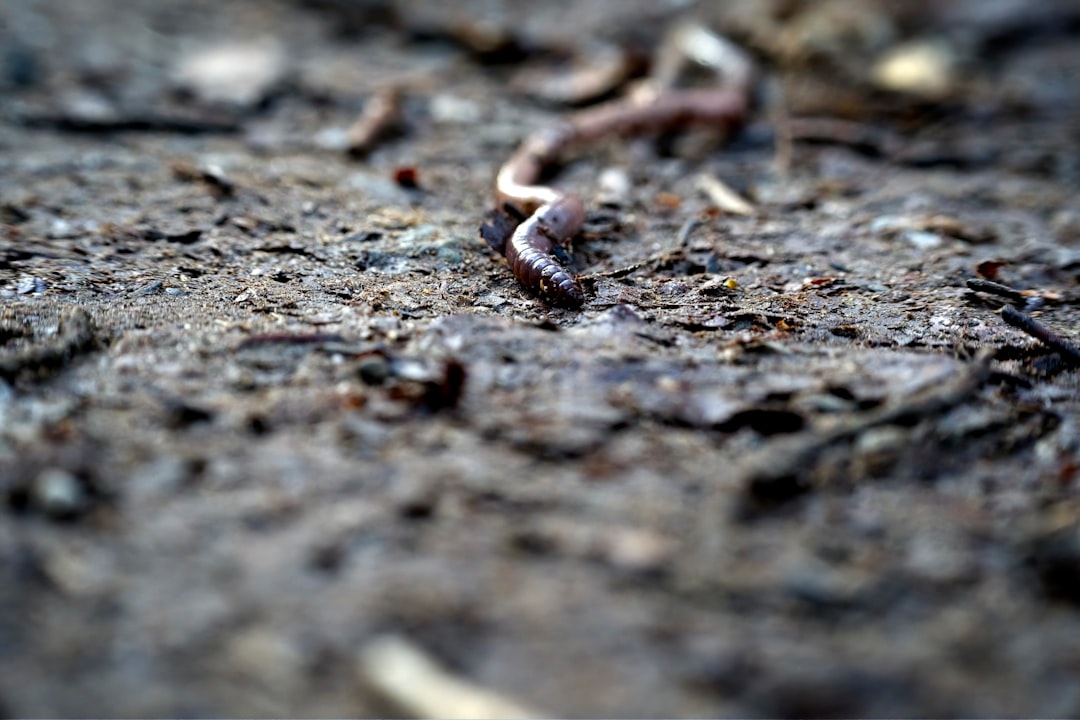
Anthony Agueda, a third-generation California dairy farmer, pulls a rake through a bed of dark, wet wood chips on his family’s land in Hickman. He reaches down with both hands and pulls up a clump of muck, turning it over to reveal a half-dozen squirming red earthworms. There are likely hundreds of thousands more wriggling just under the surface of the three-foot mound of wood and crushed river rock before us, which stretches across the equivalent of six football fields. These natural materials form a biofilter that may dramatically cut the methane, nitrous oxide, and water pollution generated by the massive amounts of manure that hundreds of Holstein cows produce each day.
Agueda’s family business, the Alberto Dairy, was one of the first cattle operations in California to adopt this approach to manure treatment, developed and patented by the Chilean company BioFiltro. Eight more of these so-called vermifiltration systems are already operating on US dairies, according to the company, while another 16 are under construction or set to be next year, nearly all of them in California. Vermifiltration is just one of a variety of methods that farmers, companies, and scientists are employing to drive down manure pollution as the livestock industry faces growing pressure to address the environmental harms from one of the smelliest parts of the business. California, easily the nation’s largest milk producer, has established a handful of programs to promote their adoption, including one initiative that has funneled more than a billion dollars to farms.
Sponsored Protocol
Vermifiltration offers a cheaper alternative to anaerobic digesters
Researchers stress that much more work needs to be done to determine the most effective approaches, the trade-offs between them, and their success over the long term under actual farm conditions. Agueda says that he and his family recognized the need to adopt new practices as environmental rules tightened. They were drawn to vermifiltration because it is simple and relatively cheap compared with other, higher-tech options. “California daily farmers are constantly facing more and more regulation,” says Agueda. “This makes me excited, because it shows how we are part of the solution.”
Sponsored Protocol
The World Resources Institute estimates that manure management on dairy and swine farms accounts for 1.6% of the US’s greenhouse-gas emissions. Globally, manure storage and processing makes up about 10% of the livestock industry’s contributions to climate change. Typically, cattle and swine farms spray manure into lagoons or tanks, creating a foul-smelling, low-oxygen slurry in which microorganisms known as methanogens thrive, producing methane and nitrous oxide. Both are potent greenhouse gases, with as much as 30 to nearly 275 times the warming power of carbon dioxide over a century.
Sponsored Protocol
New technologies aim to cut emissions without digester costs
California has arguably done the most to use government policy specifically to drive down the methane emissions from livestock. In 2016, the state enacted a law that requires dairies, landfills, and other businesses to cut methane emissions 40% below 2013 levels by 2030. The measure directed the California Air Resources Board to set up incentive programs to encourage cleaner practices. However, the vast majority of estimated reductions so far come from anaerobic digesters, which cover slurry lagoons to prevent methane leakage and convert it into natural gas. These digesters are only viable for farms with about 2,000 cattle or more due to high installation costs, and they do little to address water pollution because manure is still spread on fields.
Worms and microbes offer a more accessible solution. Vermifiltration systems, like the one used by Agueda, rely on earthworms and microorganisms to break down organic matter, reducing emissions and producing reusable solid fertilizer. According to BioFiltro, eight systems are already operational and 16 more are in construction, signaling growing adoption. For more on how AI is transforming agriculture, see the article on Anthropic's Claude Cowork expansion.
Sponsored Protocol
Another recent innovation involves using AI chips for resource optimization, as covered in the piece on DeepSeek's proprietary chips. However, the worm-based solution is simpler and less energy-intensive. Experts like Swati Hegde from the World Resources Institute emphasize the need for continued field testing to evaluate long-term effectiveness. For more background, see the Wikipedia entry on vermicomposting.